{"url":"https://www.zooplus.co.uk/magazine/dog/dog-health-and-care/tracheal-collapse-in-dogs","title":"Tracheal Collapse in Dogs","mag_id":416115,"is_single":true,"cat_name":"Dog","sub_cat_id":143,"sub_cat_name":"Dog Health and Care","cat_id":3410}
If your four-legged friend’s airways can no longer transport oxygen into the lungs, vital organs can no longer function. Conversely, air must be able to leave the lungs in order to remove harmful carbon dioxide from the body. But what happens if your dog’s windpipe collapses? Find out everything you need to know about the dangerous condition known as “tracheal collapse in dogs” here.
The term tracheal collapse (also known as a collapsed windpipe) describes an abnormally narrowed windpipe (Latin: trachea). If the windpipe collapses completely (narrows or caves in), the air your dog breathes in and out through its mouth can no longer pass into or out of the lungs.
Symptoms: What Are the Signs of Tracheal Collapse in Dogs?
Affected dogs do not always show clinical signs straight away. In many cases, owners only notice several weeks or even months after the actual tracheal collapse that their dogs are becoming weaker. This is then followed by chronic coughing, which initially occurs during exercise and, in severe cases, even at rest.
If your dog experiences a feeling of suffocation, it will begin breathing in frantically. However, the resulting negative pressure only makes the situation worse, as the windpipe collapses even further. In this case, you must act quickly, as your dog’s life is now in danger!
Diagnosis: How Is Tracheal Collapse in Dogs Diagnosed?
At the latest, if your dog shows severe breathing problems such as shortness of breath and its mucous membranes turn blue (cyanosis), you should contact your vet immediately. They can take life-saving measures and restore your pet’s breathing.
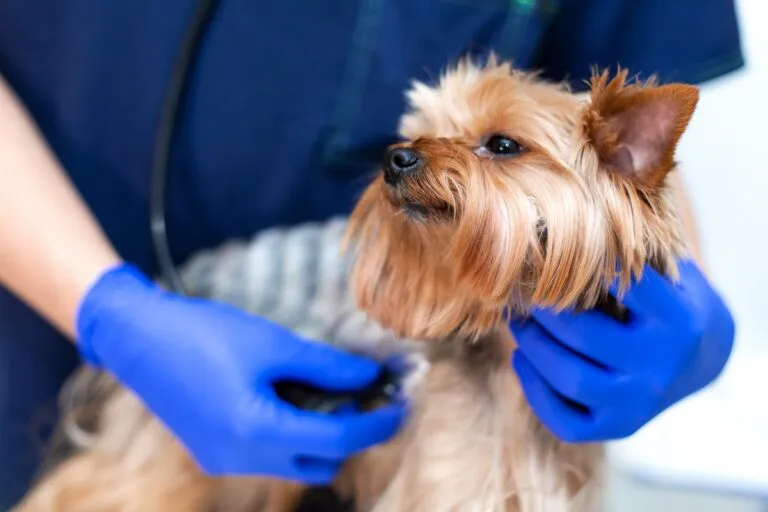
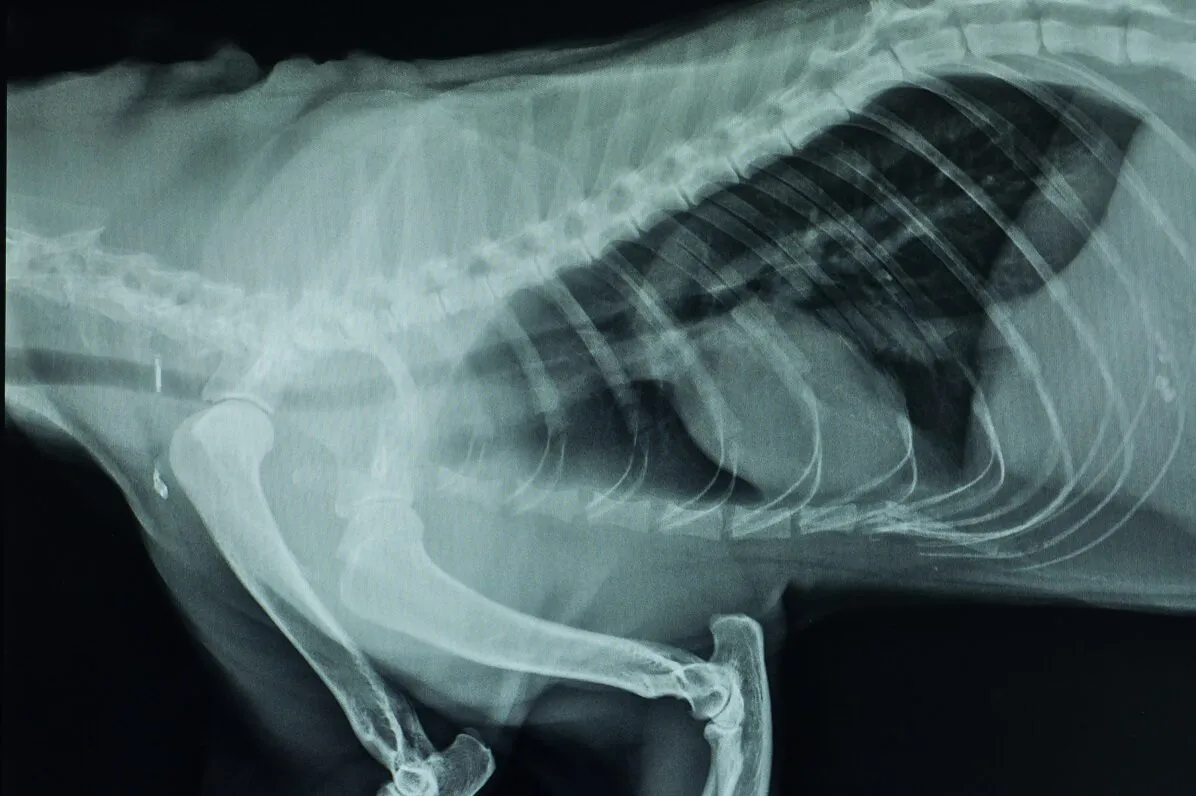
Once your dog is stable, the vet can examine its airways more closely using a stethoscope and imaging techniques such as X-rays. In addition, they can inspect the inside of the windpipe using a tracheoscopy and rule out tracheal collapse.
A lateral X-ray image of a chest cavity: the long black tube running from left to right represents a dog’s windpipe.
Treatment: How Is Tracheal Collapse in Dogs Treated?
Surgery is not always necessary for tracheal collapse in dogs. Up to a certain point, medication such as anti-inflammatory drugs, mucus-loosening medication and bronchodilators can relieve your dog’s symptoms. Cough suppressants and sedatives are also commonly used.
If your dog is overweight or you frequently smoke around it, you should reduce these factors wherever possible.
If your dog suffers from severe breathing difficulties and conservative treatment has not been successful, surgery may be life-saving. Depending on the method used (e.g. extraluminal or endotracheal stents), the aim of the operation is to stabilise the condition of the windpipe or widen the trachea.
It is important to understand that the operation itself does not solve the underlying problem, but only reduces the symptoms. Even after a successful procedure, it remains important to minimise the risk factors.
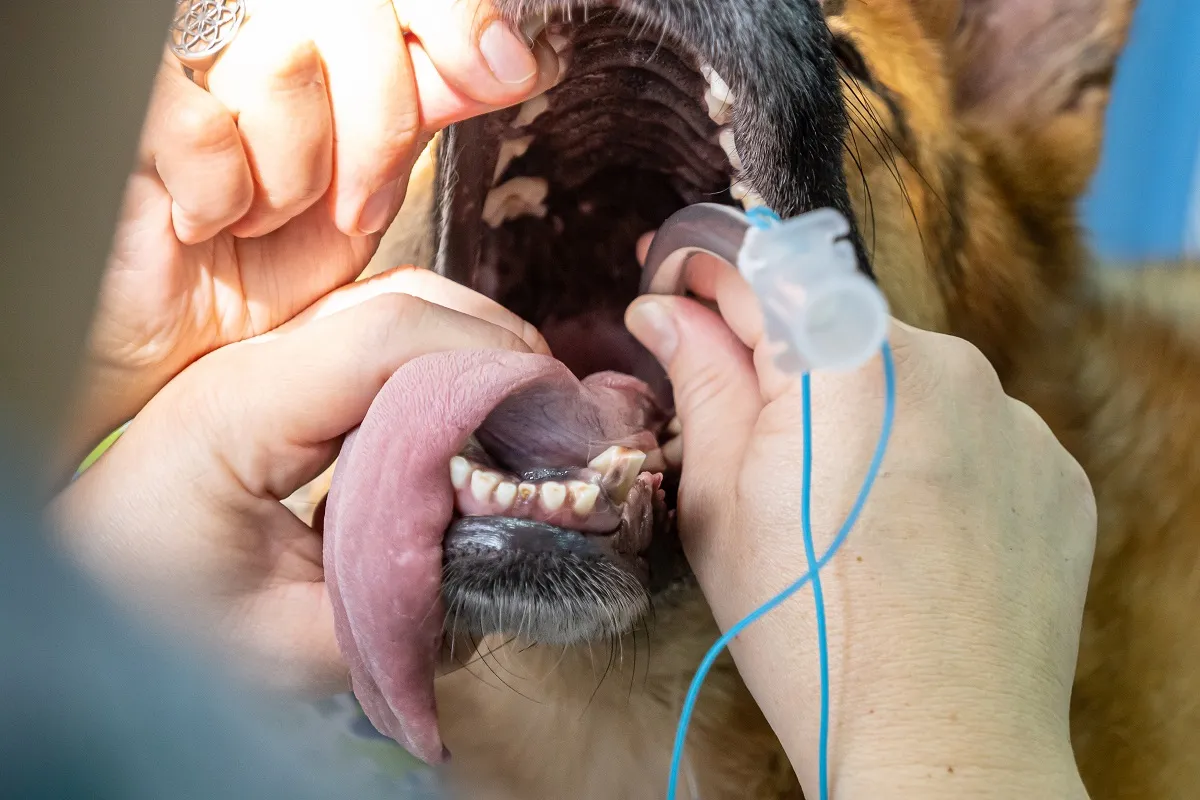
Vets often cannot manage without intubating their patients (inserting a tube into the windpipe for artificial ventilation). However, they must always take care not to damage the windpipe!
What Complications Can Occur?
During the insertion of plastic rings, the surgeon may damage nearby structures such as nerves. There is therefore a risk of causing laryngeal paralysis, which can also lead to severe breathing problems.
The implantation of stents (supports) can also lead to complications. If the stents shift out of place, this can become life-threatening for your dog.
Are There Home Remedies for Tracheal Collapse in Dogs?
The simple answer to this question is: no. If your dog’s windpipe has collapsed, you cannot manage this condition using home remedies or homeopathic remedies. For your dog’s health, it is now important to seek professional help from a vet!
Causes: What Triggers Tracheal Collapse in Dogs?
Various factors can increase the risk of tracheal collapse in dogs. These include:
Obesity (being overweight)
Insertion of a tube (intubation) for artificial ventilation (e.g. during an anaesthetic)
Inflammatory diseases of the respiratory tract (e.g. pneumonia)
Increased inhalation of smoke (e.g. living in a smoking household)
Dog breed (small breeds)
Enlargement of the left side of the heart (left ventricular hypertrophy)
Neurological disorders (e.g. laryngeal paralysis)
Fluid build-up in the lungs (pulmonary oedema)
Breed Predisposition: Which Breeds Are Particularly Affected?
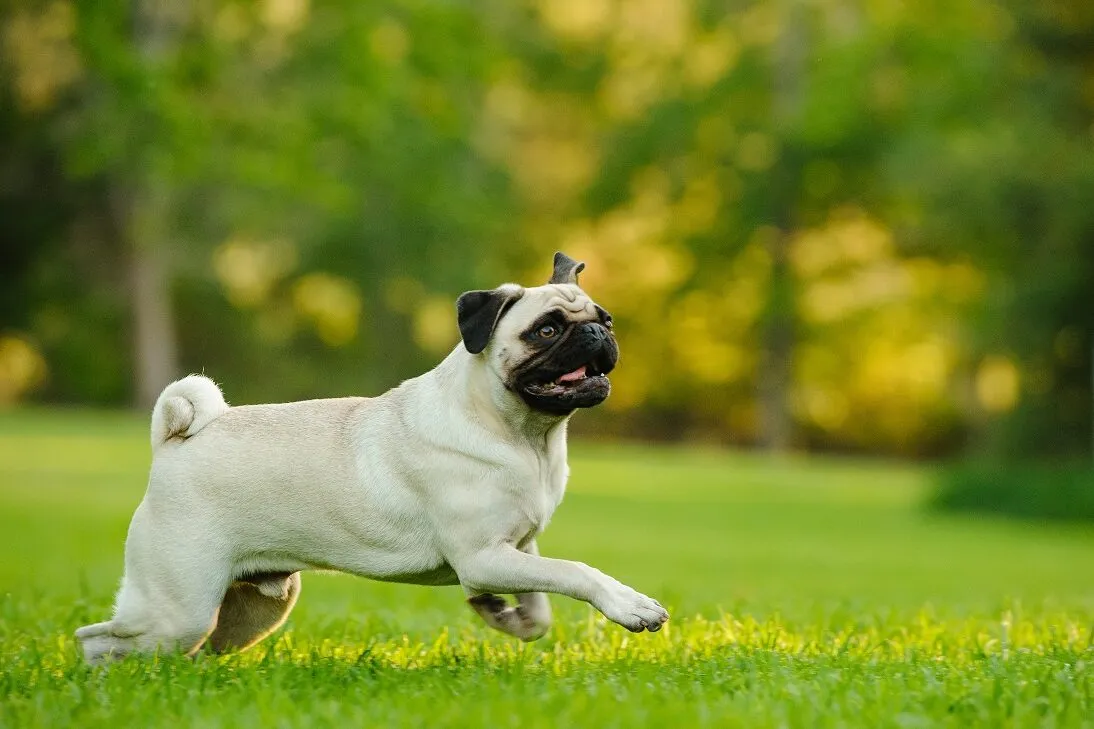
Particularly small dog breeds and brachycephalic breeds (short-nosed dogs) are genetically predisposed to developing tracheal collapse. These include, for example, the Pug, the Spitz and the Yorkshire Terrier.
Their oesophagi are too flat, which over time causes the walls of the organ to rub against one another. Gradually, this irritation damages the important ciliated epithelium that lines the inside of the windpipe.
Small dogs have a higher risk of illness than large dogs!
Prognosis: What Are the Chances of Recovery?
As a general rule, the earlier you recognise the signs and take action, the better the prognosis. In many cases, dogs with mild tracheal collapse who receive medication can continue to live without major restrictions.
However, if your dog’s windpipe has collapsed completely, surgery is the only remaining option. Further complications may occur during the procedure, which can potentially worsen the prognosis. This is exactly why it is important to have your dog examined by a vet if you suspect breathing difficulties.
Prevention: How Can I Prevent Tracheal Collapse in Dogs?
To prevent your dog’s condition from worsening further, you should follow these recommendations if tracheal collapse has been diagnosed:
Important Note: The content provided for informational purposes only and is not intended to replace professional veterinary advice, diagnosis or treatment. If you have any questions or concerns about your pet's health, please always consult a licensed veterinarian.
This article was translated using Artificial Intelligence from the original German zooplus Magazine. While the original content was authored by industry experts and reviewed by our editorial team, this automated translation has not been human-edited and is provided for informational purposes.
At the Justus-Liebig-University of Giessen I was extensively trained as a veterinarian and was able to gain experience in various fields such as small animal, large animal and exotic animal medicine as well as pharmacology, pathology and food hygiene.
Since then, I have been working not only as a veterinary author, but also on my scientifically driven dissertation. My goal is to better protect animals from pathogenic bacterial organisms in the future.
Besides my veterinary knowledge, I also share my own experiences as a happy dog owner and can thus understand and enlighten fears and problems as well as other important questions about animal health.
When does a female dog’s first season begin? How often and for how long is a female dog in season? And what symptoms does a female dog in season show? Find out everything you need to know about these “hot days” and how you and your dog can get through the season calmly and stress-free in the following article.
16 February 2024 |Leishmaniasis is an infectious disease transmitted by sandflies and can often prove fatal for dogs. Find out how you can protect your dog and how to recognise and treat the disease should it emerge.
Neutering has traditionally been a standard veterinary practice, but is it universally recommended? What distinguishes neutering from sterilisation and what expenses should a dog owner anticipate? Here, you can discover all the essential information concerning the advantages and disadvantages of neutering your dog.