{"url":"https://www.zooplus.co.uk/magazine/dog/dog-health-and-care/lungworms-in-dogs-symptoms-and-treatment","title":"Lungworms in Dogs: Symptoms and Treatment","mag_id":416005,"is_single":true,"cat_name":"Dog","sub_cat_id":143,"sub_cat_name":"Dog Health and Care","cat_id":3410}
There are many dangers lurking in the environment for our four-legged friends. Parasites such as lungworms in dogs can cause a range of illnesses. This article explains the symptoms lungworms can cause in dogs, as well as how they can be treated and prevented.
Lungworms are roundworms that settle in the airways and lungs of dogs. As a result, they impair the affected dog’s respiratory system. Lungworms can pose a serious risk and, in severe cases, may even be fatal.
What Types of Lungworm Affect Dogs?
There are different types of lungworm that can affect dogs. The most common are the French heartworm (Angiostrongylus vasorum) and the fox lungworm (Crenosoma vulpis or small lungworm).
While the French heartworm mainly affects the pulmonary arteries and the right chamber of the heart, the small lungworm is primarily found in the bronchi and trachea.
If left untreated, lungworms in dogs can lead to severe breathing difficulties.
Symptoms: How Can you Recognise Lungworms in Dogs?
As you might expect, lungworms in dogs primarily cause respiratory symptoms such as sneezing. However, the most common symptom of a lungworm infection iscoughing, which typically occurs after physical exertion. As the condition progresses, affected dogs may develop shortness of breath that can seriously reduce their quality of life.
Your Dog’s Health May Deteriorate
In addition to respiratory problems, lungworms can also trigger other symptoms in your dog.
Alongside increased tiredness and reluctance to exercise, this mainly includes loss of appetite, which gradually leads to weight loss in most dogs.
In severe cases, neurological problems such as lameness, seizures, coordination problems and blood clotting disorders may also occur. You can recognise these disorders by heavy bleeding , such as frequent nosebleeds.
When Should I Take my Dog to the Vet?
As soon as you suspect that your dog may have parasites, you should consult a vet. This not only provides the necessary help for your dog, but also helps protect other animals from infection.
Diagnosis: How Are Lungworms Detected in Dogs?
Due to the wide variety of possible symptoms, it is not immediately obvious to your vet whether your dog has lungworms or not.
To confirm the suspected diagnosis, after discussing your dog’s history and carrying out a general clinical examination, they may perform a stool test to detect lungworm larvae.
However, your vet will usually need a pooled stool sample from three consecutive days, as dogs shed these larvaeat irregular intervals.
Further Tests to Detect Lungworms
In addition to stool testing, there are other tests that can be used to diagnose a lungworm infection in your dog:
Imaging procedures: If your dog’s X-ray shows an enlarged right chamber of the heart or changes to the lung structure, this may indicate a lungworm infestation.
Blood test: An increase in eosinophilic granulocytes in the blood can indicate a parasitic infection.
Bronchoscopy: During a bronchoscopy, the vet examines your dog’s airways using an endoscope fitted with a camera. During this examination, the vet may also carry out a bronchoalveolar lavage to collect fluid, which can then be examined for larvae.
Treatment: How Are Lungworms Treated in Dogs?
If your dog has lungworms, they urgently need veterinary treatment. Without targeted treatment, the animal’s condition can worsen and become life-threatening.
1. Antiparasitic Medication (Worming Treatment)
To kill the worms, the vet may prescribe special worming medication for your dog. These are available as pastes, spot-on treatments or tablets, and contain various active ingredients such as fenbendazole and moxidectin, with differing durations of action.
Note: To check whether the treatment has been successful, it is advisable to have your dog’s stool tested for worms again a few weeks after the final dose of medication. If parasites are still detected, another round of worming treatment will be necessary.
2. Symptomatic Treatment
In addition to worming treatment, your dog may need supportive measures to relieve the symptoms.
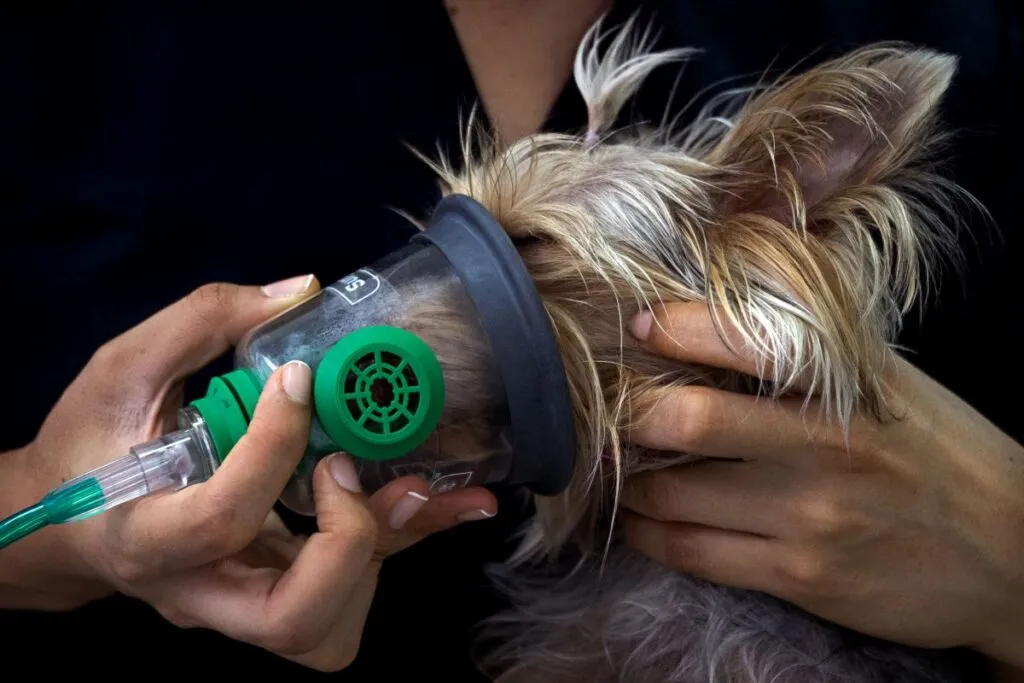
For example, cough-suppressant medication may help with coughing. If your dog is suffering from oxygen deficiency due to breathing difficulties, it may also be necessary to administer oxygen.
Infection and Life Cycle: How Are Lungworms Transmitted in Dogs?
Lungworms go through a special life cycle that mainly depends on the type of lungworm involved.
Crenosoma vulpis (L1 larval stage), for example, infects snails and slugs, in which it develops into the more advanced L3 larval stage. If your dog eats the infected snail or slug, the larvae enter its intestines and travel via the liver and right side of the heart to the bronchi and trachea. Here, the mature worms lay eggs, from which larvae hatch. Your dog then swallows these larvae after coughing them up and excretes them in its faeces.
Direct transmission through intermediate hosts:Direct contact with intermediate hosts, especially snails and slugs, is the most common route of infection for lungworms in dogs. If your dog accidentally eats a snail or slug carrying infectious lungworm larvae while out on a walk, the larvae enter your dog directly.
Indirect transmission through contamination: The consumption of animals that have previously eaten infected snails or slugs can also lead to your dog becoming infected with lungworms. Another possible route of indirect ingestion is drinking contaminated water or eating contaminated materials such as faeces or blades of grass.
No, your dog cannot catch lungworms directly from other dogs. However, bear in mind that infected dogs can contaminate their surroundings, for example through faeces, meaning your dog could become indirectly infected with lungworms.
Can Lungworms Be Transmitted from Dogs to Humans?
Lungworms are highly adapted to their life cycle and therefore also to dogs as their main host. They therefore cannot reproduce in humans in most dogs.
This means that lungworms pose a very low risk to you or your family – although they should not be underestimated for hygiene reasons. Regular handwashing is therefore essential when handling dogs.
Prognosis: What Are the Chances of Recovery?
As there are now many effective medications available to treat lungworms in dogs, treated lungworm infections generally have a good prognosis in most dogs.
However, this depends on seeking veterinary advice early. If your dog is left untreated, it could eventually die from the consequences.
Prevention: How Can I Protect My Dog from Lungworms?
There are several precautions you can take to reduce the risk of your dog becoming infected with or ill from lungworms:
Ensure your dog has effective parasite protection and is regularly checked for parasites.
Clean your dog’s food and water bowls regularly.
Use natural, non-toxic products to ensure your garden contains as few snails and slugs as possible.
Store food in a way that prevents contamination by snails, slugs or prey animals.
Train your dog to drink from puddles as little as possible.
Important Note: The content provided for informational purposes only and is not intended to replace professional veterinary advice, diagnosis or treatment. If you have any questions or concerns about your pet's health, please always consult a licensed veterinarian.
This article was translated using Artificial Intelligence from the original German zooplus Magazine. While the original content was authored by industry experts and reviewed by our editorial team, this automated translation has not been human-edited and is provided for informational purposes.
At the Justus-Liebig-University of Giessen I was extensively trained as a veterinarian and was able to gain experience in various fields such as small animal, large animal and exotic animal medicine as well as pharmacology, pathology and food hygiene.
Since then, I have been working not only as a veterinary author, but also on my scientifically driven dissertation. My goal is to better protect animals from pathogenic bacterial organisms in the future.
Besides my veterinary knowledge, I also share my own experiences as a happy dog owner and can thus understand and enlighten fears and problems as well as other important questions about animal health.
When does a female dog’s first season begin? How often and for how long is a female dog in season? And what symptoms does a female dog in season show? Find out everything you need to know about these “hot days” and how you and your dog can get through the season calmly and stress-free in the following article.
16 February 2024 |Leishmaniasis is an infectious disease transmitted by sandflies and can often prove fatal for dogs. Find out how you can protect your dog and how to recognise and treat the disease should it emerge.
Neutering has traditionally been a standard veterinary practice, but is it universally recommended? What distinguishes neutering from sterilisation and what expenses should a dog owner anticipate? Here, you can discover all the essential information concerning the advantages and disadvantages of neutering your dog.