{"url":"https://www.zooplus.co.uk/magazine/dog/dog-health-and-care/are-acorns-poisonous-to-dogs","title":"Are Acorns Poisonous to Dogs?","mag_id":414908,"is_single":true,"cat_name":"Dog","sub_cat_id":143,"sub_cat_name":"Dog Health and Care","cat_id":3410}
Did you play with acorns as a child or use them as pretty autumn decorations? Then you probably wouldn’t think twice if your four-legged friend starts playing with these seasonal treasures. But be careful: acorns are anything but harmless for your dog!
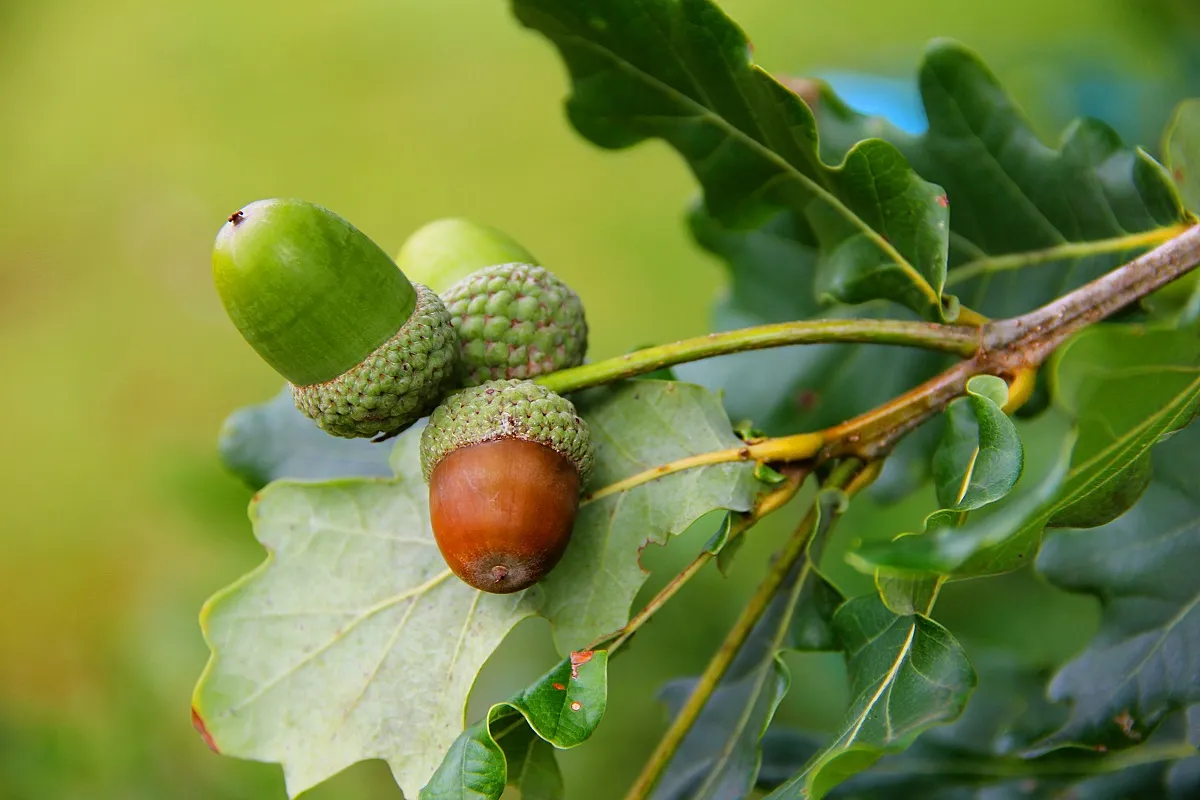
If your dog occasionally eats acorns while out on a walk, you should stop them from doing so straight away. Acorns, as well as the leaves and bark of the oak tree, contain so-called tannins. These are bitter plant compounds that protect the tree from being eaten by animals. They are dangerous for dogs and also for other animals such as cats, cows and horses.
As few as five to ten acorns are enough to poison a ten-kilogram dog.
Unlike acorns, chestnuts or pine cones are not poisonous to your dog. However, you should still take care, as your dog could swallow them.
The young, unripe green acorns are particularly poisonous for your pet!
Symptoms: What Are the Typical Signs of Poisoning in Dogs?
If your dog has eaten acorns, the symptoms will depend on how many they have ingested. The amount consumed determines whether your dog develops acorn poisoning and how severe it will be.
The following symptoms are typical signs of poisoning in dogs:
Reduced general condition (weakness) and staggering
If your dog has ingested a large dose of tannins, these can also damage the liver and kidneys. As a result, your dog’s mucous membranes (e.g. the lining of the mouth and the sclera of the eyes) may turn yellow – a condition vets refer to as jaundice (icterus).
When this happens, the damaged liver cells can no longer excrete sufficient bile acids, which then build up in the blood as yellow-brown pigments. Kidney failure can also prove fatal for your dog within a short period of time.
Treatment: How Is Acorn Poisoning in Dogs Treated?
Has your dog eaten acorns and is now showing signs of poisoning? Then head straight to the vet! They can make your dog vomit using special medication or pump out their stomach to remove any remaining contents and prevent further absorption of the toxins.
If your dog’s circulation has already collapsed, the vet can also initiate life-saving measures. As the toxins can damage your dog’s liver and kidneys, they should remain under veterinary observation for a few days as a precaution. This allows the vet to check the function of these vital organs daily using blood tests and begin treatment promptly if any abnormalities are detected.
You can find out what to do in the event of poisoning in dogs and which other plants are toxic to dogs in the following articles: Poisoning in dogs and Poisonous plants for dogs
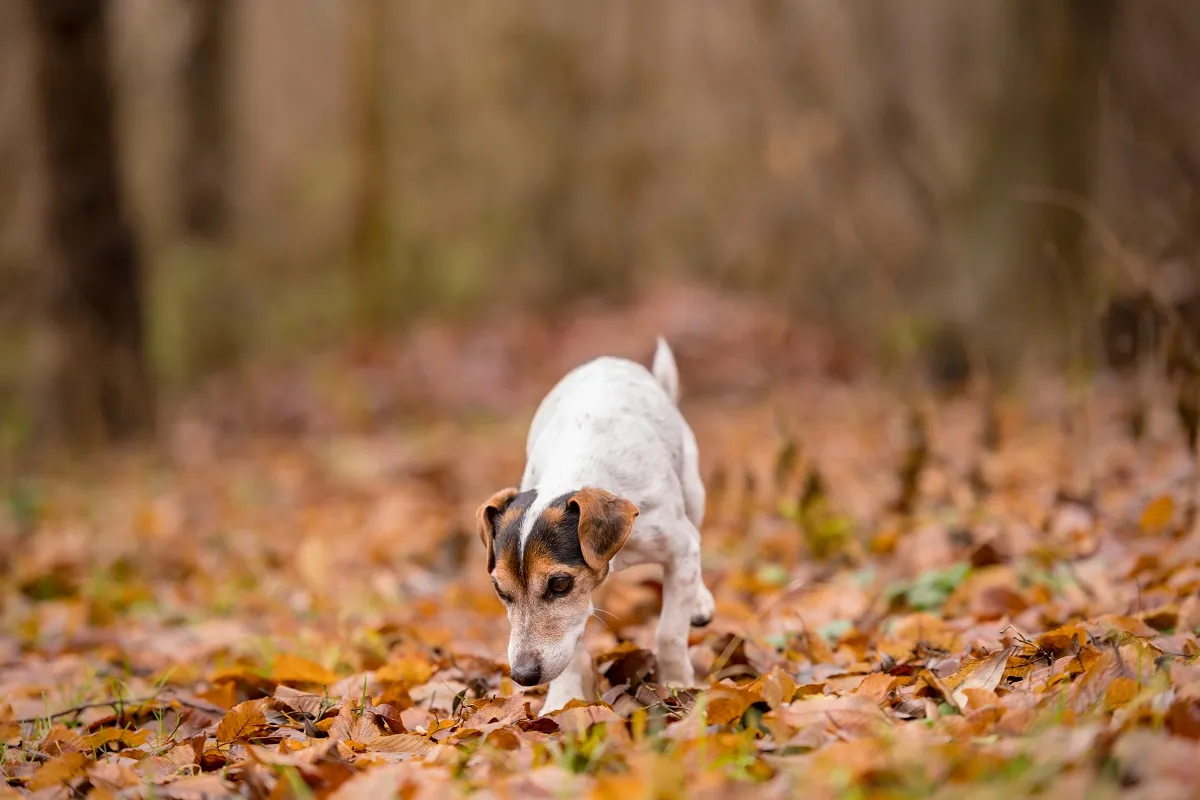
Pedigree tricolour Jack Russell Terrier. A sweet little dog follows a scent trail along a path between trees, grass and stones.
Warning: Acorns Are also a Danger to the Intestines!
In addition to their toxicity, swallowed acorns can also cause an intestinal blockage (ileus) in your dog. If your dog swallows acorns whole, they can become lodged in the intestines.
If the acorn obstructs digestion or constricts the intestinal wall and the blood vessels within it as a result of strangulation, your dog could die from the consequences.
Important signs of an intestinal blockage include sudden abdominal pain combined with bouts of weakness and panicked behaviour.
Important Note: The content provided for informational purposes only and is not intended to replace professional veterinary advice, diagnosis or treatment. If you have any questions or concerns about your pet's health, please always consult a licensed veterinarian.
This article was translated using Artificial Intelligence from the original German zooplus Magazine. While the original content was authored by industry experts and reviewed by our editorial team, this automated translation has not been human-edited and is provided for informational purposes.
At the Justus-Liebig-University of Giessen I was extensively trained as a veterinarian and was able to gain experience in various fields such as small animal, large animal and exotic animal medicine as well as pharmacology, pathology and food hygiene.
Since then, I have been working not only as a veterinary author, but also on my scientifically driven dissertation. My goal is to better protect animals from pathogenic bacterial organisms in the future.
Besides my veterinary knowledge, I also share my own experiences as a happy dog owner and can thus understand and enlighten fears and problems as well as other important questions about animal health.
When does a female dog’s first season begin? How often and for how long is a female dog in season? And what symptoms does a female dog in season show? Find out everything you need to know about these “hot days” and how you and your dog can get through the season calmly and stress-free in the following article.
16 February 2024 |Leishmaniasis is an infectious disease transmitted by sandflies and can often prove fatal for dogs. Find out how you can protect your dog and how to recognise and treat the disease should it emerge.
Neutering has traditionally been a standard veterinary practice, but is it universally recommended? What distinguishes neutering from sterilisation and what expenses should a dog owner anticipate? Here, you can discover all the essential information concerning the advantages and disadvantages of neutering your dog.