{"url":"https://www.zooplus.co.uk/magazine/cat/cat-health-and-care/a-guide-to-caring-for-a-blind-cat","title":"A Guide to Caring for a Blind Cat ","mag_id":399212,"is_single":true,"cat_name":"Cat","sub_cat_id":152,"sub_cat_name":"Cat Health and Care","cat_id":138}
Just as in humans, cats can become blind not only due to eye diseases but also through a natural decline in vision as they reach their twilight years. However, this by no means suggests that your furry pal can no longer relish life. Discover how you can support your blind cat in everyday life and what treatment options are available.
The clinical symptoms depend on the cause of the blindness and how much of its vision your cat has lost. Nonetheless, typical signs of blindness in cats include the following:
Your cat may occasionally bump into objects.
It may miss steps and stumble more often.
It gets startled by sudden loud noises.
Your feline friend is less active than before and climbs very little.
It appears confused in front of walls and cannot find its way out of rooms (disorientation).
If touched unexpectedly, it may startle and react with aggression or timidity.
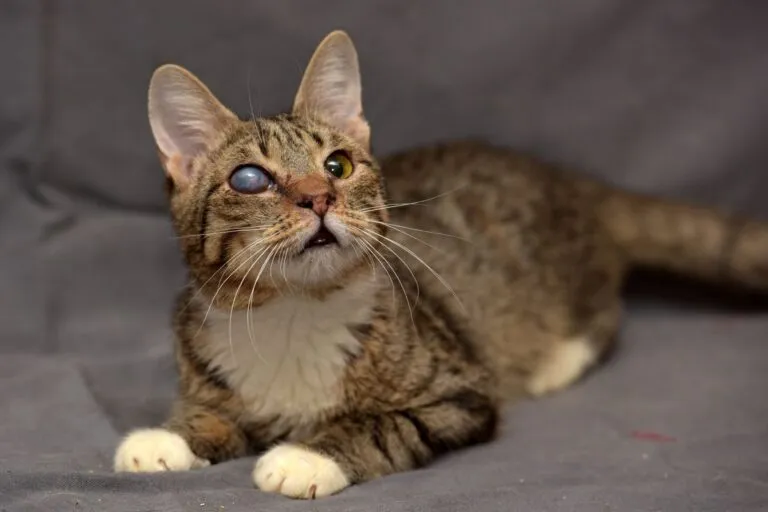
One or both eyes look cloudy.
The pupils may be excessively dilated.
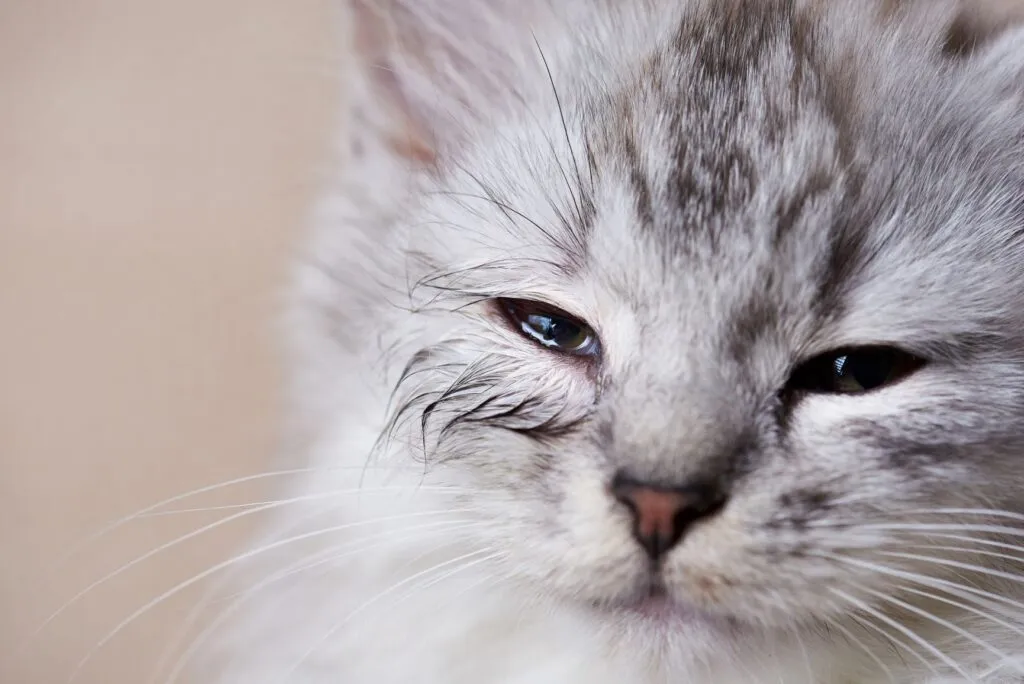
There might be pus-like, clear or yellowish discharge from its eyes (epiphora).
If your cat has sustained an injury or other structural changes occur, one eye may seem larger or smaller than the other eye.
Causes: What Triggers Blindness in Cats?
As cats age, the lens core naturally becomes cloudy. But what about younger cats? Here are the most common eye diseases in cats that can lead to blindness:
Cataract (Grey Star)
Some diseases cause the lens to cloud, preventing sunlight from reaching the back of the eye. In cats, cataracts can be congenital or acquired. The latter can occur, for example, when your cat injures its eye or suffers from a metabolic disorder. If your cat has diabetes mellitus, the blood sugar concentration is high and sugar deposits within the lens, which can lead to blindness.
Eye infections are often accompanied by discharge from the eyes.
Glaucoma (Green Star)
When the aqueous humour in the eye cannot drain properly, the intraocular pressure rises, leading to glaucoma. This eye disease can be very painful for cats in its advanced stages.
Retinal Detachment
The retina houses the cells that convert light into sensory signals. When the retina detaches, your cat can become blind. High blood pressure is the most common cause of retinal detachment in cats.
This often occurs if your furry companion has damaged kidneys (renal insufficiency) or suffers from hypertrophic cardiomyopathy (HCM), which causes the heart muscle to thicken abnormally.
Treatment: How Can Blind Cats Be Treated?
Depending on the underlying condition, there are various approaches to treating a blind cat:
Your veterinary eye specialist may be able to surgically treat cataract. However, your cat must meet certain criteria to undergo the procedure. Have your cat examined by your veterinarian for this.
Glaucoma requires immediate pressure-reducing eye drops and infusion therapy. Certain medications are also used to decrease the intraocular pressure permanently to prevent further irreversible damage. If medication is insufficient, your vet may recommend surgery.
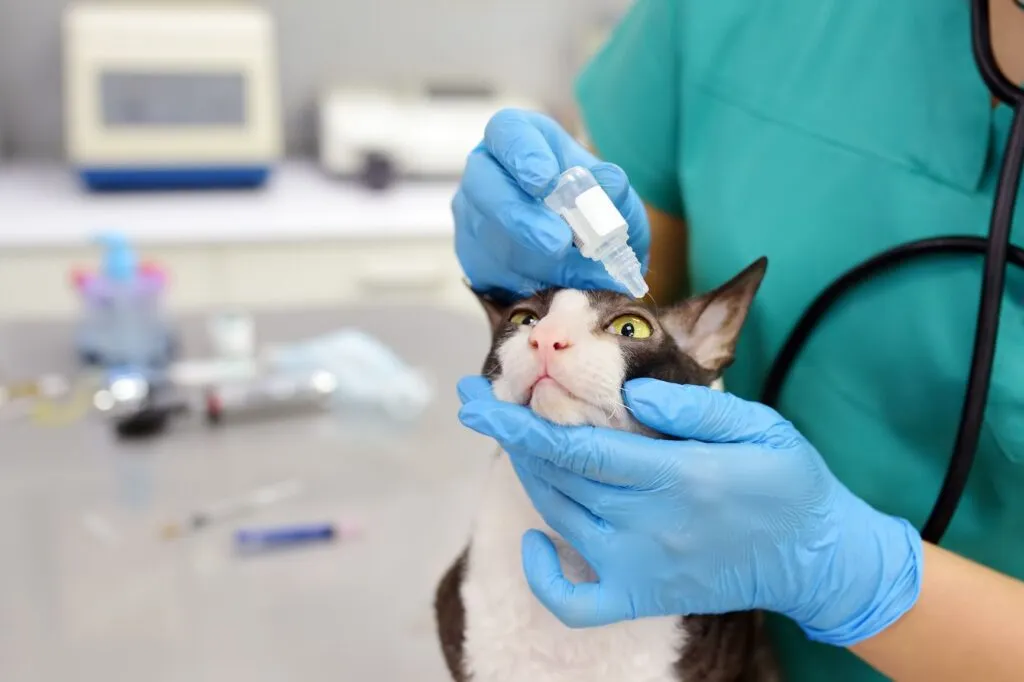
With the aid of eye drops, some eye diseases can be treated effectively.
To treat retinal detachment, the vet must first reduce the high blood pressure using specific medications that relieve the blood vessels and heart (pre-load and after-load reducers). In addition, feeding your cat special diet cat food to protect its kidneys can be beneficial in the long term.
Note: The choice of a suitable dietary feed can support your cat’s natural bodily functions. However, please be aware that dietary feeds cannot cure or prevent illnesses. Always discuss your cat’s nutrition with your vet. Special diet feed is available in the zooplus online shop.
Tips for Everyday Life with a Blind Cat
Caring for blind cats is different from looking after their sighted counterparts, but with a few tricks, you can make your blind cat’s life more comfortable:
1. Place Multiple Bowls for Your Blind Cat
Whenever possible, place a water bowl and food bowl in every room so your blind cat can eat and drink at any time. As it may have difficulty keeping the feeding area clean, you can use bowl mats.
2. Ensure Accessible Spaces
Cats are generally agile and enjoy climbing. To prevent injuries for your blind cat, it’s wise to make places like the litter box and sleeping areas easily accessible, perhaps by building small ramps.
3. Secure Hazardous Areas
Sharp corners on furniture like tables, dressers, or chairs can be dangerous. Ideally, cushion these edges with corner protectors (usually used for childproofing). Gates or other obstacles can also protect your cat from stairs and other hazards.
4. Offer Retreats for Your Blind Cat
Reliant entirely on hearing, touch, and scent, blind cats appreciate having a retreat in every room, especially if you have visitors or are watching television loudly.
5. Avoid Startling Noises
Always announce your presence gently when entering a room to avoid startling your cat. If you’re hosting a big event at home, consider using stress-relieving aids like pheromones, in consultation with your vet.
Find out more on this topic in the article: Pheromones for Cats
6. Close Doors and Windows
Cats (whether blind or not) can unfortunately get trapped in tilted windows. It’s crucial to lock windows and doors when leaving the room or secure them with grids or a tilt-window protector for a blind cat.
7. Limit Outdoor Access
If your feline has lost most of its vision, venturing outside could lead to injuries or becoming lost. Consider (partial) indoor living to protect your cat, but still offer indoor activities (e.g., toys or a scratching post).
If you do want to allow outdoor access, accompany your cat if possible, or take it into the garden for set periods. Additionally, secure both your garden and balcony to make them cat-safe.
Also label your cat’s collar with your address in case it wanders off and gets lost.
Important Note: The content provided for informational purposes only and is not intended to replace professional veterinary advice, diagnosis or treatment. If you have any questions or concerns about your pet's health, please always consult a licensed veterinarian.
At the Justus-Liebig-University of Giessen I was extensively trained as a veterinarian and was able to gain experience in various fields such as small animal, large animal and exotic animal medicine as well as pharmacology, pathology and food hygiene.
Since then, I have been working not only as a veterinary author, but also on my scientifically driven dissertation. My goal is to better protect animals from pathogenic bacterial organisms in the future.
Besides my veterinary knowledge, I also share my own experiences as a happy dog owner and can thus understand and enlighten fears and problems as well as other important questions about animal health.
It’s not just the right type of litter tray that will make your cat happy, but also the right type of cat litter. The best litters are ones that are very absorbent and ideally neutralise odours too, but finding the perfect cat litter can be no easy task with so many varieties on offer from natural clumping litter made of clay, non-clumping litter, litter made of wood or silica.
Are you worried because your ageing feline friend no longer responds to her name? Or are you wondering why your house cat can’t find her food bowl straight away? Your cat has probably reached a proud senior age and now needs special care. Find out how to spot the symptoms of senility in your cat early on and give her an age-appropriate life.
Coconut oil is very popular among cat owners as it provides natural protection from ticks and other parasites. In addition, this on-trend product is said to have numerous benefits. We will give you tips and information on how and when coconut oil can be a practical alternative to conventional remedies.