

11 min
2.6k
Medium Size Poodle
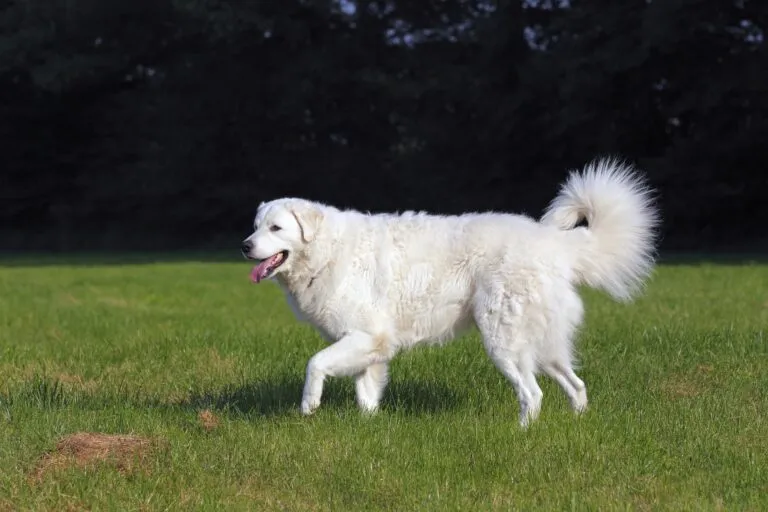
The Kuvasz, a large white shepherd dog of Asian origin, makes a wonderful companion for experienced dog owners who appreciate its independence and can offer plenty of space.
© imageBROKER / stock.adobe.com
The Kuvasz is a historic Hungarian guardian breed with Asian roots, once prized by nobility for protecting homes and assisting in hunting.
With their white, slightly wavy coat and large, well-proportioned build, Kuvasz dogs are an impressive sight that turns heads. Males often sport a “chest mane”, which is less pronounced in females. Beneath their striking coat, these dogs are muscular with a strong bone structure. A typical Kuvasz feature is the black-pigmented nose.
Males can reach up to 76 cm at the shoulder and weigh over 60 kg.
These shepherd dogs originally come from Asia and made their way to Hungary, which is officially recognised as their country of origin. The breed name translates roughly as “protector” or “guardian”. As early as the Middle Ages, these vigilant dogs were used for hunting, later becoming increasingly valued as guard dogs for homes, farms and herds.
During the reign of Hungarian King Matthias Corvinus in the 15th century, written records show that the Kuvasz was a favourite among the nobility, used for hunting wolves and bears. Their light-coloured coat – similar to the ivory-toned Komondor – made it easier to distinguish them from wolves at night.
Targeted Kuvasz breeding only began in the early 20th century, and almost came to a tragic end: in 1956, during the Hungarian uprising, many of these dogs defending homes and farms were shot. Even today, Kuvasz dogs are rare.
As a traditional shepherd and guard dog, the Kuvasz is independent, territorial and alert. The breed is also known for its strong loyalty and fearlessness, forming a close bond with its primary caregiver or human family. Within this circle, the Kuvasz is a loving companion for children and, if introduced to cats as a puppy, can also be a good feline friend.
Towards strangers, whether people or animals, he will always be suspicious to hostile within his territory, while remaining aloof on neutral ground. The breed requires a loving yet consistent upbringing, because as wonderful as a well-balanced Kuvasz can be, one that gets out of control can display a high level of aggression, which, given his size and speed, can have dangerous consequences.
 © Carola Schubbel / stock.adobe.com
The first eighteen months are crucial for shaping the personality of these large shepherd dogs. If a Kuvasz puppy joins your household, you’re in for a demanding yet incredibly exciting and rewarding time! A Kuvasz puppy should not be kept exclusively indoors or solely outdoors. He needs to be part of the family and exposed to a wide range of everyday stimuli – from vacuum cleaners to street noise – so he grows into a well-balanced dog who remains calm in daily situations.
This is especially important in terms of his guarding instincts, if you don’t want to raise a constant barker. Puppy play sessions are a great idea, helping your young Kuvasz meet other dogs and breeds and develop solid social skills. Friendships often form here – between dogs and between owners.
His independent thinking means that a Kuvasz is only truly trainable if he willingly accepts competent, strong and always non-violent leadership. He obeys primarily out of affection and respect for his “pack leader”, who must show consistent, calm authority without aggression.
In this case, the Kuvasz will willingly submit – which is essential – while still retaining his independence.
A Kuvasz enjoys long walks and, with the right training, can accompany riders as an adult. Otherwise, due to his size, he’s not particularly suited to dog sports. Training as a tracking or rescue dog is possible.
The best way to give a Kuvasz a fulfilling life is to provide him with a territory where he can independently pursue his favourite activity – guarding – while also being integrated into your family.
Large dogs eat more – but that’s not the only rule to follow when choosing food for your Kuvasz: for the sake of his health, treat your companion to food with a high meat content and without low-quality grains, so he can make the most of his meals.
High-quality proteins from muscle meat can help support the musculoskeletal system, which is under particular strain in large dogs. Pay special attention with puppies to ensure they receive food suitable for large-breed youngsters, as an excess of nutrients can cause muscles to grow faster than nature intended, potentially leading to skeletal problems.
Protect your dog from gastric torsion by feeding him after walks and then letting him rest – never encourage running games or vigorous rolling straight after meals.
In addition to the almost “typical” susceptibility of dogs this size to hip dysplasia (HD), members of the breed can be prone to skin problems. The best prevention for joint issues is to buy a puppy from a reputable breeder who carries out the necessary health checks and excludes HD-affected dogs from breeding.
Also make sure to avoid excess weight. For dental care, dental care snacks from specialist retailers and dried chews are suitable.
In good health, a Kuvasz can reach an impressive age of around 13 years for a dog of his size.
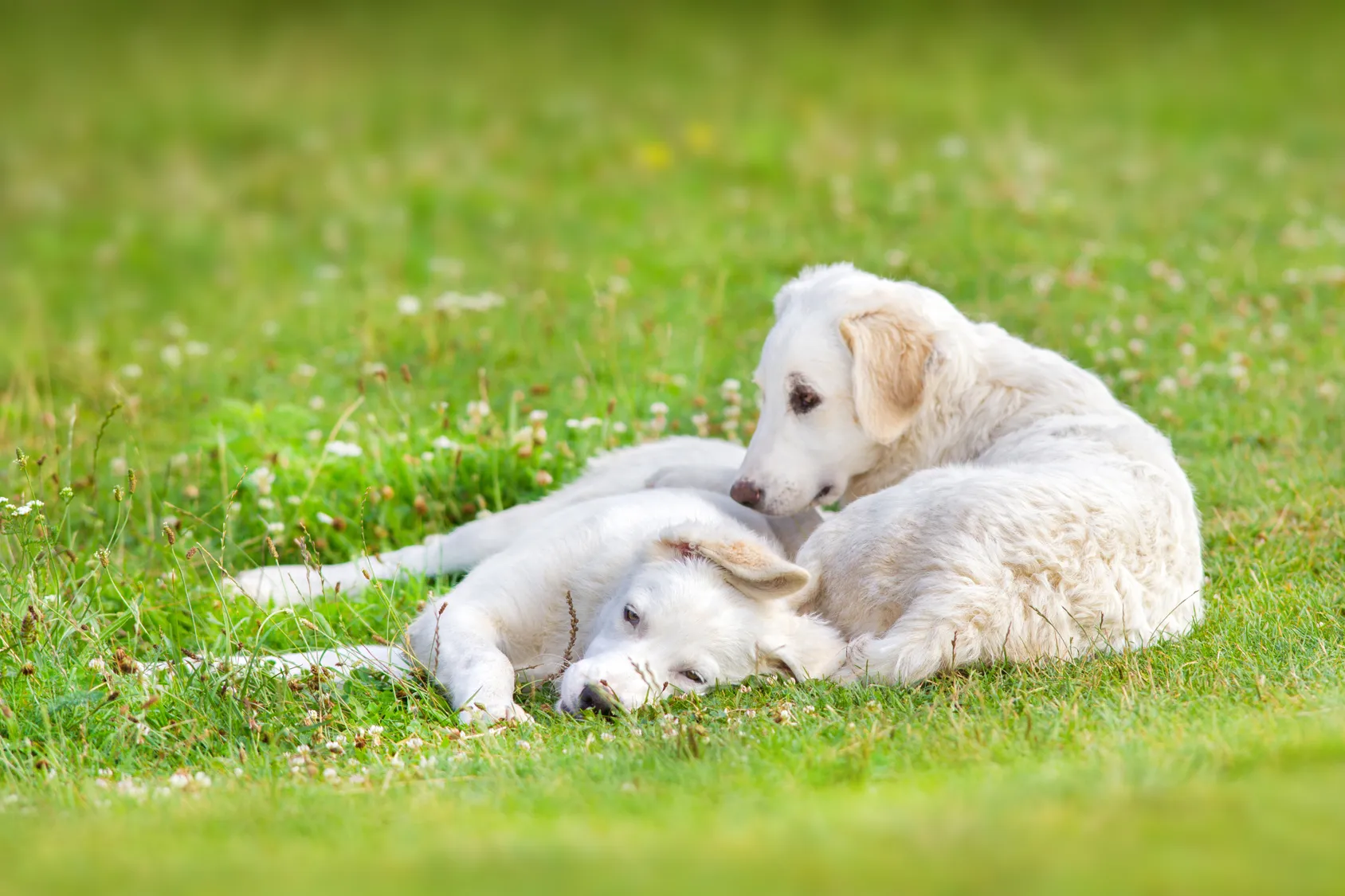
The Kuvasz’s dense coat is easy to care for, but this white giant won’t win over cleanliness fanatics, as he sheds quite a lot. Get your puppy used to brushing early on, and during the twice-yearly coat change, it’s best to brush daily to remove loose hair. This will help reduce the amount of hair on furniture and clothing, though you’ll never eliminate it completely.
However, don’t overdo grooming, as too frequent brushing can pull out the undercoat, which in turn increases shedding. As with many things in life, brushing should follow the rule: as much as necessary, as little as possible! Only bathe your Kuvasz in exceptional cases – dirt usually falls out of the coat once dry or comes away during brushing.
Check his ears regularly. And for human “grooming”, make the lint roller your constant companion and take stray hairs with a sense of humour – perhaps this thought will help: thanks to the wool-like nature of the undercoat, some owners have their dog’s brushed-out fur spun into yarn to knit cosy jumpers – a very special kind of matching outfit!
 © kwadrat70 / stock.adobe.com
The beauty and size of this breed appeal to many dog lovers, but only those with plenty of experience should consider welcoming a Kuvasz. Because, as balanced and reliable as members of the breed can become with professional and loving training, they are unforgiving of mistakes.
Experienced dog owners with ample space can enjoy having a Kuvasz as a loyal, intelligent companion with a strong character. This breed is absolutely unsuitable for kennel living. Before bringing a Kuvasz home, make sure you know who will care for him if you fall ill or go on holiday. Due to their territorial nature and size, these shepherd dogs are not ideal travel companions.
Also factor in, alongside the purchase price (plus costs for bowls, blankets, brushes, travel safety equipment, toys, lead, harness or collar), the ongoing expenses for high-quality food and routine vet check-ups. Veterinary costs can, of course, rise sharply in the event of acute or chronic illness.
Find out about dog taxes in your area and take out dog liability insurance.
Thanks to the internet, finding a Kuvasz puppy may seem easy at first glance. Avoid all unregistered breeders who are not members of a recognised club, as well as “accidental litters” or dogs from “we just wanted one litter” pairings. In both cases, you risk taking on a sick, poorly socialised dog with no knowledgeable background regarding breed standards.
True Kuvasz enthusiasts buy a puppy only from a competent breeder, visiting them at home to meet not only the puppies but also their surroundings and the parent dogs. All should appear healthy and well-balanced. Don’t hesitate to ask for the results of temperament tests or breed evaluations. A reputable breeder will be happy to advise you and work with you to find the puppy that best suits you.
When you collect your puppy, you’ll receive his vaccination record – he will have been wormed and microchipped – along with pedigree papers as proof of lineage.
If you’re looking for an older Kuvasz, you could check with organisations specialising in Hungarian shepherd dogs, which often rehome Kuvasz dogs who have lost their previous home for various reasons. In discussions with the rehoming organisation and during a meet-and-greet, you can decide together whether “the chemistry is right”.
Older dogs may, of course, come with baggage – for example, due to past training mistakes – but welcoming a dog with his own history can be very rewarding. However, before taking in your potential new housemate, be honest with yourself and, if necessary, consult an expert to assess whether your dog-handling skills are sufficient for that particular Kuvasz.
We wish you a wonderful time with your strong-charactered Kuvasz!

The zooplus editorial team consists of a dedicated team of experts with many years of experience in the field of animal husbandry: Luisa with her White Swiss Shepherd Elyos, Laura, Julio, and Florian. Together with a large network of animal experts, we work to make the zooplus magazine a trusted source of information for all animal owners and lovers. Our goal is to provide exciting animal knowledge and relevant information on the proper care of pets.
Fans of the Bearded Collie agree that those who aren't familiar with this dog breed simply have to get acquainted with it. And those who have experienced how a Bearded Collie bolts across meadows with its flowing fur, how it rolls around full of energy and joy and how it attentively and observantly takes into account its owners wishes become simply addicted to this original dog breed and its unique charm.
The Irish Wolfhound is one of the largest dogs in the world. Used for hunting wolves and bears in medieval Ireland, today it is kept exclusively as a family dog. Despite its imposing size, this sighthound is very gentle and affectionate. Unfortunately, the friendly giant is also quite prone to illness and has a comparatively short life expectancy. Is an Irish Wolfhound right for me, and what does keeping one involve? You can find everything you need to know in the following article.