

11 min
2.6k
Medium Size Poodle
It’s not just the Komondor’s extraordinary coat that makes him such a special companion – his personality is equally unique: This livestock guardian dog is highly independent and gets on well with experienced dog owners who appreciate his charming stubborn streak.
© SasaStock / stock.adobe.com
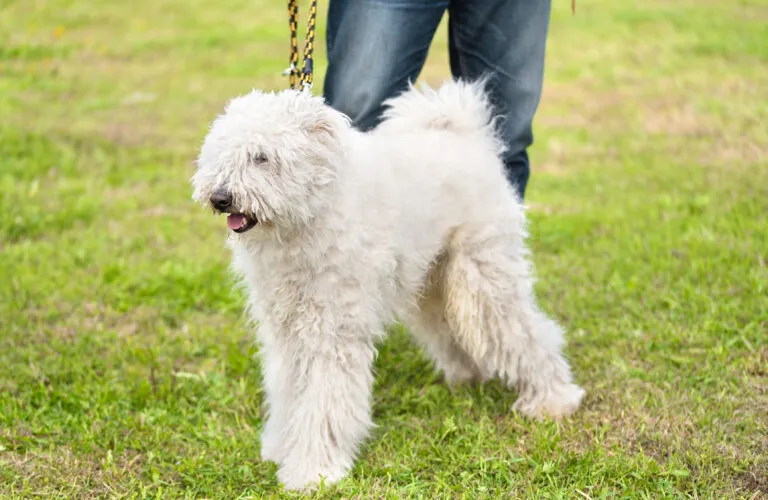
The Komondor is known for its shaggy, ivory-coloured coat that forms long cords, especially on the croup, loins and thighs. With its large size and striking coat texture, the breed is instantly recognisable.
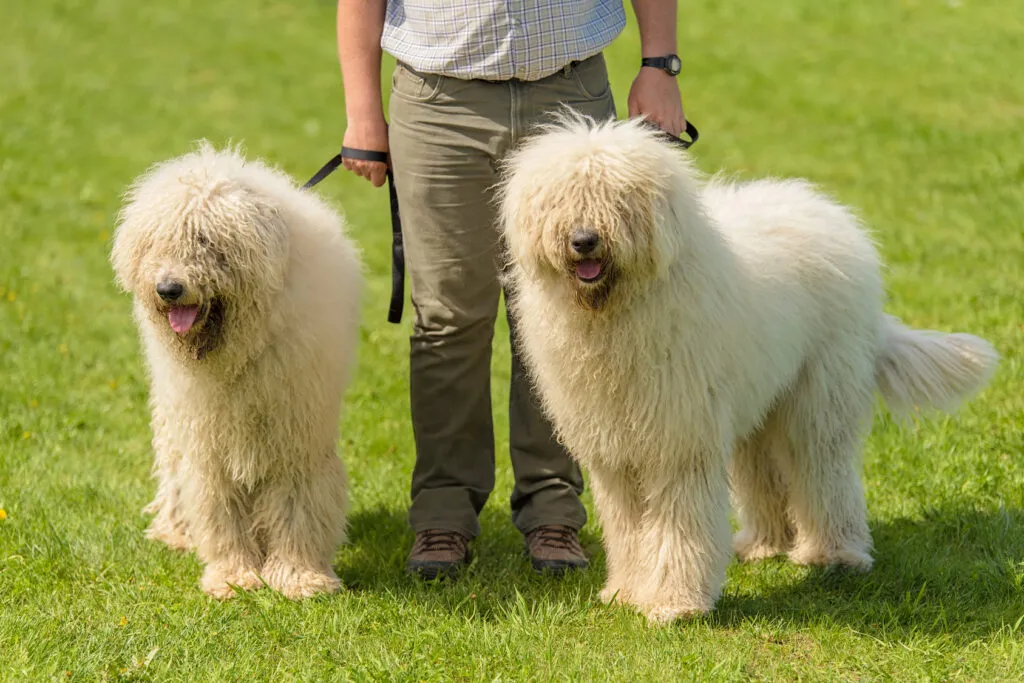
A Komondor is a real head-turner, with his shaggy, ivory-coloured coat covering his entire body – sometimes making it tricky to tell “front” from “back” at first glance. With his impressive mane, a height at the withers of up to 70 cm and a weight of around 50 kg, the Komondor is a striking figure. His coat consists of coarse outer hair and fine undercoat.
While some dogs have very shaggy coats, others in the breed have more wavy hair and “cords” rather than tassels. The longest hair grows on the croup, the loins and the back of the thighs.
The roots of this proud breed lie in Asia. From there, the first dogs arrived in Hungary in the 9th century with the Magyar steppe people, and Hungary is now considered the breed’s country of origin. Here too, these guardian dogs were used to watch over large herds of livestock, bravely defending them against wolves.
The Komondor was first mentioned by name in a source dating back to 1544.
For centuries, the breed has been renowned for its courage and strong protective instinct. The shaggy coat serves as protection against extreme weather and injury – some even say that the sheep-like appearance was intended to scare off wolves when the “sheep” suddenly launched an attack.
The modern breed standard was established in the early 20th century.
As an original livestock guardian dog, the Komondor is very independent and self-assured: Unlike “herding dogs”, “guardian dogs” such as this breed protect herds or territories entirely on their own. These dogs are usually highly territorial and will tolerate no strangers in their domain, yet behave neutrally outside it.
They are incorruptible and won’t be distracted by treats from strangers in their own territory. A Komondor rarely makes instant friends with unfamiliar dogs – early socialisation with other canines is especially important.
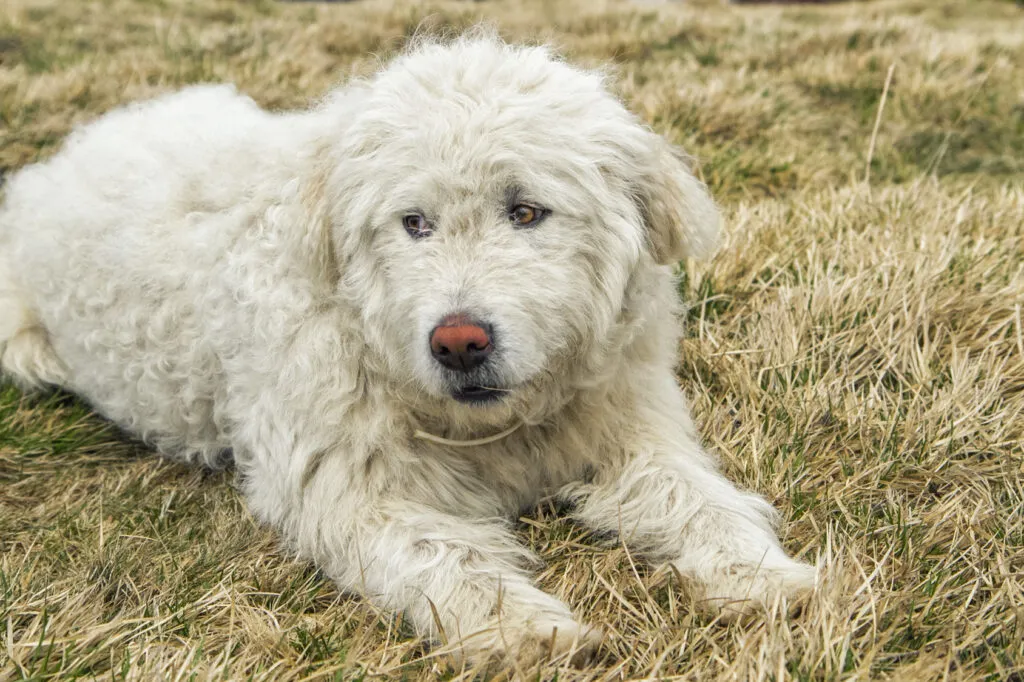
The breed exudes a dignified calm that can be deceptive, as in a serious situation this dog is lightning-fast in defending his area. If you can offer the Komondor a suitable home with plenty of space and knowledgeable training, you’ll have a charming, well-balanced companion who can make a good family dog.
 © Ivan / stock.adobe.com
This strong-willed and proud character calls for experienced owners who can train the noble dog with expertise and sensitivity, without demanding blind obedience. Only then will this strong-minded dog willingly cooperate.
He’ll happily take on tasks for you – provided he also sees them as worthwhile. The best foundation for a good upbringing is good socialisation, ensured by a knowledgeable and conscientious breeder. Dog training schools are an ideal addition, helping your pet to meet other dogs of all sizes and breeds early on.
Bear in mind that the Komondor is a late developer and won’t fully outgrow his youthful character until he’s nearly three years old.
Your Komondor will happily join you on long walks, but he doesn’t have a strong urge for physical activity. His favourite role is guarding the house and garden, a task he carries out independently. Canine sports don’t appeal to these shaggy dogs, and in any case, their size and abundant coat mean not every sport would be suitable.
Your Komondor will be content if you can offer him a large property and the chance to spend plenty of time each day with his human family or main caregiver. He doesn’t demand constant entertainment.
Especially on warm days, give your Komondor time to rest and schedule longer walks for the morning or evening.
When a Komondor first comes to live with you, it’s best to offer his usual food for a while so that the move isn’t accompanied by another change. If you then wish to alter his diet, do so gradually to avoid upsetting his sensitive stomach. The best approach is to mix a little more of the new food into his familiar food each day.
Like all large dogs, the Komondor is at greater risk of gastric torsion (bloat). You should therefore ensure he doesn’t gulp his food, or alternatively feed several small portions a day. Offering only dry food is considered a risk factor for bloat, as dry food swells in the stomach, meaning the feeling of fullness comes later. After meals, give your canine companion time to rest and avoid encouraging fast-paced play or vigorous exercise.
Ideally, feed grain-free dog food, as grains are harder for him to digest. A diet with a high meat content is generally more species-appropriate for your pet – so make sure meat is listed first in the ingredients and that no low-quality grains are included.
Be sparing with treats and regularly check your Komondor’s weight on a scale, so you can monitor any changes hidden under his abundant coat and take action promptly. Include treats in the calculation of his daily ration.
Dental care snacks from pet shops and dried chews such as cow ears can be a useful addition to your dog’s diet.
Like many large dogs, this breed has a slight tendency towards hip dysplasia (HD) as well as gastric torsion. When choosing a Komondor puppy, make sure the breeder takes health precautions seriously – meaning all breeding dogs have been tested for HD.
Without proper care, the dog’s magnificent coat can quickly lead to skin eczema if mats form or the skin is irritated by repeated bathing.
In good health, a Komondor can live to 13 years or more.
First of all: A well-groomed Komondor’s coat brings no disadvantages – in fact, it helps maintain a pleasant body climate. Despite its benefits and protective function, it’s clear that the long cords are dirt magnets, catching everything from spring flowers to twigs. Owners should check their dog daily for such hitchhikers.
Overall, grooming a Komondor’s coat takes time, but it also strengthens the bond between you and your furry friend, making it far more than just a chore.
The typical cords start forming in puppyhood – you should never brush the dog as a puppy, or later, as this would disrupt the natural “cord development”. Instead, when stroking him, run all your fingers through his coat and gently separate the cords along their natural lines to prevent matting. This “stroking grooming” is best done daily from puppyhood so the cords can develop optimally – ask your breeder to show you how.
When the dog is about a year old, matting begins. Each cord should be at least finger-thick so it doesn’t break easily. Pay special attention to the areas behind the ears and on the tail. Once the cords are fully formed, you only need to shape them by hand every two weeks – brushes should never be used on an adult Komondor’s coat! You can trim the hair on the inner thighs and around the genitals and anus to prevent urine or faeces from sticking.
Check the paws regularly and trim any matted hair there to avoid painful inflammation. Also, remove the fluffy hair inside the ears regularly to prevent skin problems. You can clean the ears with a special dog ear cleaner – never use cotton buds in your dog’s ears.
The easiest way to clean your Komondor is with a simple towel. This works particularly well if the dog is slightly damp from rain but not soaked. If your dog eats wet food, check after meals whether any has got caught in his beard cords and clean them with a damp towel if needed.
Bathing a Komondor is a demanding task best avoided unless absolutely necessary. The dog will be slow to dry, and afterwards his coat should be replenished with lanolin.
Even with daily grooming, a Komondor doesn’t necessarily smell more “doggy” than other canines, and thanks to his coat structure he doesn’t shed, though he may occasionally lose a cord. However, be aware that he’s not really a dog for cleanliness fanatics.
 © SasaStock / stock.adobe.com
Only dog lovers with plenty of experience and space should consider welcoming a Komondor. This guardian dog likes to patrol his territory independently – farms, large plots of land or at least a very large garden are ideal. Members of the breed thrive in open countryside and are not suited to city life. If he has an appropriate territory, he needs little in the way of extra occupation.
As independent as a Komondor may be, he still needs close contact with his human “pack”! Keeping these proud dogs in kennels is therefore strongly discouraged.
Before deciding on a Komondor, think carefully about how you’ll care for him when you travel: He prefers to stay in familiar surroundings, so ideally you’ll have family members or trusted dog-owning friends who can look after him while you’re away.
The breed often forms a particularly close bond with its main caregiver – so a boarding kennel would only be a last resort and could be distressing for this loyal dog.
Living with other pets such as cats usually works peacefully only if the puppies are accustomed to feline housemates – with unfamiliar cats, your dog will likely always be on the warpath. He will generally love and protect the children in his “human pack”.
However, be cautious when other children visit – the Komondor might misinterpret rough play and try to defend “his pack”! Also consider the ongoing financial commitments that come with owning a dog. In addition to initial purchases (bowls, toys, dog blankets or beds, lead, collar, car safety equipment), you’ll need to budget for high-quality, species-appropriate food for a dog weighing around 50 kg, as well as regular vet visits. If your dog falls ill, vet bills can quickly mount up.
Fans of Hungarian guardian dogs know that you’ll only get a genuine Komondor from a reputable breeder. Breeders who belong to a recognised club generally have the expertise and sense of responsibility to produce healthy, typical and well-socialised puppies from pairings with the right breeding goals.
Steer well clear of breeders without club membership or “accidental litters”, as those motivated mainly by profit or “just wanting puppies” often skimp on essential health checks for the parent dogs and on proper socialisation – which is especially important for an independent breed like the Komondor.
You can visit a reputable breeder at their home to meet the puppies and their parents. All dogs should appear healthy and well-balanced, with plenty of space available. The breeder will be happy to answer all your questions about their breeding, provide proof of the parents’ health checks, and will also ask you questions about your experience with dogs to ensure you can offer their charges a good home.
You’re unlikely to find such an exceptional dog as the Komondor at your local rescue centre, but if you’d prefer to welcome an adult Komondor, you can of course search online. Bear in mind that living with a “second-hand dog” may require extra experience. Through a detailed conversation with the rehoming organisation and ideally a first meeting, you can assess whether the “chemistry” between you and the dog is right – if so, adopting an adult Komondor can be a hugely rewarding experience for both sides!
We wish you a wonderful time with your extraordinary Komondor!
The zooplus editorial team consists of a dedicated team of experts with many years of experience in the field of animal husbandry: Luisa with her White Swiss Shepherd Elyos, Laura, Julio, and Florian. Together with a large network of animal experts, we work to make the zooplus magazine a trusted source of information for all animal owners and lovers. Our goal is to provide exciting animal knowledge and relevant information on the proper care of pets.
Fans of the Bearded Collie agree that those who aren't familiar with this dog breed simply have to get acquainted with it. And those who have experienced how a Bearded Collie bolts across meadows with its flowing fur, how it rolls around full of energy and joy and how it attentively and observantly takes into account its owners wishes become simply addicted to this original dog breed and its unique charm.
The Irish Wolfhound is one of the largest dogs in the world. Used for hunting wolves and bears in medieval Ireland, today it is kept exclusively as a family dog. Despite its imposing size, this sighthound is very gentle and affectionate. Unfortunately, the friendly giant is also quite prone to illness and has a comparatively short life expectancy. Is an Irish Wolfhound right for me, and what does keeping one involve? You can find everything you need to know in the following article.