

11 min
2.6k
Medium Size Poodle
Dogs of the Ciobănesc Românesc Mioritic type, or Mioritic for short, are commonly found in Romania, where they are popular working dogs for shepherds. Outside their homeland, they are very rare and efforts towards standardised breeding are still relatively recent.
© taviphoto / stock.adobe.com
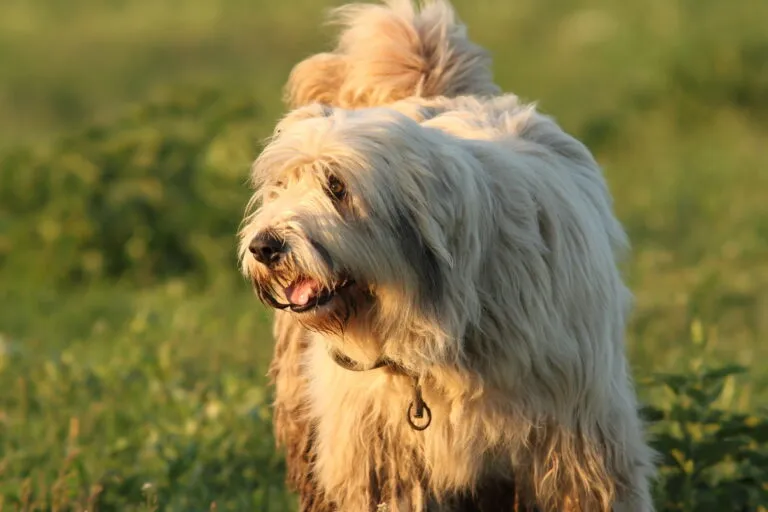
The loyal and fluffy Mioritic Romanian Shepherd Dog.
This impressive Romanian Shepherd Dog stands up to 75 cm at the shoulder, with males often being around 10 cm taller than females and, according to the breed standard, significantly more powerfully built. They weigh around 45 kg, while females are correspondingly lighter.
The Mioritic has a longer coat than its close relative, the Ciobănesc Românesc Carpatin: like many shepherd dogs, the Mioritic is adorned with a thick, abundant coat. The harsh top coat is at least 10 cm long, while the dense undercoat is soft and lighter in colour. The hair is shorter on the legs, while the tail is also heavily coated. In piebald dogs, the base colour is always white with clearly defined grey or black patches, while solid-coloured dogs are white or grey.
The roots of this Romanian Shepherd Dog lie in the Carpathian region – traditionally, this area of Romania has been home not only to numerous large flocks of sheep, but also to wolves. This is where the Mioritic comes in: for centuries, these large, calm shepherd dogs have protected flocks from wolves, as well as lynxes and bears, usually through their presence alone.
Suitability as a shepherd dog has always been the main focus in the development of the breed. Over time, however, two distinct Romanian Shepherd Dog types with characteristic traits emerged: the Ciobănesc Românesc Carpatin and the Ciobănesc Românesc Mioritic. As the name suggests, the Carpatin is more commonly found in the higher regions of the Carpathians, while the Mioritic tends to be found in the lowlands. Incidentally, the name “Mioritic” comes from the Romanian word “mioritica”, meaning “little sheep”. Even today, many shepherd dogs are still working as herding helpers in the Romanian lowlands.
Unfortunately, many are also kept as chained dogs – which is especially regrettable because the Mioritic loves close contact with its pack. While the breed is naturally quite widespread in its homeland, Mioritics are still unfamiliar to many dog lovers in other European countries. Controlled breeding efforts only began in the 20th century and were interrupted by the turmoil of the two World Wars. Romania has had an official breed standard since 1981, created by the Romanian Kennel Club. The FCI provisionally recognised the breed in 2005 and granted full recognition ten years later.
A Ciobănesc Românesc Mioritic generally radiates calmness. However, if danger approaches, this seemingly sleepy dog reacts in a flash and bravely defends the flock entrusted to it. Like many shepherd dogs, it shows great loyalty towards its pack and loves spending time together with them. The breed is also considered fond of children – just make sure your Mioritic can retreat when needed: it is a wonderful cuddle companion, but not a toy!
As closely bonded as this four-legged friend is with its people, it tends to be equally reserved towards strangers, announcing their presence in its territory with a deep bark. Behaviour towards other dogs can also be challenging, although this can be improved through extensive socialisation during puppyhood.
Anyone wanting to live with a Mioritic should have dog experience, extensive knowledge and plenty of consistency. Like many shepherd dogs, this breed has a stubborn streak and is used to thinking independently. It is therefore important to make it clear to your four-legged friend through consistent training that the human is the pack leader. With the Mioritic, the ritual of thorough grooming is particularly helpful here and should be practised calmly from puppyhood onwards.
After all, a dog that allows itself to be brushed is also accepting the dominance of the person brushing it – a very pleasant training method. The Mioritic sometimes takes a little longer than many other dogs to learn, but once it has understood something, it will retain it reliably. With the necessary knowledge and – just as importantly – the right level of activity, this eager-to-learn Romanian Shepherd Dog can become a dependable companion that always radiates calmness.
Mioritics are considered robust four-legged companions and efficient eaters. Your dog’s actual energy requirements are usually somewhat lower than the feeding recommendations stated by manufacturers. Check its weight regularly so you can adjust its food intake accordingly, and choose high-quality nutrition with a high meat content. Give puppies up to four meals a day, while two portions are sufficient for an adult Mioritic.
After meals, it is best to allow a digestion break – this helps protect your four-legged friend from dangerous gastric torsion. Dried chew treats such as cow ears, dried tripe and similar snacks are healthy treats for your Mioritic. With good care this breed can reach an age of 12 years or more.
You should get your Mioritic used to regular grooming from puppyhood so that it becomes a pleasant routine for the adult dog too. Brush your four-legged friend thoroughly once or twice a week, strand by strand. More frequent brushing is especially useful during shedding periods to thin out the dense undercoat and prevent matting. Pay particular attention to the areas under the armpits. In some places, using a comb as well is advisable because the hair is finer there and therefore more prone to tangling – for example around the ears.
A special ear cleaner is recommended for cleaning them. Depending on need, remove tear stains with a mild eye cleaner for dogs. You should also pay close attention to the paws once a week: are the claws too long? If so – something that occurs particularly in older dogs – trim them with dog nail clippers. If you are unsure, ask a vet to show you how to carry out your dog’s pedicure. Mioritics do not need baths – once dried, dirt can easily be brushed out of the coat.
Exploring and protecting wide open spaces – these are a Mioritic’s favourite everyday activities. Ideally, you should have plenty of land or at least a large garden where this intelligent four-legged friend can spend time independently. At the same time, it needs close family contact and enjoys plenty of cuddles. These dogs love long walks together through woods and fields in all weathers.
This combination of a large territory, lots of contact with its favourite humans and long walks forms the basis of a happy shepherd dog’s life. You can also try out other activities you both enjoy – but take care not to encourage young or untrained dogs to jump or run for long distances. On hot days, move all strenuous activities to the cooler hours of the day and always respect your companion’s independent character.
This breed, which developed over centuries in the Carpathians, feels most at home in wide open landscapes. Only dog lovers with a great deal of space – such as a farm or a large fenced property – and plenty of dog experience should consider offering a home to this independent breed. If you do not have a flock to guard, ask yourself honestly beforehand why you specifically want a dog of this breed. Finding a Mioritic from a reputable breeder can involve long journeys and extensive searching, which may already be a deciding factor for some people – especially as there are many other shepherd dog breeds that are easier to find.
Mioritics are considered very child-friendly and generally get along well with other pets too, especially if they have been properly socialised. It is usually easiest when young animals join the household – the livestock guardian dog will happily look after them, and a young cat is also more likely to warm to this shaggy but somewhat clumsy companion. You should also think carefully in advance about who could care for your Mioritic in the event of illness. When it comes to holidays, the easiest option is usually to take your four-legged friend with you – for example, a hiking holiday in the mountains is ideal. Alternatively, leave it in the care of someone it knows and trusts.
In addition to the costs involved when bringing home a Mioritic (the price of the dog itself, possible travel costs to distant breeders, and basic equipment such as bowls, collar, harness, lead, toys, dog blankets, grooming tools and a car safety restraint), you should also consider the ongoing costs of high-quality pet food, dog tax, third-party liability insurance and regular visits to the vet. Speaking of basic equipment: a Mioritic usually prefers a firm place to lie down, so a soft dog bed is not essential. It is best to provide several lightly insulated dog blankets.
This breed is rare in most countries outside Romania, although there are some dedicated breeders in its homeland. You should definitely contact one of them if you can and want to provide a Mioritic with everything it needs for a happy dog’s life. Unfortunately, Romanian Shepherd Dogs without pedigree papers are repeatedly offered internationally under descriptions such as “genuine Mioritics from Romania”.
At best, you may get a charming four-legged friend from the Carpathians, but at worst you could end up with an unsocialised and unhealthy animal. In that case, it will have very little in common with a true Mioritic. If you want a puppy, be sure to support the still relatively young controlled breeding efforts. These also focus on selecting dogs with suitable temperaments so that they can become pleasant companions in family life and not only in the vast Romanian countryside among sheep flocks.
The chances of finding an adult Mioritic through an animal rescue organisation or private rehoming service are comparatively very low. However, in international rescue organisations you may come across dogs of the Mioritic type, often former street dogs from Romania. While you certainly cannot expect them to meet the actual breed standards and should have at least as much experience as would be needed for a Mioritic itself, adopting one can still give a dog a new home and perhaps lead you to an amazing canine companion.
We wish you lots of joy with your Romanian Shepherd Dog!

The zooplus editorial team consists of a dedicated team of experts with many years of experience in the field of animal husbandry: Luisa with her White Swiss Shepherd Elyos, Laura, Julio, and Florian. Together with a large network of animal experts, we work to make the zooplus magazine a trusted source of information for all animal owners and lovers. Our goal is to provide exciting animal knowledge and relevant information on the proper care of pets.
Fans of the Bearded Collie agree that those who aren't familiar with this dog breed simply have to get acquainted with it. And those who have experienced how a Bearded Collie bolts across meadows with its flowing fur, how it rolls around full of energy and joy and how it attentively and observantly takes into account its owners wishes become simply addicted to this original dog breed and its unique charm.
The Irish Wolfhound is one of the largest dogs in the world. Used for hunting wolves and bears in medieval Ireland, today it is kept exclusively as a family dog. Despite its imposing size, this sighthound is very gentle and affectionate. Unfortunately, the friendly giant is also quite prone to illness and has a comparatively short life expectancy. Is an Irish Wolfhound right for me, and what does keeping one involve? You can find everything you need to know in the following article.