

11 min
2.6k
Medium Size Poodle
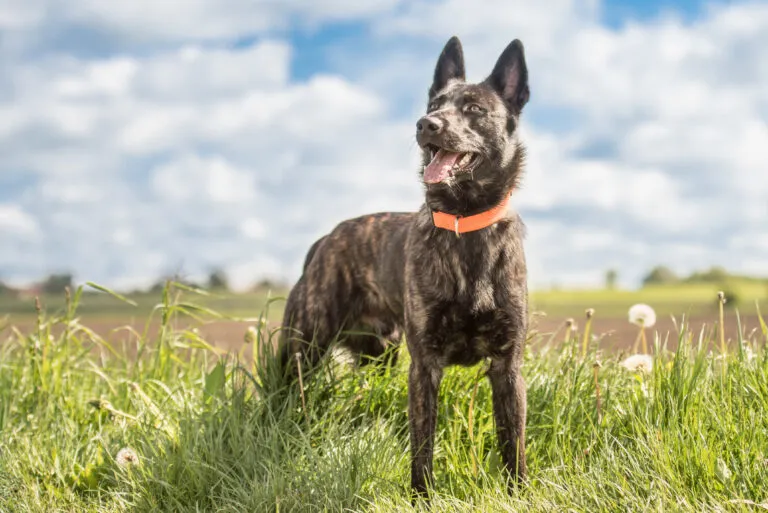
The Dutch Shepherd comes in three different coat varieties. Its talents are just as versatile, as it cuts a fine figure both as a diligent working dog and as part of a family. However, the lively temperament and high sensitivity of this breed require a delicate touch when it comes to training.
© K.Thalhofer / stock.adobe.com
The Dutch Shepherd is an intelligent and versatile herding dog.
The Dutch Shepherd, also known as the Hollandse Herder, is visually just as versatile as its character. Similar to the Belgian Shepherd, this medium-sized dog breed also comes in three varieties.
Depending on coat type and texture, this breed is divided into short-haired, long-haired and rough-haired dogs, which differ both in appearance and temperament:
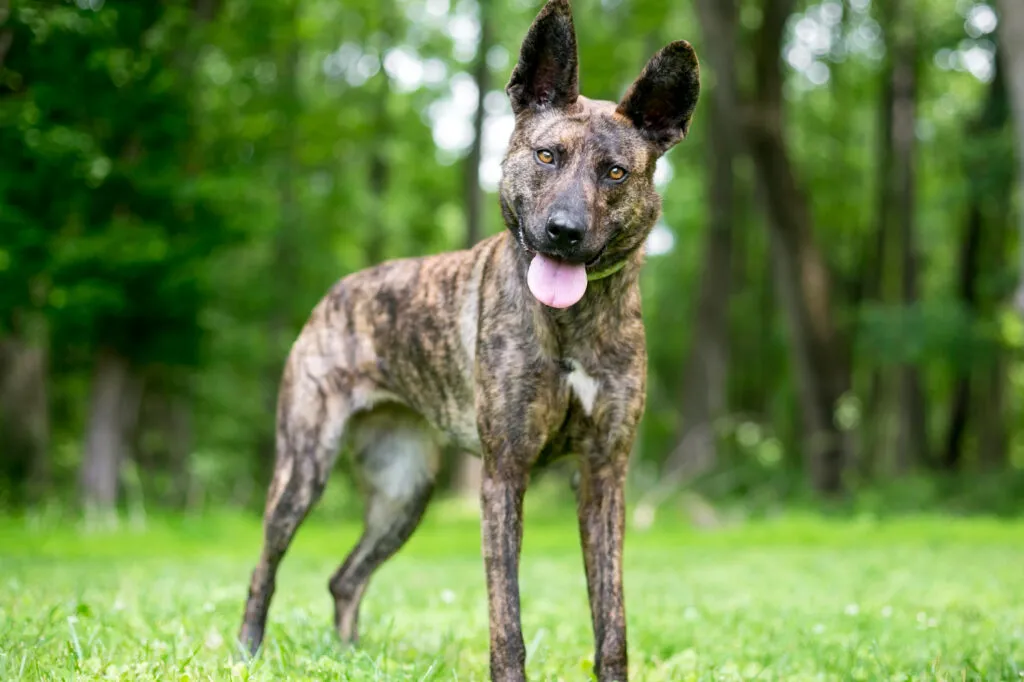
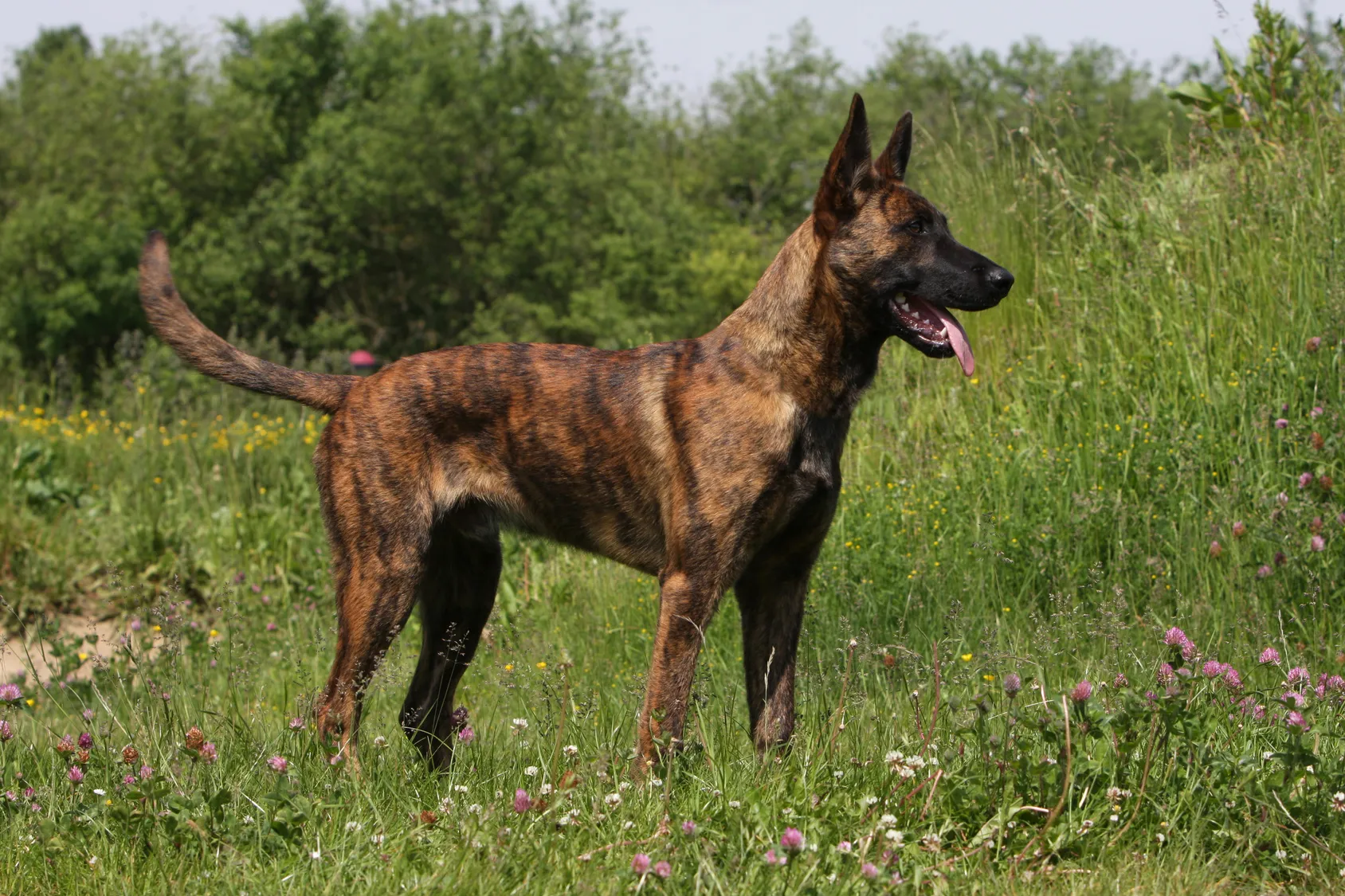
What all three varieties have in common is the brindle coat. Its golden and silver base tones range from light sand to dark chestnut red. In the rough-haired Herder Shepherd, colour variations such as blue-grey or pepper and salt may also occur in addition to golden and silver brindle.
 © Mary Swift / stock.adobe.com
With a shoulder height of up to 62 centimetres for males and up to 60 centimetres for females, all three varieties are classed as medium-sized to large dog breeds. The average weight ranges – depending on size and sex – between 23 and 30 kilograms.
The Dutch Shepherd has a powerful yet always well-proportioned build. Its wedge-shaped head, which can sometimes appear square in the rough-haired type, is in harmonious proportion to the body. The medium-sized ears visibly prick up when the dog is alert.
What is a Hollandse Herdershond?
Hollandse Herdershond is the Dutch name for this dog breed.
The Dutch Shepherd is a loyal, intelligent, alert and reliable four-legged companion that has everything you would expect from an excellent shepherd dog. This breed works willingly with its owner and is a true working dog.
However, owners should be aware that, due to its history, this pedigree dog acts very independently and has a certain amount of temperament. When herding large flocks of animals, its decisiveness and ability to work independently of the shepherd were highly valued – in everyday family life, however, these traits often get in the way. Without sufficient guidance, it is quite happy to take charge itself.
From an early age, the Dutch Shepherd needs a strong reference person at its side who guides it with kindness but also consistency. A clear hierarchy is important to this primitive breed. Within the family, it usually focuses on just one leader. While it respects other family members, the one who truly has the “say” is, in its eyes, the pack leader.
This intelligent dog does not, however, follow commands from its reference person unconditionally – it only becomes the obedient and compliant companion described in the standard with the right motivation.
Reading tip: Tips for puppy training
A treat or appreciative praise from its owner is usually sufficient motivation for the Herder. The prospect of an exciting game with mum or dad, or free play with other dogs, can also work wonders during training.
While training this breed is more demanding than with some other dogs, well-trained and appropriately kept individuals do not pose a danger.
The Hollandse Herderhond has a pronounced desire to work and proves to be an obedient and reliable helper in everyday life. To be happy, it needs to be challenged and kept busy.
Due to its high drive to work and energy level, keeping this dog in a flat is only suitable if it can spend plenty of time outdoors every day and get ample exercise and mental stimulation. Ideally, the Dutch Shepherd is best suited to a house with a garden.
Beginners are better off choosing a different breed: the Herder belongs in experienced hands and requires consistent training. Under these conditions, it can also be suitable as a family dog.
If you challenge and motivate your active four-legged friend both physically and mentally, you will be rewarded with a reliable, attentive and easy-to-handle dog that also gets on well with children and other dogs.
Grooming the Dutch Shepherd is generally associated with little effort. Even with the long-haired variety, it is sufficient to regularly brush the dog briefly or clean the coat with a cloth.
Only during the shedding season, which occurs twice a year, does the grooming effort increase. During this phase, you should remove loose hair at least once a day using a brush.
In addition, as with most dog breeds, it is necessary to
You can find accessories for grooming your four-legged friend in the zooplus shop.
With good training and the right preparation, the Dutch Shepherd is suitable for almost all areas of work – whether for the police and rescue services, as a guide or therapy dog or as a sporty family dog.
For a Dutch Shepherd to be completely content, you need to keep it sufficiently occupied both physically and mentally. As an original herding dog, this pedigree breed wants to work. It does not necessarily need to train as a police or guide dog – dog sports or shared activities such as cycling or jogging are also ideal.
In general, the Dutch Shepherd is a robust dog with no breed-specific diseases. However, like many shepherd dogs, larger individuals of this breed can suffer from joint problems such as hip dysplasia.
Always keep an eye on your dog’s wellbeing and visit your vet at least once a year to detect illnesses early. Then your furry friend can look forward to around 12 to 15 wonderful years of life.
The shared ancestors of the Hollandse Herderhond and the Belgian Shepherd come from the southern Netherlands, especially the region around Brabant and neighbouring Belgium. As early as the beginning of the 18th century, they served local farmers as herding and droving dogs.
With the separation of Belgium from the Netherlands, the previously uniform breed became two national dog breeds. Their nature and use, however, hardly changed, as for Dutch shepherds and farmers the dogs’ working ability was more important than pure breeding.
It was not until 1898 that the “Nederlandse Herdershonden Club” (N.H.C.) was founded, which sought to establish a uniform standard and promoted the Herder as a police and guide dog. As large flocks of sheep declined and heathland areas were transformed, Dutch Shepherds lost their original task.
Attempts to unite both shepherd dog breeds into a Belgian-Dutch Shepherd, the “Brabant Shepherd Dog”, failed among other things due to resistance from Belgium, which had already achieved great success with its national shepherd dog.
In 1960, the breed standard was limited to the three brindle coat varieties to distinguish it more clearly from its Belgian neighbour. Since then, the FCI has recognised the Hollandse Herderhond as an independent breed.
Official recognition brought the pedigree dog many new admirers and supporters, especially in its home country. Outside the Netherlands, however, the Dutch Shepherd is still relatively rare.
If you would like to adopt a Herder, you therefore need to expect waiting times. Use this time to inform yourself thoroughly about the breed and to find a reputable breeder.
Caution is advised if you are looking to buy an X-Herder. In these dogs, breeders cross in other breeds such as the Malinois or the X-Mechelaar. As a rule, an X-Herder does not have breeding papers.
Tip: With our questions for dog breeders, you will be well prepared for a personal conversation with the breeder of your choice.
 © Dogs / stock.adobe.com
This versatile shepherd dog from the Netherlands is the perfect companion for owners who already have experience with dogs, enjoy being active and are looking for an energetic and lively four-legged friend.
Anyone who enjoys spending lots of time with a unique dog and challenging it both mentally and physically will find in the Herder a reliable and tireless companion who will stand by their handler through thick and thin.
| Special features: | At heart, the Dutch Shepherd is a herding dog that is active and eager to work. Today, it is popular as a police or therapy dog. |
| Character: | loyal, alert, reliable, intelligent, independent |
| Height at the withers: | Males: up to 62 cm Females: up to 60 cm |
| Weight: | 23–30 kg |
| Coat: | short, long or rough-haired brindle, base tones of gold and silver with shades from light sand to dark chestnut red; in rough-haired Herders, colours such as blue-grey or pepper and salt also occur |
| Coat care: | easy, brush regularly, daily only during shedding |
| Exercise: | needs plenty of exercise and mental stimulation |
| Suitable for beginners: | not suitable for beginners |
| Barking: | rarely barks |
| Life expectancy: | approx. 12–15 years |
| Typical illnesses: | no known hereditary diseases, prone to joint problems |
| FCI group: | 1 |
| Origin: | Netherlands |

The zooplus editorial team consists of a dedicated team of experts with many years of experience in the field of animal husbandry: Luisa with her White Swiss Shepherd Elyos, Laura, Julio, and Florian. Together with a large network of animal experts, we work to make the zooplus magazine a trusted source of information for all animal owners and lovers. Our goal is to provide exciting animal knowledge and relevant information on the proper care of pets.
Fans of the Bearded Collie agree that those who aren't familiar with this dog breed simply have to get acquainted with it. And those who have experienced how a Bearded Collie bolts across meadows with its flowing fur, how it rolls around full of energy and joy and how it attentively and observantly takes into account its owners wishes become simply addicted to this original dog breed and its unique charm.
The Irish Wolfhound is one of the largest dogs in the world. Used for hunting wolves and bears in medieval Ireland, today it is kept exclusively as a family dog. Despite its imposing size, this sighthound is very gentle and affectionate. Unfortunately, the friendly giant is also quite prone to illness and has a comparatively short life expectancy. Is an Irish Wolfhound right for me, and what does keeping one involve? You can find everything you need to know in the following article.