{"url":"https://www.zooplus.co.uk/magazine/cat/cat-health-and-care/polydactyly-in-cats-having-extra-toes","title":"Polydactyly in Cats (Having Extra Toes)","mag_id":413132,"is_single":true,"cat_name":"Cat","sub_cat_id":152,"sub_cat_name":"Cat Health and Care","cat_id":138}
Have you discovered a kitten in your litter with one toe too many? Then you certainly haven’t miscounted. It may be that your little companion is polydactyl, meaning they have more toes than usual. Find out here what polydactyly in cats means for their health and what else you should know about this controversial topic.
Breeding “Polys” – Unethical Breeding or Advantage?
Breeding with so-called “Polys” is highly controversial. Some, however, do not see polydactyly in cats as a flaw but rather as an advantage. They believe that affected house cats can climb and grip better, giving them an edge over cats with a “normal” number of toes when hunting. In America, some breeders even selectively breed for polydactyly – specifically in the “Superscratcher” cat breed.
Symptoms: What Are the Signs of Polydactyly in Cats?
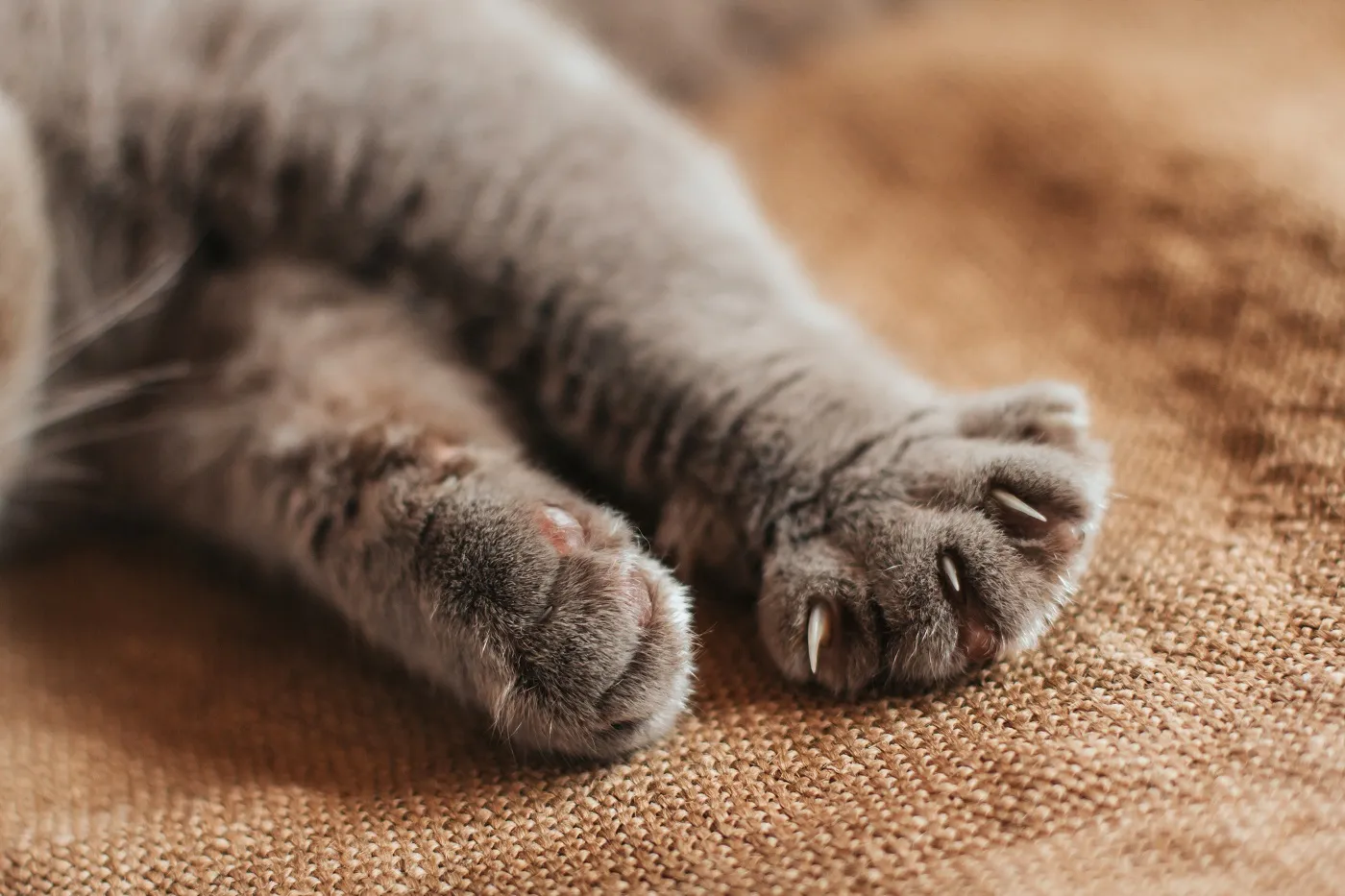
Cats with polydactyly usually have six toes at the front and five at the back instead of the usual five front toes and four hind toes – in other words, one extra toe on each paw.
However, the expression of this trait can vary. The gene may cause an extra toe to grow on all limbs, or only one paw may be affected. In rarer cases, more than one additional toe can develop. The Guinness World Records, for example, reports on a tomcat named Jake who is said to have had 28 toes instead of the usual 18.
If your cat also has one or more extra toes, this is not painful for them. In rare cases, a claw may tear and become inflamed. As a rule, however, serious complications do not occur.
Depending on where the additional digit is positioned on the paw, specialists divide polydactyly in cats into two different forms:
1. The Mitten Form
This term comes from English (“mitten”) and means something like “boxing glove” or “mitten”. In this case, the inherited gene mutation affects the inner side of the paw. Instead of a dewclaw on the front paws, polydactyl cats have a thumb.
2. The Patty-Foot Form
The cat’s paw appears round, like a hamburger patty. The reason: the poly gene causes the toe to grow either in the middle of the paw or on the outside.
The cause of polydactyly in cats is a specific gene mutation that is inherited in an autosomal dominant manner. A cat’s genetic make-up normally dictates that they have a total of 18 toes on their front and hind paws. If the gene responsible for this is altered, the number of toes changes accordingly.
Polydactyly is particularly common in the cat breed Maine Coon. Various sources state that 40% of the original Maine Coon type had one extra toe.
Good to know: As the cat of the world-famous writer Ernest Hemingway was also a poly, polydactyl cats came to be known as “Hemingway cats”. Cats with an extra toe on at least two paws are also referred to as “ship’s cats”.
The breed Pixiebob is also known for its frequent occurrence of polydactyly. Unlike the Maine Coon, however, polydactyly in the Pixiebob is recognised as part of the official breed standard by TICA (The International Cat Association).
You Might also Be Interested in These Similar Topics
Important Note: The content provided for informational purposes only and is not intended to replace professional veterinary advice, diagnosis or treatment. If you have any questions or concerns about your pet's health, please always consult a licensed veterinarian.
This article was translated using Artificial Intelligence from the original German zooplus Magazine. While the original content was authored by industry experts and reviewed by our editorial team, this automated translation has not been human-edited and is provided for informational purposes.
At the Justus-Liebig-University of Giessen I was extensively trained as a veterinarian and was able to gain experience in various fields such as small animal, large animal and exotic animal medicine as well as pharmacology, pathology and food hygiene.
Since then, I have been working not only as a veterinary author, but also on my scientifically driven dissertation. My goal is to better protect animals from pathogenic bacterial organisms in the future.
Besides my veterinary knowledge, I also share my own experiences as a happy dog owner and can thus understand and enlighten fears and problems as well as other important questions about animal health.
Teacup cats are so small that they fit in a teacup – even when they are fully grown up. However, these tiny cats pay for their cute appearance with severe health problems.
Red, white and black – the calico cat immediately stands out with its tricolour fur. How does this special fur pattern emerge? Why are almost all calico cats female? Do they really bring good fortune? Read the answers to these questions in this article.