{"url":"https://www.zooplus.co.uk/magazine/cat/cat-health-and-care/pain-relief-for-cats-what-you-need-to-know","title":"Pain Relief for Cats: What You Need to Know","mag_id":417751,"is_single":true,"cat_name":"Cat","sub_cat_id":152,"sub_cat_name":"Cat Health and Care","cat_id":138}
Pain relief for cats is used for injuries, organ diseases or after operations. This article summarises which active ingredients can help your cat with different types of pain and what you should keep in mind when giving pain medication.
Even though this understanding is still fairly new: pets such as dogs and cats feel pain just like we humans do. That is why more and more painkillers (analgesics) for relieving pain in cats have been approved in veterinary medicine over recent decades.
There are various situations in which giving pain relief to cats makes sense. Vets may prescribe it as part of treatment or use it for diagnostic purposes.
Pain relief for cats is particularly common in the following cases:
acute (sudden) pain, for example shortly after an injury
chronic (long-lasting) pain, such as with osteoarthritis
for painful underlying illnesses such as cancer
during (perioperative) or after (postoperative) an operation
Groups of Active Ingredients: What Pain Relief Can You Give Cats?
Before giving pain relief, it is important to know which active ingredients are approved for cats and when they should be used. There is generally no single best painkiller. The choice of active ingredient depends much more on individual factors.
Glucocorticoids
Glucocorticoids do not relieve pain directly, but they have anti-inflammatory and decongestant effects. They are therefore mainly used for inflammatory and chronic degenerative joint diseases such as arthritis. They also help with pain caused by tumours.
Examples:
Dexamethasone
Methylprednisolone
Prednisolone
Prednisone
Opioids
An opioid, also called an opioid analgesic, is a strong painkiller for cats. However, opioids also affect the circulatory system. How strongly they work depends on the type of active ingredient. A distinction is made between:
pure agonists,
antagonists,
agonist-antagonists or
partial agonists.
Opioids are commonly used in veterinary medicine to relieve perioperative pain. There is one particular feature in cats: opioids, and especially butorphanol, can at least temporarily lead to an increased body temperature (hyperthermia).
Examples:
Buprenorphine
Butorphanol
Codeine
Fentanyl
Morphine
Tramadol
Non-opioids
Non-opioids are divided into different categories.
α2 agonists
α2 agonists are painkillers that also have a sedative, calming and hypnotic effect. Vets use these medicines during operations because they enhance the effects of anaesthetics such as ketamine.
Compared to other analgesics, α2 agonists are not especially effective at relieving pain. They should therefore not be used as the sole treatment for severe pain.
Cats are very sensitive to α2 agonists and quickly react with vomiting.
Examples:
Dexmedetomidine
Medetomidine
Xylazine
NSAIDs (Non-Steroidal Anti-Inflammatory Drugs)
NSAIDs have anti-inflammatory and pain-relieving effects. They are typically suitable for pain relief during an operation. However, NSAIDs can also help with joint problems or acute pain.
Compared to dogs, cats react more strongly to NSAIDs, which means they have a higher risk of side effects.
Examples:
Carprofen
Meloxicam
Robenacoxib
Tolfenamic acid
Special Case: Metamizole
Metamizole is a special NSAID that has a strong effect on the central nervous system. Unlike conventional NSAIDs, metamizole does not reach peripheral areas such as the joints, kidneys or stomach lining.
For this reason, this active ingredient is generally considered to have few side effects, although additives such as phenol can cause side effects in cats.
This active ingredient is suitable for perioperative pain treatment and for managing severe pain in high-risk patients.
This class of active ingredients is suitable for pain relief during minor surgical procedures and for somatic pain. The latter can, for example, be caused by burns.
Example: Ketamine
Local Anaesthetics
Local anaesthetics are locally acting painkillers. They provide temporary freedom from pain in a specific area around the injection site.
The cat remains conscious. For this reason, local anaesthetics are considered to have few side effects.
Examples:
Bupivacaine
Lidocaine
Mepivacaine
Ropivacaine
Monoclonal Antibodies
Monoclonal antibodies are something of a new development in the world of pain relief. For cats, they have only been available since 2021 in the form of the medicine frunevetmab.
These substances are said to cause significantly fewer side effects than other classes of medication while still providing good pain relief.
Ibuprofen, Paracetamol & Co.: Can You Give Cats Medicines Made for Humans?
If your cat is in pain, the question quickly arises whether painkillers for humans are also suitable for cats. There is only one answer to this: Never give your sick cat painkillers from your own medicine cabinet without veterinary advice.
While ibuprofen or paracetamol may bring you quick relief, these medicines are highly toxic for your cat. Even small doses can kill animals or cause severe damage.
Can Home Remedies Be Used as Pain Relief for Cats?
This is also not recommended. Home remedies such as camomile do not help to relieve pain in cats in a controlled and reliable way.
Do Painkillers Cause Side Effects in Cats?
Whether and which side effects painkillers cause in cats depends on various factors. The choice of active ingredient and the dosage play a particularly important role. The most common side effects caused by painkillers include:
Note: Even though painkillers can always cause side effects, their use under veterinary guidance is appropriate when a cat is in pain.
Administration: What You Should Keep in Mind When Giving Painkillers
As a cat owner, there are a few things you need to bear in mind when giving pain medication.
My Cat Refuses to Eat Pain Tablets, What Can I Do?
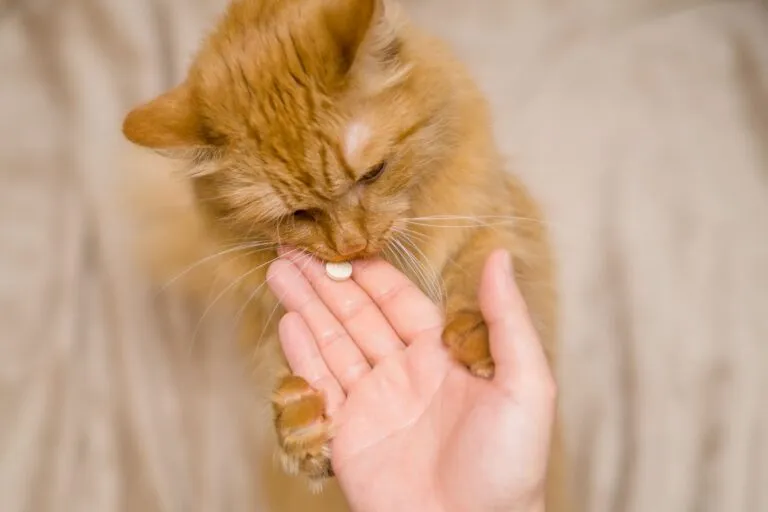
It is not uncommon for cats to outright refuse to eat tablets. Nevertheless, it is important that your cat takes the pills properly to relieve its pain.
How to get your cat to swallow pain tablets:
Hide the tablet in a treat your cat particularly likes. This could, for example, be a little liver pâté.
Ask your vet or check the package leaflet to see whether you can dissolve the tablets in water. If so, you can draw up the solution with a normal syringe (without a needle) and give it into the side of your cat’s mouth.
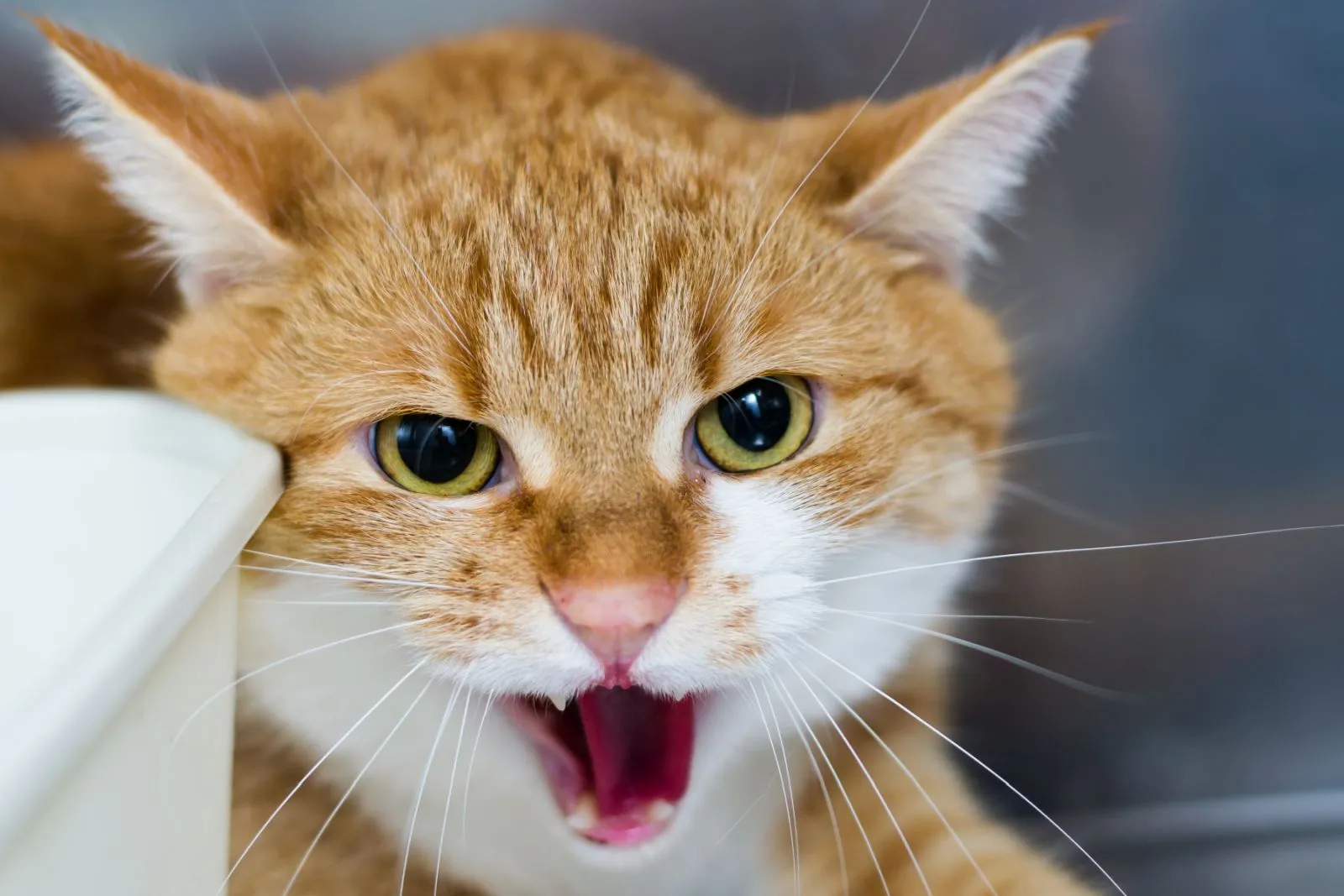
Even if your cat is normally very gentle: pain can turn even the sweetest cat into a tiger.
If your cat still refuses to take the medication and there is a risk of injury for either of you, you should stop trying to give the tablet. Discuss with your vet the best way to administer the tablet.
If a cat is in pain, aggressive behaviour can be a possible reaction.
Dosage: How Much Pain Relief Does My Cat Need?
Paying attention to the correct dosage of painkillers is important for your cat’s health. An incorrect dose of pain medication can have serious consequences.
If you give your cat too little pain relief, you cannot expect sufficient pain management. However, if you give too much, severe side effects and, in the worst case, serious poisoning may result.
For this reason, the number one rule is: follow the instructions in the package leaflet and from your vet.
My Cat Has Had Too Many Painkillers
It can happen that you accidentally give your cat too much pain medication. If this happens, it is important to act quickly and contact your vet. They can assess whether it is necessary to make your cat vomit or pump its stomach.
Are There Over-The-Counter Painkillers for Cats?
Pain relief for cats is available to buy without a prescription. As a rule, over-the-counter painkillers for cats work homeopathically and are plant-based, with the aim of relieving pain.
Note: Compared to prescription painkillers, over-the-counter pain relief for cats is weaker. Nevertheless, you should never give your cat medication without discussing it with your vet first.
Important Note: The content provided for informational purposes only and is not intended to replace professional veterinary advice, diagnosis or treatment. If you have any questions or concerns about your pet's health, please always consult a licensed veterinarian.
This article was translated using Artificial Intelligence from the original German zooplus Magazine. While the original content was authored by industry experts and reviewed by our editorial team, this automated translation has not been human-edited and is provided for informational purposes.
At the Justus-Liebig-University of Giessen I was extensively trained as a veterinarian and was able to gain experience in various fields such as small animal, large animal and exotic animal medicine as well as pharmacology, pathology and food hygiene.
Since then, I have been working not only as a veterinary author, but also on my scientifically driven dissertation. My goal is to better protect animals from pathogenic bacterial organisms in the future.
Besides my veterinary knowledge, I also share my own experiences as a happy dog owner and can thus understand and enlighten fears and problems as well as other important questions about animal health.
It’s not just the right type of litter tray that will make your cat happy, but also the right type of cat litter. The best litters are ones that are very absorbent and ideally neutralise odours too, but finding the perfect cat litter can be no easy task with so many varieties on offer from natural clumping litter made of clay, non-clumping litter, litter made of wood or silica.
Are you worried because your ageing feline friend no longer responds to her name? Or are you wondering why your house cat can’t find her food bowl straight away? Your cat has probably reached a proud senior age and now needs special care. Find out how to spot the symptoms of senility in your cat early on and give her an age-appropriate life.
Coconut oil is very popular among cat owners as it provides natural protection from ticks and other parasites. In addition, this on-trend product is said to have numerous benefits. We will give you tips and information on how and when coconut oil can be a practical alternative to conventional remedies.