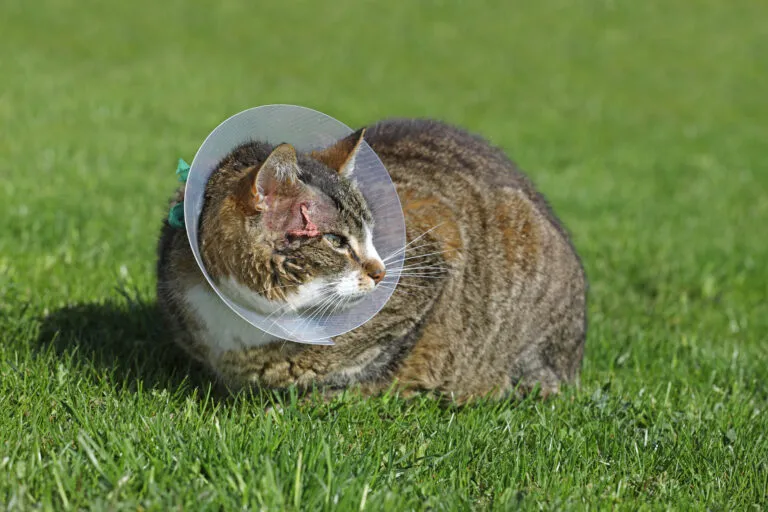
An Elizabethan collar protects the wound after the operation.
Causes: How Does An Abscess Develop in Cats?
An abscess (pus-filled swelling) is an inflammation in which pus forms in cavities within the tissue. The pus becomes encapsulated by connective tissue, separating it from the surrounding tissue.
Bacterial Infections as a Trigger
The pus develops as cells break down during the inflammatory process, which in cats is often caused by bacterial infections. Sterile, non-infectious abscesses are less common.
In general, pus-filled swellings in cats can form in any organ. Common bacteria involved in cats include environmental germs such as staphylococci. However, bacteria such as Clostridia or Escherichia coli can also lead to abscesses in cats.
How Do Abscesses Develop in Cats?
These germs usually enter the cat’s body through the following routes:
- Open wounds: In outdoor cats, bite injuries are the most common cause of an abscess. However, bacteria can also enter the skin through other open wounds.
- Bloodstream: In cats, blood poisoning (sepsis) can develop from small wounds or inflammation of the umbilicus in kittens. The bacteria are spread throughout the body via the bloodstream. This can lead to abscesses in internal organs (e.g. the liver).
- Dental disease: Cats often suffer from gum inflammation (gingivitis) or inflammation of the structures supporting the teeth (periodontitis). As there are many bacteria in the mouth, these can quickly spread via the tooth root into the cat’s jaw.
- Inhaling foreign bodies: Outdoor cats sometimes inhale grasses or grass awns, which become lodged in the lungs due to their barbed structure. As they can carry a wide range of environmental germs, they may lead to pus-filled swellings in the lungs.
Did you know? Incidentally, the encapsulation is what distinguishes an abscess from an empyema. This refers to a build-up of pus in natural body cavities such as joint cavities or hollow organs (e.g. the uterus).
Symptoms: What Does An Abscess in Cats Look Like?
A typical sign of an abscess in cats is the development of a lump. Initially, this causes redness and swelling in the affected tissue. Naturally, this is not visible if the abscess is located in an internal organ.
How Do Cats Behave When They Have an Abscess?
The affected area then becomes painful and sensitive to pressure. Cats often react to pain with behavioural changes such as aggression, increased rest or loss of appetite. As the inflammation progresses, the cat’s general condition worsens and it develops a fever.
Sometimes the abscess cavity bursts open. When this happens, the pus-filled swelling drains to the outside. The consistency of the pus can range from liquid to waxy or crumbly.
How Long Does It Take for an Abscess to Mature?
As a rule, it takes three to eight days after the bacteria enter the body before a soft swelling can be felt beneath the cat’s skin. An abscess is considered mature once the cavity in the tissue has completely filled with pus. At this point at the latest, it is time to take your cat to the vet.
Diagnosis: What Does the Vet Do for An Abscess?
If your cat is eating poorly, limping or there is even a noticeable swelling, you should definitely consult a vet. During a thorough examination, they can locate the abscess and rule out other possible causes.
Blood Tests and Imaging Procedures
A blood test can detect inflammation in the cat’s body. If the vet suspects an abscess in an internal organ, they will use imaging procedures such as X-rays for cats or ultrasound.
Treatment: How Are Abscesses in Cats Treated?
How a vet treats an abscess in cats depends, among other things, on how advanced the pus-filled swelling is. If the abscess is only just beginning to form, in the best-case scenario a course of antibiotics may be enough. This is usually combined with pain relief for cats.
Surgical Removal of the Abscess
However, as most cats only show symptoms once the abscess is already more advanced, the pus-filled swelling often has to be opened by the vet under anaesthetic. The vet then completely drains and cleans the abscess cavity. A drain is also inserted so that newly formed pus can escape. The vet removes this again after a few days.
Alongside this surgical treatment, the cat is also given pain relief and antibiotics for several days.
Prognosis: Can Cats Die from An Abscess?
If an abscess causes blood poisoning , cats can indeed die from it. However, this is an extreme case.
Otherwise, the following applies: abscesses in cats can vary greatly depending on their location, size and the type of bacteria involved. In general, a large abscess is more likely to burst open and therefore more likely to lead to life-threatening blood poisoning.
Are Abscesses in Cats Dangerous?
The chances of recovery are good if you have your cat’s pus-filled swelling treated promptly. However, bacteria that are resistant to common antibiotics or an abscess in difficult-to-reach areas (e.g. in the pelvic cavity or upper jaw) can make treatment more difficult and therefore worsen the prognosis.
Prevention: How Can I Prevent Abscesses in Cats?
Most abscesses in cats are caused by bite injuries. So if your cat has had a fight with another cat or a marten, proper wound hygiene can help prevent an abscess from developing.
As a first step, trim the fur around the injury. Then clean the wound with sterile saline solution or cooled boiled water. Afterwards, apply a suitable disinfectant to the wound (e.g. Cutasept or Braunovidon).
You can find suitable products to help care for your cat properly in the zooplus shop:
To allow the wound to dry and heal, you should not cover it. Keep a close eye on the wound over the next few days. If signs of inflammation appear (redness/swelling) or your cat’s general condition worsens, contact your vet quickly.
You May also Be Interested in These Topics
This article was translated using Artificial Intelligence from the original German zooplus Magazine. While the original content was authored by industry experts and reviewed by our editorial team, this automated translation has not been human-edited and is provided for informational purposes.