{"url":"https://www.zooplus.co.uk/magazine/cat/cat-health-and-care/can-cats-cry","title":"Can Cats Cry?","mag_id":414264,"is_single":true,"cat_name":"Cat","sub_cat_id":152,"sub_cat_name":"Cat Health and Care","cat_id":138}
Throughout our lives, we repeatedly face extreme situations in which we grieve. But can our feline companions feel the same? Can cats perhaps even cry? This article provides answers to these and other questions.
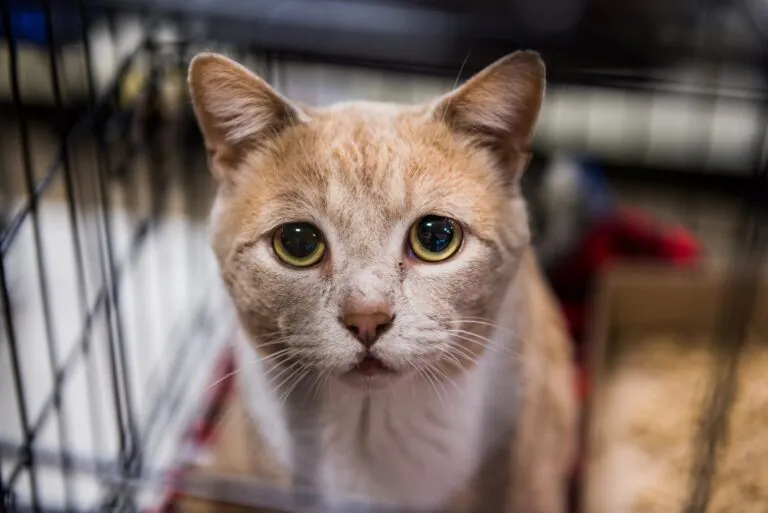
Whether tears of joy or tears of sorrow – you’ve probably cried at some point in your life. But what if your cat has watery eyes? Do cats cry because they’re unhappy?
Don’t worry, tears in cats are not a sign of grief. Strictly speaking, cats don’t cry for emotional reasons.
What Does It Mean When Cats Cry?
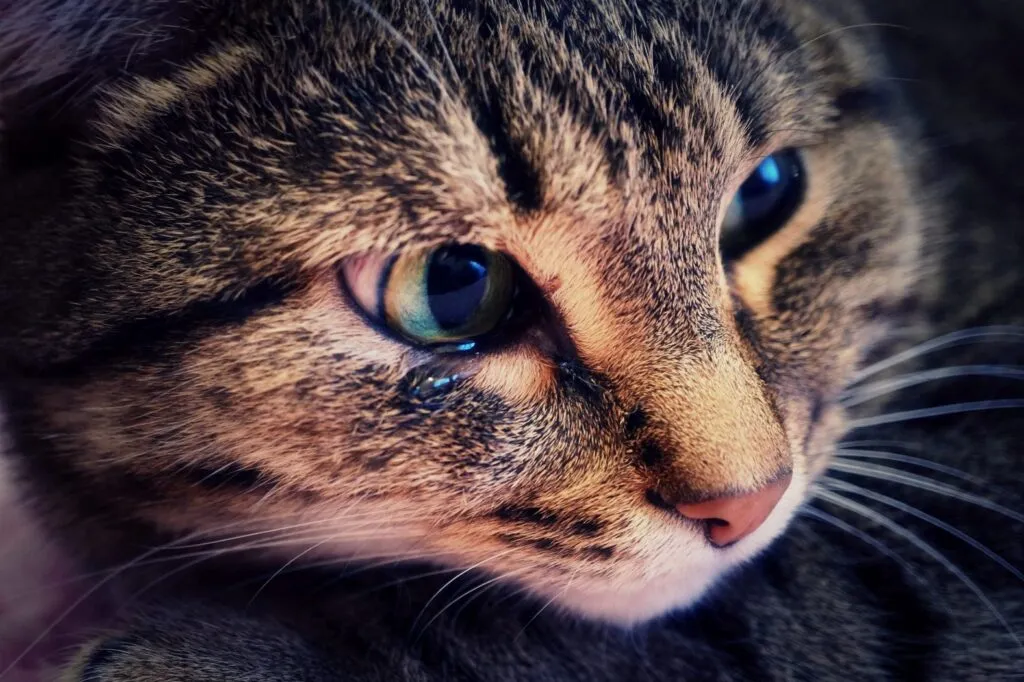
If a cat sheds tears, the reason is usually linked to the health of their eyes. For example, allergies, foreign bodies or cat flu (one of the most common eye conditions in cats) can cause the tear glands to produce more fluid or the tear ducts to become swollen.
If your cat appears to be “crying”, it’s best to have their eyes checked by a vet .
If a cat has watery eyes, conjunctivitis is often the underlying cause.
Even without Crying: Can a Cat Feel Sad?
Back in 1872, Charles Darwin wrote the book “The Expression of the Emotions in Man and Animals”. In it, he published his observations that emotions in humans and animals such as cats can be remarkably similar.
Despite Darwin’s efforts, the question of whether animals can truly grieve remained unanswered for a long time. It was only during the 20th and 21st centuries that science began to focus more closely on animal emotions again.
Grief in Pets
One well-known researcher in the field of animal grief is Marc Bekoff, former Professor of Ecology and Evolutionary Biology at the University of Colorado Boulder. His passion was exploring the emotions of animals.
He discovered that brain imaging studies in dogs indicate that similar areas are activated during certain emotional responses as in human brains. Today, we know that animals display emotional behaviours – just as we do.
Crying and Grief in Cats: Owners’ Experiences
Most cat owners also welcome the current scientific viewpoint. Anyone who brings a cat into their home soon realises that behind those long whiskers and that warm fur lies a unique personality.
And what would a personality be without feelings? Even though cats don’t cry like we do, they’re perfectly capable of expressing their emotions – for example by purring or hissing.
Crying as an Expression of Grief in Cats?
As important as grieving is, it can be incredibly draining. To support your cat during times of grief, it’s essential to recognise the signs.
How Do Cats Show They Are Grieving?
If cats are experiencing emotional pain, you may notice the following signs:
They seek more contact with their owner or, conversely, withdraw more than usual.
So crying is not part of a sad cat’s behavioural repertoire.
How to Help Your Grieving Cat
Patience, calm and routine are the key things if you want to help your grieving cat. Grief often arises when a familiar routine is disrupted – in other words, when the loss of a person significantly changes the cat’s living situation.
Even if your cat doesn’t cry in the human sense, make sure they feel cared for. Ensure your cat still receives their food at the usual times.
Talk to them and gently encourage them to play. Perhaps you can cheer them up with a toy?
Important Note: The content provided for informational purposes only and is not intended to replace professional veterinary advice, diagnosis or treatment. If you have any questions or concerns about your pet's health, please always consult a licensed veterinarian.
This article was translated using Artificial Intelligence from the original German zooplus Magazine. While the original content was authored by industry experts and reviewed by our editorial team, this automated translation has not been human-edited and is provided for informational purposes.
At the Justus-Liebig-University of Giessen I was extensively trained as a veterinarian and was able to gain experience in various fields such as small animal, large animal and exotic animal medicine as well as pharmacology, pathology and food hygiene.
Since then, I have been working not only as a veterinary author, but also on my scientifically driven dissertation. My goal is to better protect animals from pathogenic bacterial organisms in the future.
Besides my veterinary knowledge, I also share my own experiences as a happy dog owner and can thus understand and enlighten fears and problems as well as other important questions about animal health.
It’s not just the right type of litter tray that will make your cat happy, but also the right type of cat litter. The best litters are ones that are very absorbent and ideally neutralise odours too, but finding the perfect cat litter can be no easy task with so many varieties on offer from natural clumping litter made of clay, non-clumping litter, litter made of wood or silica.
Are you worried because your ageing feline friend no longer responds to her name? Or are you wondering why your house cat can’t find her food bowl straight away? Your cat has probably reached a proud senior age and now needs special care. Find out how to spot the symptoms of senility in your cat early on and give her an age-appropriate life.
Coconut oil is very popular among cat owners as it provides natural protection from ticks and other parasites. In addition, this on-trend product is said to have numerous benefits. We will give you tips and information on how and when coconut oil can be a practical alternative to conventional remedies.