The Sokoke cat breed from Kenya is still fairly rare in the UK. But that could soon change. This African cat with its classic tabby coat is extremely adaptable and sociable. It loves interacting with its humans, but also needs its freedom and plenty of exercise from time to time.
The origin of all Sokoke cats lies in Kenya, more precisely in the Sokoke Arabuko rainforest. It is one of the last remaining rainforest areas in East Africa. In 1979, the English farmer Jeni Slater, who had owned a coconut plantation in Kenya for many years, discovered an abandoned litter of feral kittens there.
It is believed that the cats were feral descendants of escaped cats brought by immigrants. Slater took the young kittens back to her farm, where she raised them. Despite their wild origins, the animals proved easy to tame and exceptionally affectionate.
From Kenya to Denmark
At first, Slater knew very little about the ancestry of her cats. However, she realised that the animals were something special and began breeding them selectively. From then on, she called the cats Sokoke.
For further breeding, she also crossed in black domestic cats. The Sokoke’s distinctive appearance, muscular tabby-like body and people-oriented yet freedom-loving nature were preserved. Five years later, in 1984, Slater was visited in Kenya by a friend from Denmark, Gloria Moldrup. The Danish cat enthusiast was delighted by the beautiful Sokoke cats and took a breeding pair back home with her to Denmark.
At first, Moldrup feared that the African cats would not adapt well to the climate of northern Europe. However, these concerns proved unfounded. Moldrup therefore established the first Sokoke breeding cattery on European soil in Denmark and actively campaigned for recognition of the breed. In the mid-1980s, the first Sokokes bred in Denmark were finally presented at an exhibition in Copenhagen. In 1994, the Fédération Internationale Féline (FIFé) officially recognised the breed.
Modern Breeding
Sokoke cats are still very rare in the UK. This is partly due to the strict breeding requirements. In order for a breeder to officially register a Sokoke litter, documents must be provided for every cat. These documents must confirm that the breeding animals genuinely originate from the Sokoke district in Kenya. Only then will the young cats receive a certificate of authenticity and be recognised as Sokokes.
Despite these requirements, breeders in Norway, Finland, the USA, Italy, Germany and, of course, Denmark have now taken an interest in this remarkable African breed.
Appearance
The Sokoke’s athletic nature is immediately obvious. Beneath its short coat, its athletic build and strong bone structure are clearly visible. Adult Sokoke cats weigh between three and a half and six kilograms, while tomcats can weigh up to seven kilograms.
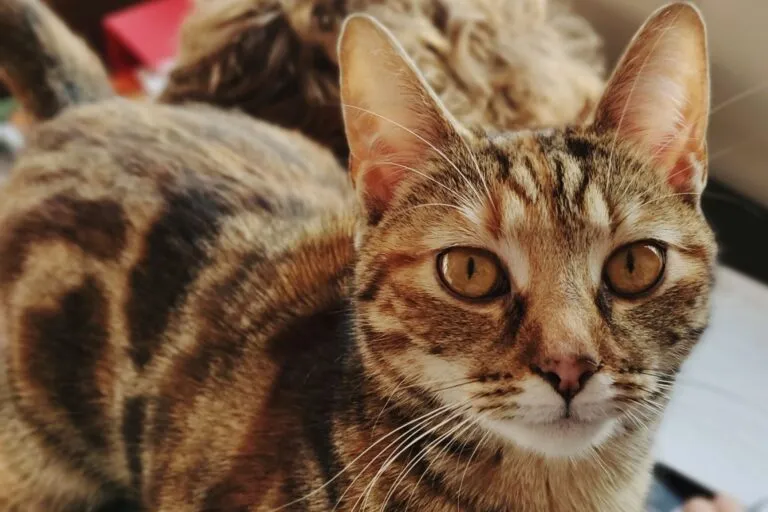
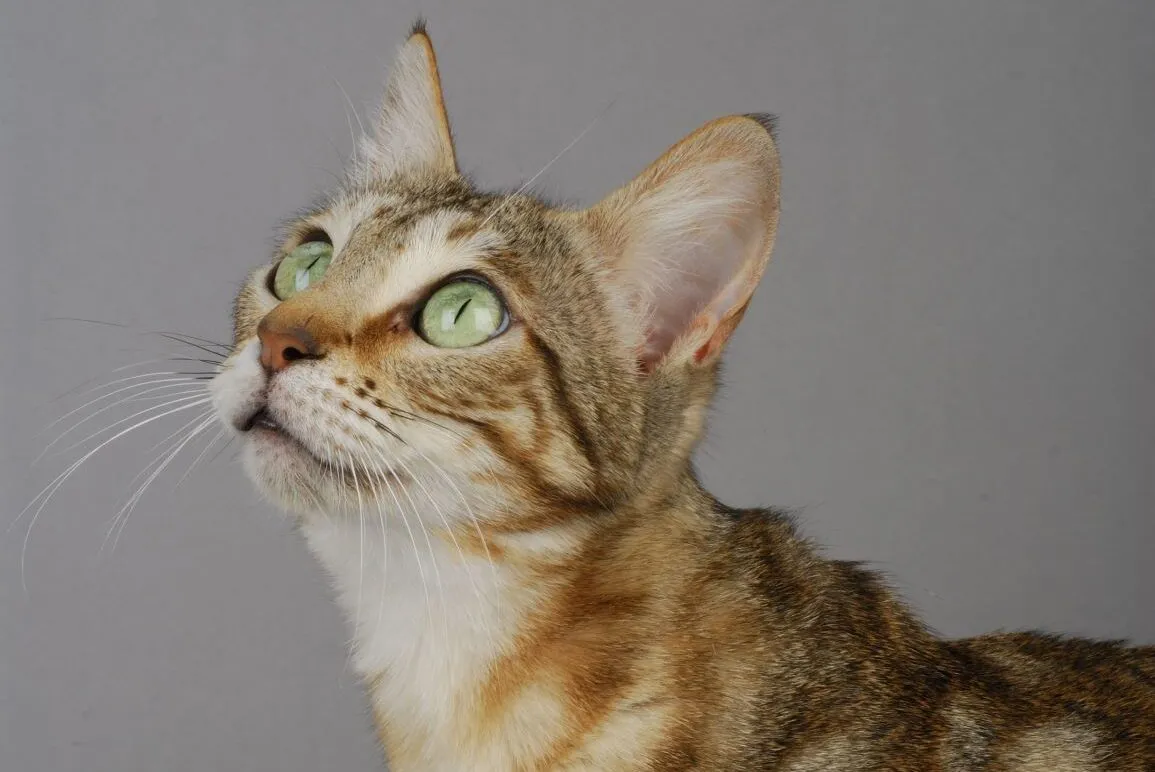
Compared to its medium-sized, muscular body, however, its head appears relatively small. Its broad, medium-sized ears and light almond-shaped eyes give it an alert expression. Its pronounced cheekbones and whisker pads are also characteristic features. An expressive outline in the colour of the coat markings surrounds the nose and eyes.
How to recognise a Sokoke: she always has a dark tabby pattern on a grey or golden-brown coat, as well as a slim, wiry body.
The Sokoke’s very short, elastic coat lies close to the body and has little to no undercoat. In terms of colour, Sokoke cats are very consistent. They always have a classic tabby pattern: the coat features dark black brindled markings on a grey to golden-brown background.
Character
It takes a while for a Sokoke cat to build trust. But once it has taken its humans to heart, this Kenyan cat proves extremely affectionate and cuddly.
It loves having its owners around, playing, cuddling and communicating with them. The Sokoke is also extremely vocal and communicative. Like a Siamese cat, it enjoys meowing and miaowing, rubbing its head against its owner’s leg and loudly demanding attention.
Athletic, Intelligent and Curious
The lively and athletic Sokoke is always up for games or other physical activities. This intelligent African cat also enjoys learning little tricks or practical fetching games. You can expect more from it than simply opening doors. After all, the clever Sokoke will have worked out how to do that within just a few days of arriving in your home.
The Sokoke Is Not Suitable for Workaholics
Learning and discovering new things is in this cat’s nature. It thoroughly explores every corner and nook, sniffing chair legs, curtains, shoes and plants. It is extremely curious and never wants to miss out on any excitement. Nothing frustrates a Sokoke more than boredom. As a result, this spirited feline does not like being left alone. It is therefore not suitable for people who are hardly ever at home.
Keeping and Care
The Sokoke needs to be close to its family and also appreciates the company of other cats. However, every now and then it seeks its freedom. At those times, it wants to move around as it pleases. This sporty and active cat loves climbing and enjoys going off to explore.
Plenty of Space Required
Keeping a Sokoke solely indoors in a cramped city flat is therefore not suitable. A secure garden, a large protected balcony or, ideally, outdoor access in a rural area is perfect for this breed.
Because of its character, the Sokoke also requires more attention and care than some other cat breeds. Dangerous plants or other hazardous objects that the curious cat could injure itself on while exploring the home should always be kept out of reach.
A Sokoke Needs Company
A cat that enjoys talking as much as the Sokoke naturally wants someone there to listen. It does not tolerate being alone for long periods. Anyone who still has to leave their cat alone from time to time should consider getting a second cat, as the sociable Sokoke generally gets on very well with other cats.
Children also make welcome playmates for the lively and sociable Sokoke. However, they should be old enough to understand that the Sokoke is not a cuddly toy and that its need for freedom must be respected. Anyone who holds this African beauty too tightly will feel its strength and possibly its claws. As affectionate as a Sokoke may be, sometimes it has simply had enough cuddles.
Health
Anyone who has successfully navigated the sometimes difficult path to owning a Sokoke cat will fortunately have little to worry about when it comes to the health and care of their new feline companion. The Sokoke is considered extremely robust and resistant to breed-specific illnesses.
Recommended Vaccinations for the Sokoke
However, they are naturally not immune to common feline illnesses such as upper respiratory infections or gastrointestinal complaints. Vaccinations against cat flu and feline panleukopenia should definitely be kept up to date. If the Sokoke has outdoor access, it should also be vaccinated against rabies and feline leukaemia.
Coat Care
The Sokoke’s extremely short coat does not require any special care. Thanks to the lack of undercoat – and, of course, the cats’ own love of cleanliness – it practically cleans itself. Even so, the Sokoke greatly enjoys occasional brushing. After all, the gentle movements of the brush are very relaxing.
Nutrition
Like every cat, the Sokoke should be fed high-quality cat food that provides all the essential nutrients and vitamins it needs. Cats are natural carnivores. Food with a high meat content (at least 60%) is necessary to provide them with the required amount of animal protein.
Is a BARF Diet Suitable for the Sokoke?
Many cat owners now swear by BARF feeding, biologically appropriate raw feeding. It is based on the original diet of wild cats. Raw fresh meat is used and supplemented with vegetables, feeding oils and other additives.
However, anyone following this feeding method should have a good understanding of the cat’s individual nutritional requirements and of the vitamins and minerals contained in the food. Only then can you guarantee a balanced diet for your cat.
What to Look Out for When Choosing Food
Alternatively, ready-made BARF menus or wet cat food specially tailored to cats’ needs are also suitable. Always pay attention to clear labelling and high-quality ingredients. Meat waste such as animal by-products does not belong in cat food. Sugar, chemical preservatives and artificial flavour enhancers should also be avoided.
Anyone who prefers dry food should make sure that the cat drinks enough fluids and that the drinking fountain or water bowl is always available and filled with fresh water.
You will, of course, find high-quality cat food in the zooplus online shop. We offer a wide selection of both wet food and dry food for cats.
What Should You Consider When Buying a Sokoke?
Buying a Sokoke cat is still difficult today. Cat lovers interested in this beautiful African breed must be prepared for a lengthy search for a registered breeder, long journeys to the cattery and long waiting times for the next litter. As a result, the price of this rare pedigree cat is correspondingly high, ranging between 1,000 and 2,000 euros. Breeding animals may sometimes cost even more.
When buying, make sure that a certificate of authenticity officially confirms the cats’ origin. Since the tabby pattern also appears in other cat breeds, some cats are occasionally passed off as rare Sokokes in order to sell them at a higher price.
Conclusion
Anyone lucky enough to encounter this rare cat breed is guaranteed to fall in love with it immediately. After all, the African Sokoke is not only exceptionally beautiful and exotic, but also very people-oriented and lively. Its communicative nature and curiosity are wonderfully refreshing and provide plenty of entertainment in everyday life together.
This article was translated using Artificial Intelligence from the original German zooplus Magazine. While the original content was authored by industry experts and reviewed by our editorial team, this automated translation has not been human-edited and is provided for informational purposes.
zooplus Editorial Team
The zooplus editorial team consists of a dedicated team of experts with many years of experience in the field of animal husbandry: Luisa with her White Swiss Shepherd Elyos, Laura, Julio, and Florian. Together with a large network of animal experts, we work to make the zooplus magazine a trusted source of information for all animal owners and lovers. Our goal is to provide exciting animal knowledge and relevant information on the proper care of pets.
The Maine Coon has become one of the most popular cat breeds in the world. This is probably due to its majestic appearance, robust nature and great character.
Large eyes and attentively upright ears instantly tell you a great deal about this charming breed of cat: Abyssinians are inquisitive and affectionate towards people.
With its long, dense fur, rounded ears, and intense stare, the Pallas Cat, or Manul, looks rather fluffy, yet somewhat dangerous. However, don't be fooled by its appearance—this is no petting zoo resident. The Manul is a wild animal and considered untameable.