As the name suggests, hairless cats have little to no fur. While some people are huge fans of these hairless cats, others criticise them for animal welfare reasons. Find out more about the different hairless cat breeds, their health and care needs.
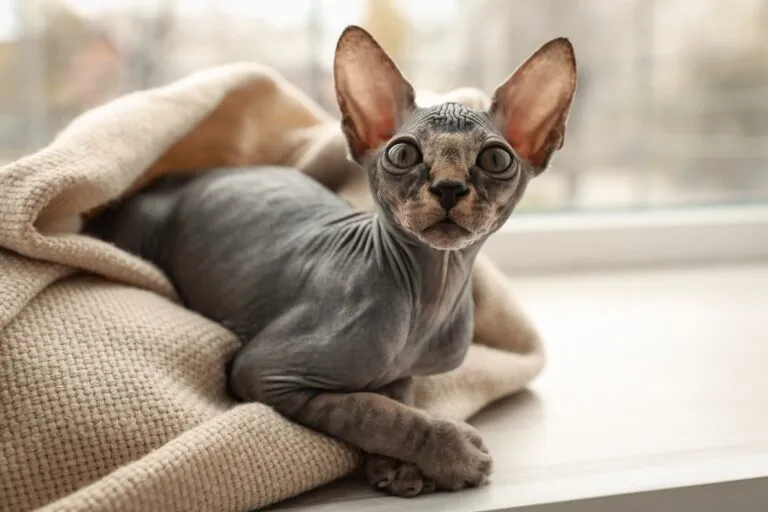
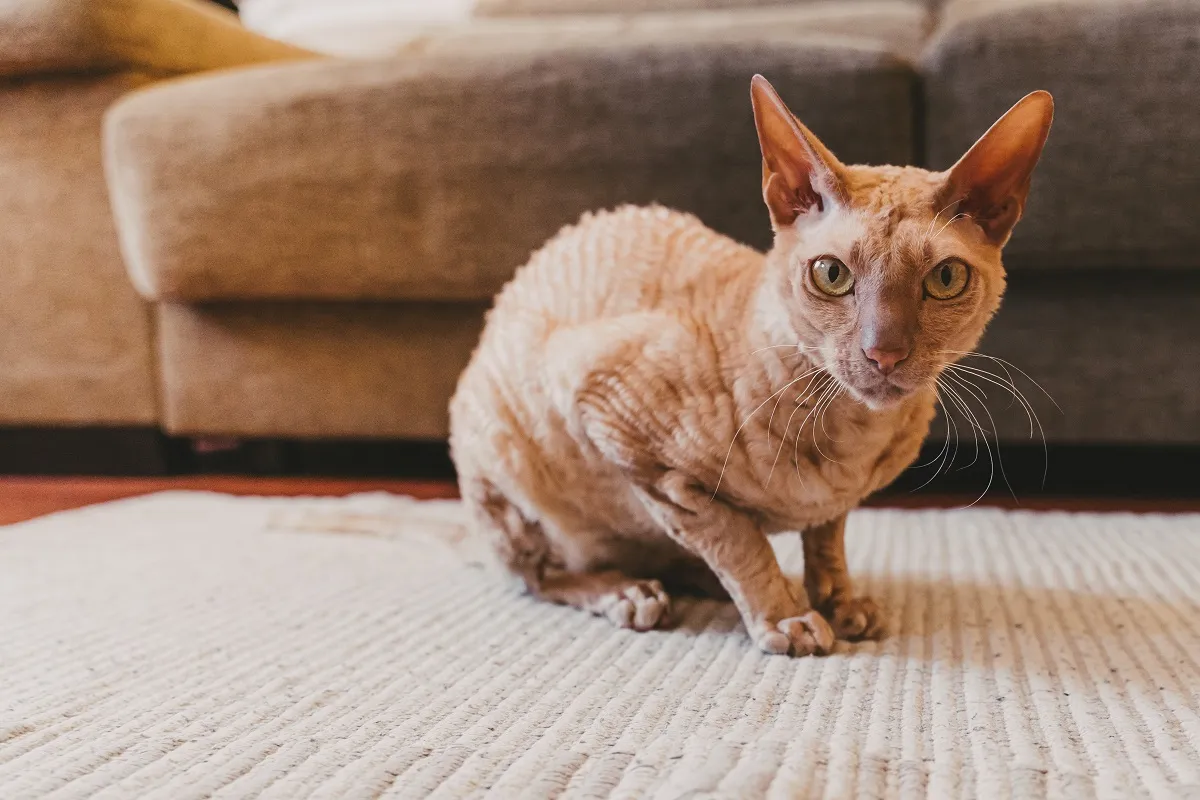
The term “hairless cat” refers to various cat breeds that, true to their name, have one main thing in common: hairless cats are hairless.
This means that, unlike other cat breeds, they have no fur or much less fur – often only a fine layer of down is visible. Most hairless cats also develop pronounced skin folds, giving these animals a very distinctive appearance.
Whiskers May also Be Missing
In addition to normal body hair, some hairless cats also lack whiskers (vibrissae). These serve a very important role in a cat’s orientation, so their absence can negatively affect the cat. You can find more information about this under the “Health” section.
Hairless Cats: Which Cat Breeds Are Included?
The Canadian Sphynx is considered the oldest hairless cat of all. Since its origins, other hairless cat breeds have also been developed. Here is an overview of the most common hairless cat breeds:
Bambino Cat
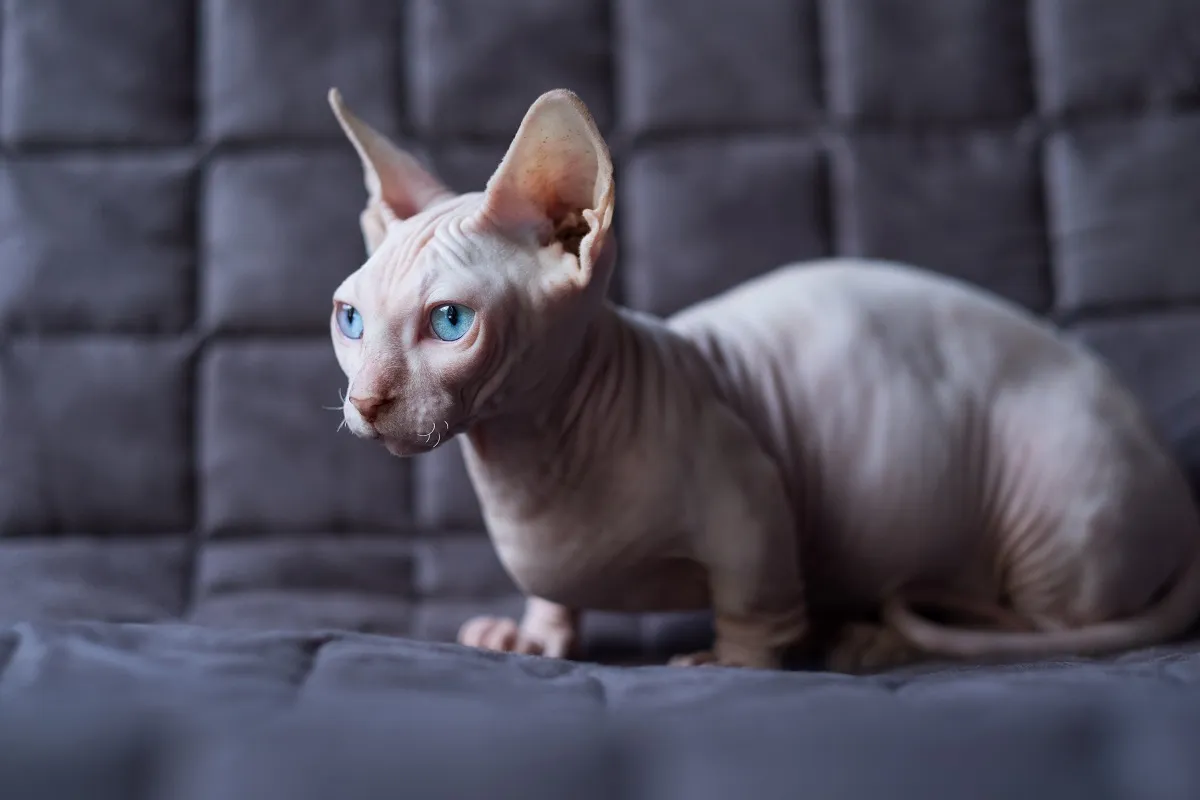
One of the newest hairless cat breeds, the Bambino cat has only been officially recognised as an independent breed since 2015. It originates from the USA and is a cross between a Munchkin and a Sphynx.
As a result, this breed has very short legs, which is why it was given the name “Bambino” (Italian for child).
The Bambino cat is a cross between the Munchkin cat and the Sphynx.
Don Sphynx
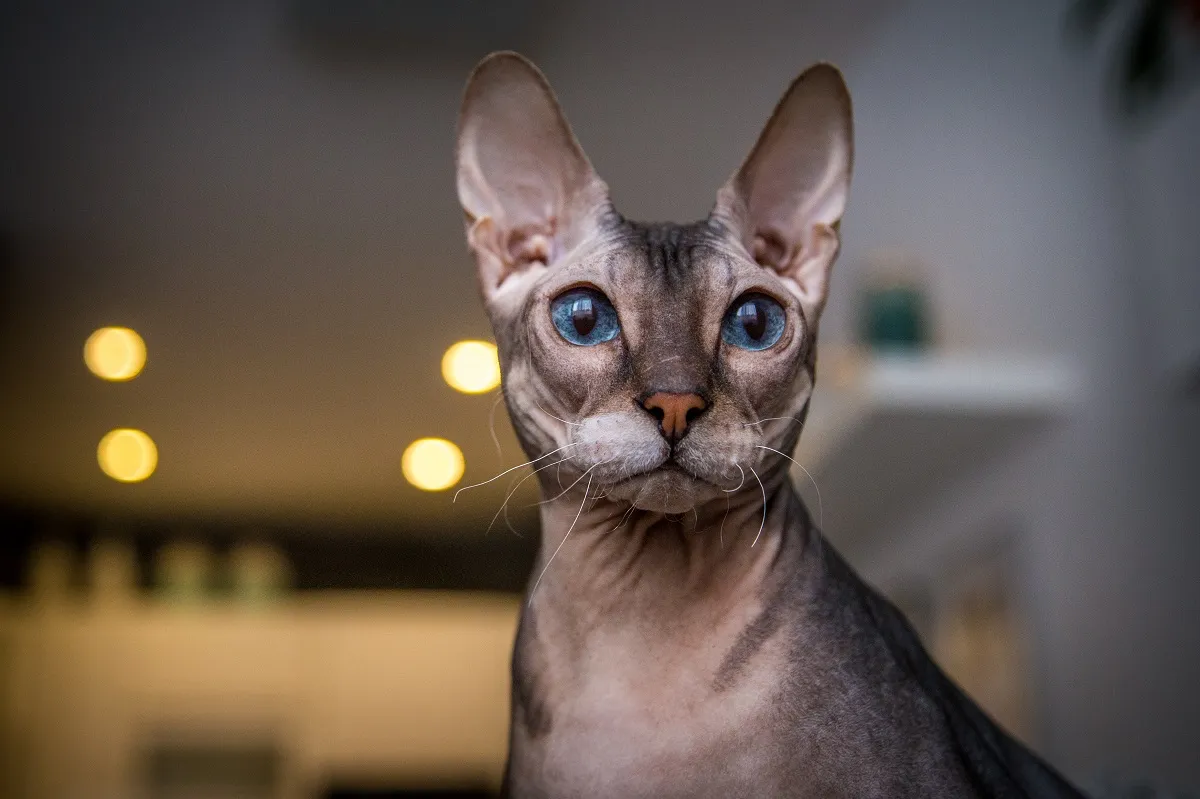
Originating from Russia, the Don Sphynx is not related to the Canadian Sphynx despite their similarities. This friendly cat also has a mind of its own and knows exactly how to charm its owners.
The Don Sphynx is not related to the better-known Canadian Sphynx cat.
Elf Cat
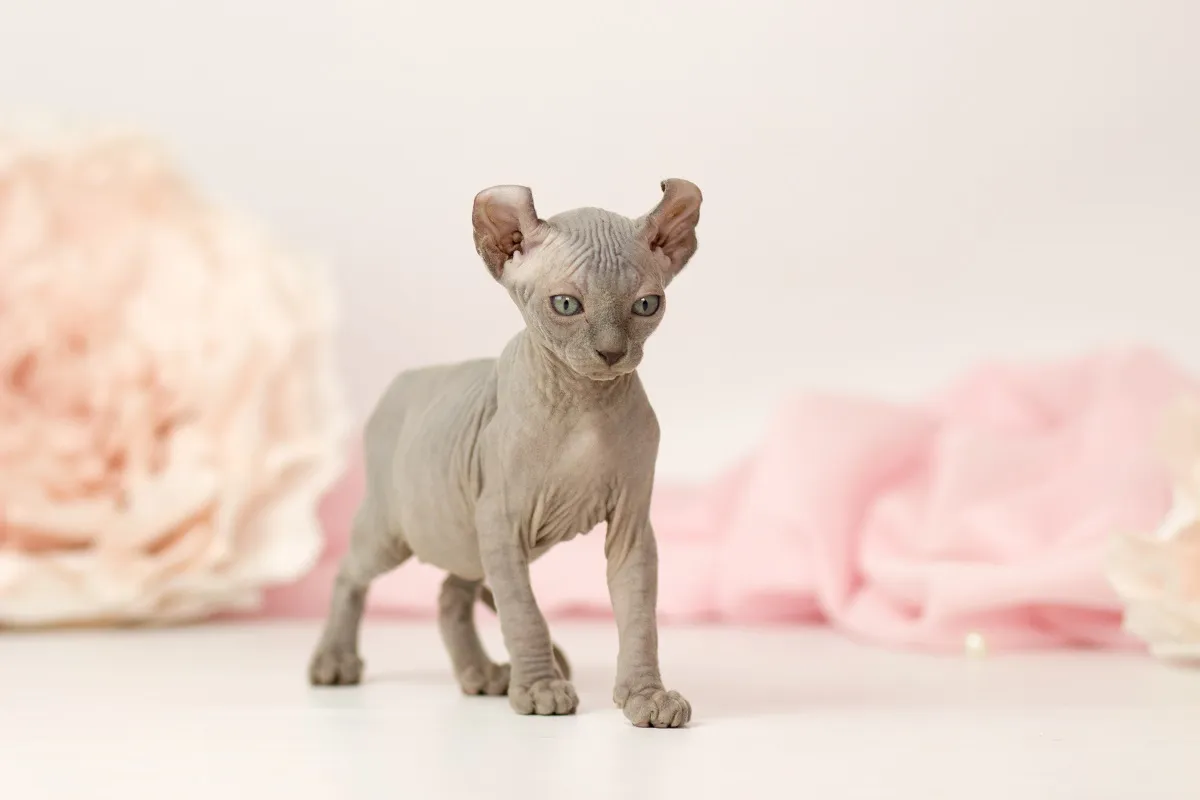
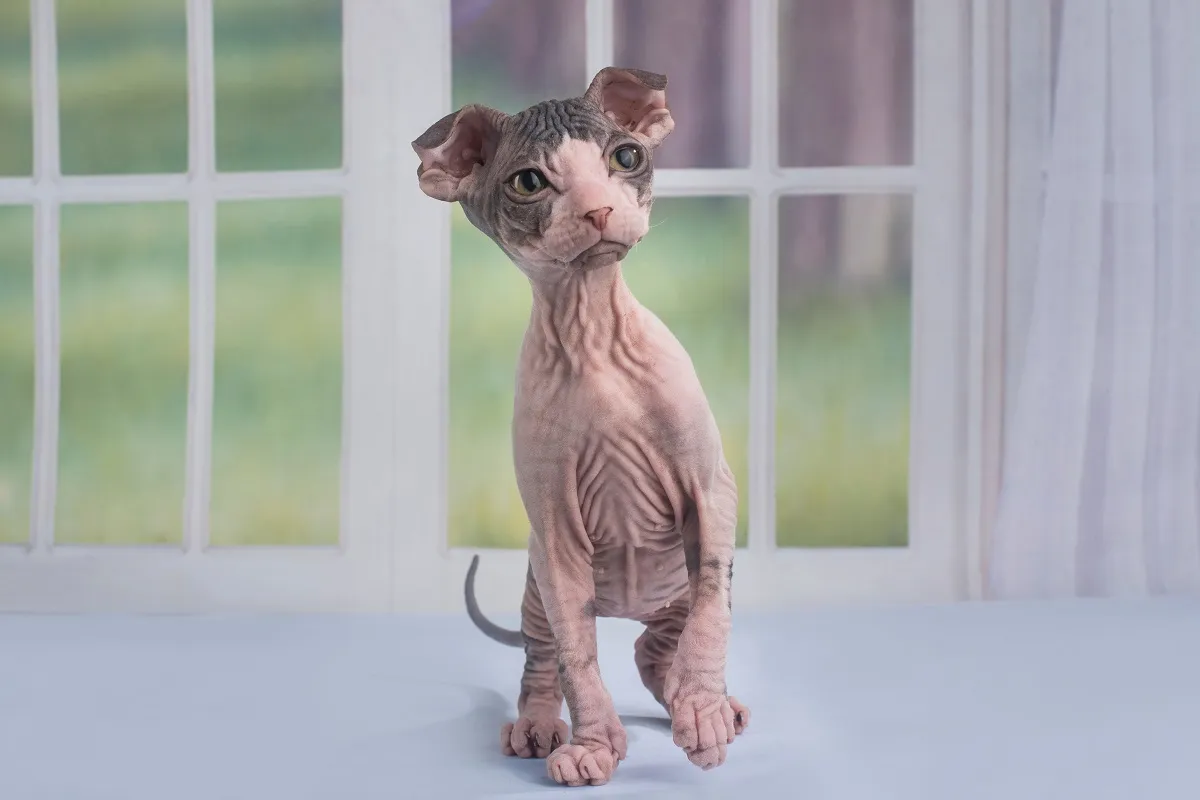
The hairless Elf cat originated in the USA from a cross between the American Curl and the Sphynx. As a result, it typically has curled ears, which sets it apart from other hairless cat breeds.
The Elf Cat is one of the rarer hairless cat breeds and stands out thanks to its curved ears.
Canadian Sphynx Cat
The Canadian Sphynx is the quintessential hairless cat breed. Since breeding began in 1966, this cat breed has gained many fans and inspired breeders to develop more hairless cats.
Kohona Cat
The Kohona is very rare and, due to its lack of whiskers, is considered particularly problematic from an animal welfare perspective. This breed probably originates from Hawaii, which is why it is also known as the “Hawaiian Hairless”.
Lykoi (Werewolf Cat)
The Lykoi is not a typical hairless cat, as it usually has a scruffy coat, which earned it the nickname “werewolf cat”.
However, because its hair growth is irregular, it sheds its coat several times a year – almost moulting like a bird, so to speak.
Peterbald
The name of this breed comes from two words: St Petersburg (its place of origin) and the English word “bald”. Although some varieties of the Peterbald are hairless, there are also other varieties that have fur on different parts of the body.
The Peterbald comes without fur, but also in various fur types.
Ukrainian Levkoy
The Ukrainian Levkoy was created in 2004 from a cross between the Don Sphynx and the Scottish Fold. The result is a cat that not only has little or no fur, but also folded ears. So far, this cat breed has not yet been recognised in official breed standards.
The Ukrainian Levkoy is a crossbreed between the Don Sphynx and the Scottish Fold.
Health: Be Aware of Unethical Breeding in Hairless Cats
Hair and especially whiskers serve important functions in animals such as cats. They not only help regulate body temperature, but are also an essential part of a cat’s sense of orientation and touch.
In addition, hairless cats have an increased risk of sunburn and ear infections. Malassezia dermatitis, which appears as a greasy and flaky skin inflammation, also tends to occur more frequently in hairless cats.
Classification as Unethical Breeding Varies by Country
The legal situation regarding the breeding of hairless cats varies from country to country. You should therefore familiarise yourself with the legal regulations in your home country before buying one.
Care: What Should You Bear in Mind with a Hairless Cat?
Even though hairless cats do not have a thick coat, they still need plenty of care. Alongside regular checks of the eyes and ears, your cat’s skin in particular needs proper care.
If you do not do this, a thin layer of sebum will gradually build up on the skin, which can cause skin problems.
Tips for Caring for the Skin of Hairless Cats
To clean your hairless cat’s skin without irritating it, you can gently wipe it several times a week with a damp cloth. You can use a soft cloth soaked in lukewarm water.
If your cat is very dirty, you can also bathe it. However, it is important not to do this too often and to use a special cat shampoo. This contains few irritating substances that could damage your cat’s skin.
This article was translated using Artificial Intelligence from the original German zooplus Magazine. While the original content was authored by industry experts and reviewed by our editorial team, this automated translation has not been human-edited and is provided for informational purposes.
At the Justus-Liebig-University of Giessen I was extensively trained as a veterinarian and was able to gain experience in various fields such as small animal, large animal and exotic animal medicine as well as pharmacology, pathology and food hygiene.
Since then, I have been working not only as a veterinary author, but also on my scientifically driven dissertation. My goal is to better protect animals from pathogenic bacterial organisms in the future.
Besides my veterinary knowledge, I also share my own experiences as a happy dog owner and can thus understand and enlighten fears and problems as well as other important questions about animal health.
The Maine Coon has become one of the most popular cat breeds in the world. This is probably due to its majestic appearance, robust nature and great character.
Large eyes and attentively upright ears instantly tell you a great deal about this charming breed of cat: Abyssinians are inquisitive and affectionate towards people.
With its long, dense fur, rounded ears, and intense stare, the Pallas Cat, or Manul, looks rather fluffy, yet somewhat dangerous. However, don't be fooled by its appearance—this is no petting zoo resident. The Manul is a wild animal and considered untameable.