{"url":"https://www.zooplus.co.uk/magazine/cat/cat-adoption/installing-a-cat-flap-made-easy","title":"Installing a Cat Flap Made Easy","mag_id":416144,"is_single":true,"cat_name":"Cat","sub_cat_id":149,"sub_cat_name":"Cat Adoption and Ownership","cat_id":138}
A cat flap gives you and your cat more flexibility in everyday life. We’ll show you step by step how to fit a cat flap and help your outdoor cat get used to the new way in and out of your home with ease.
In? Out? Then back in again? Cats have minds of their own and love routine. But when it comes to whether they’d rather be indoors or outside, our feline friends prefer to decide on the spur of the moment – much to their owners’ frustration.
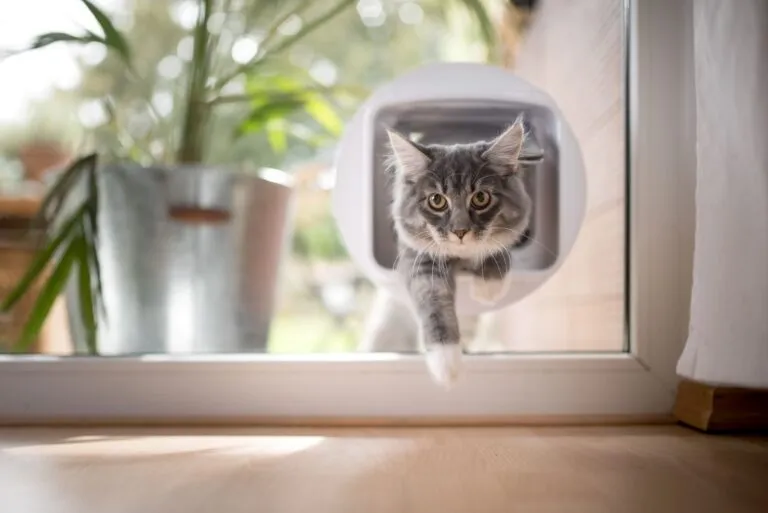
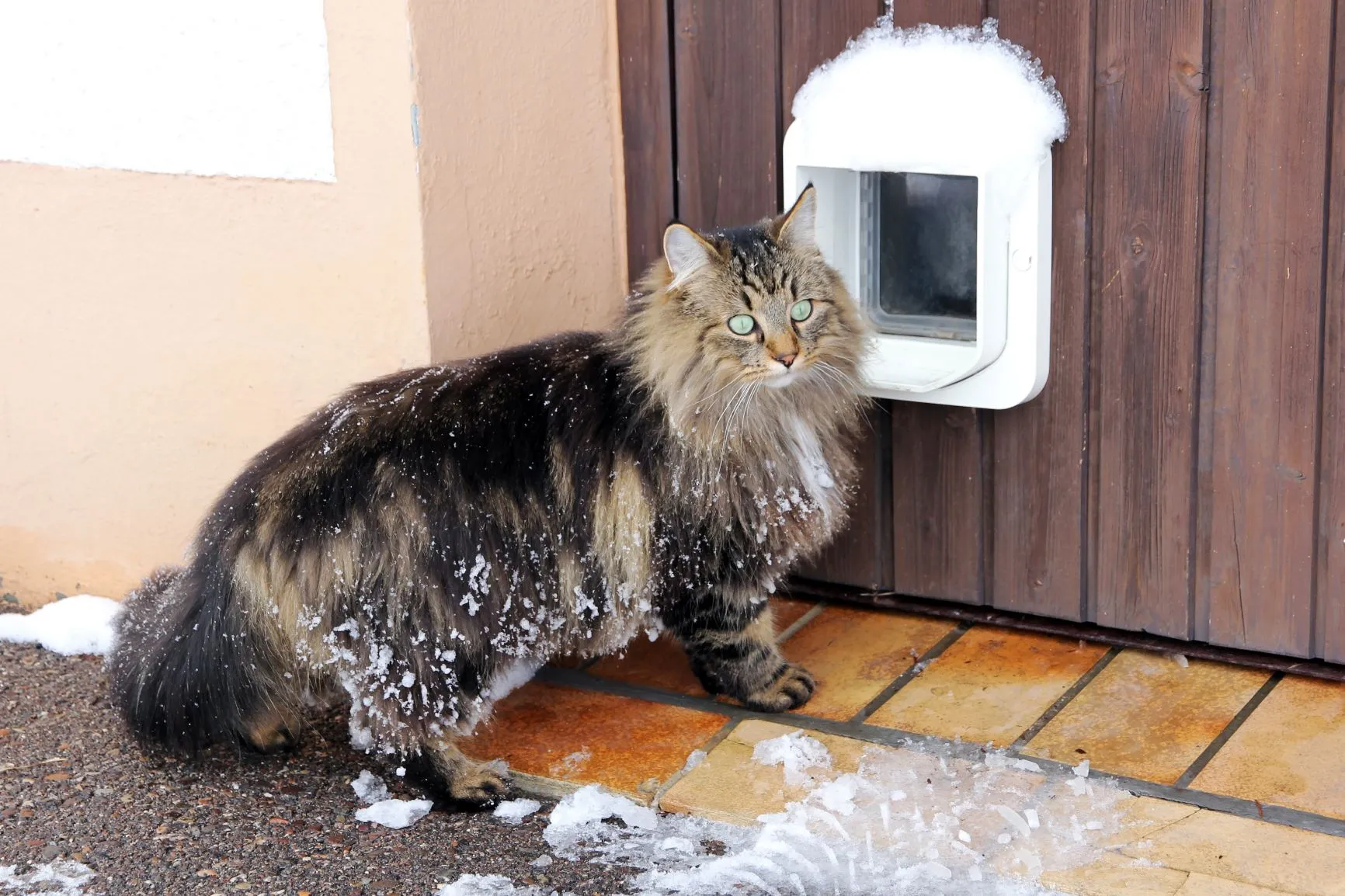
With a cat flap for a window or door, you give your feline companion the freedom to choose where it would rather spend its time. Especially in winter, it’s important for outdoor cats to have access to a warm place at all times, even when you’re not at home or it’s the middle of the night.
If your cat is ever unwell and needs to stay under your care, you can simply lock the cat flap to make sure your four-legged friend stays indoors and can recover in peace.
Cats are especially grateful in winter if they can access the warmth of the home at any time through the cat flap.
Tip for Tenants: Always Ask Permission before Fitting a Cat Flap
Installing a little entrance flap for your feline friend is easier than many cat owners think. However, whether you can fit a cat flap depends on your living situation: if you rent your home, installing a cat flap counts as an alteration to the property and requires your landlord’s approval.
Buying a Cat Flap: How to Make the Right Choice
Before buying a cat door or cat flap, you first need to decide where you want to install it. The features, flap size and security aspects also play a role – after all, you only want to let your pet in, not unfamiliar animals or even burglars.
Choosing the Right Size and Position for the Cat Flap
The most important factor when choosing a cat flap is, of course, the future user. Your cat should be able to fit through the flap comfortably. The key measurement for easy entry and exit is the distance between your cat’s tummy and the floor. This determines the height at which the cat flap should be installed. For most cats, this measurement is around 15 centimetres. If you have several cats, use the smallest one as your guide.
Choosing the Installation Location
In a ground-floor rented flat, windows and the front door are suitable places for fitting a cat flap, while on higher floors the front door is often the only option. If you live in a house, there are several possibilities. Basement or garage doors are particularly suitable, as outdoor cats often bring prey home in their mouths or dirt on their paws. Not every cat flap is insulated either.
Choosing the Features
As a cat owner, you’re spoilt for choice when it comes to comfort, security and reliability when buying a cat flap. The following operating options, for example, are available:
4-way locking system: You can set the cat flap so your cat can move freely in both directions, only go outside or only come indoors. Alternatively, the cat flap can be completely locked.
Microchip: You can programme this cat flap to recognise your cat’s individual microchip, ensuring that unfamiliar cats stay outside.
Infrared: If your cat is used to wearing a collar, you can use a collar tag that opens the cat flap via an infrared sensor for the cat wearing it.
Fitting a Cat Flap: Step-By-Step Installation Guide
Once you’ve found a suitable installation spot and the right cat flap, it’s time to fit it. You can either hire a tradesperson to install the cat flap for you or save money by fitting it yourself.
The easiest option is fitting it into a wooden door. For installation, you’ll need a saw, a drill, some sandpaper and a screwdriver. Here’s how to do it:
Preparing to Fit the Cat Flap
Mark the spot on the wooden door where the centre of the cat flap will later be positioned.
Most cat flaps come with a fitting template. Attach this to the door or trace the outline of the cat flap onto the door yourself.
Make sure the outline or template is properly aligned. The distance between the bottom edge of the flap and the floor must also suit your cat’s size.
Most templates show the corners of the opening for the cat flap. These are the markings where you’ll later position the saw. First, drill the holes.
The diameter of the drill holes should be slightly larger than the saw blade you’re using.
Cutting Out the Shape
Remove the template and use a pencil to draw straight lines between the drill holes. This is the path the saw should follow.
Place the saw into one of the drill holes and carefully saw from hole to hole until you’ve cut out the shape for the cat flap. This is easiest to do with the door closed.
Smooth the corners of the cut-out with sandpaper.
Installing the Cat Flap
Place the inner and outer sections of the cat flap into the new opening and check that the flap moves properly.
Then mark and drill the fixing holes for the inner section.
Now position the outer section on the other side again and fasten all the screws from the inside to connect both parts.
Instructions for Other Types of Doors
Fitting a cat flap into a uPVC door: There are, of course, also cat flaps for uPVC doors. Installation basically works as described above; you simply need a suitable saw.
Fitting a cat flap into a glass door: With a glass cutter and some experience working with glass, you can install a cat flap in glass doors or windows yourself. However, it’s safer to consult a glazier.
How to Get Your Cat Used to the Cat Flap
Once the cat flap is installed, your cat needs to learn how to use it. With patience and a few practice runs, your cat will soon get used to the new little door. To begin with, hold the flap open for your cat or secure it with adhesive tape. Encourage your feline friend to use it with a treat placed on the other side.
Once your cat manages this confidently, you can start closing the flap. For the first few times going through the little door, you can still help by gently pushing the flap open. Cats often learn to use a cat flap quite quickly, especially when a big outdoor adventure awaits on the other side.
Cat Flap Alternative: A Rented Flat with an Outdoor Oasis
If you rent your home and have a balcony, but a cat flap in the flat or balcony door isn’t an option, you can still give your cat a taste of the outdoors: with a few simple tips, you can secure your balcony and give your cat enjoyable hours in the fresh air.
This article was translated using Artificial Intelligence from the original German zooplus Magazine. While the original content was authored by industry experts and reviewed by our editorial team, this automated translation has not been human-edited and is provided for informational purposes.
Animals have accompanied me for as long as I can remember - there is hardly a child's photo without a budgie on my head or a cat on my lap. For more than ten years, I have been writing as an editor about various topics ranging from health insurance to cat ownership. Always with me: my cat Mimi, who is the best source of inspiration for many texts and knows when it's time for a break from writing.
The origins of indoor cats are as mysterious and fascinating as their characters. Are cats really desert animals – and what would that mean for their behaviour? In fact, it was unclear for a long time where the ancestors of our feline friends originated. That was until a genetic analysis shed some light on the enigma of cat evolution.
It’s not just the right type of litter tray that will make your cat happy, but also the right type of cat litter. The best litters are ones that are very absorbent and ideally neutralise odours too, but finding the perfect cat litter can be no easy task with so many varieties on offer from natural clumping litter made of clay, non-clumping litter, litter made of wood or silica.
There comes a time when every kitten becomes an adult and tests boundaries. The following article explains when puberty begins with cats and what this defiant phase means for you as a cat owner.