

11 min
2.6k
Medium Size Poodle
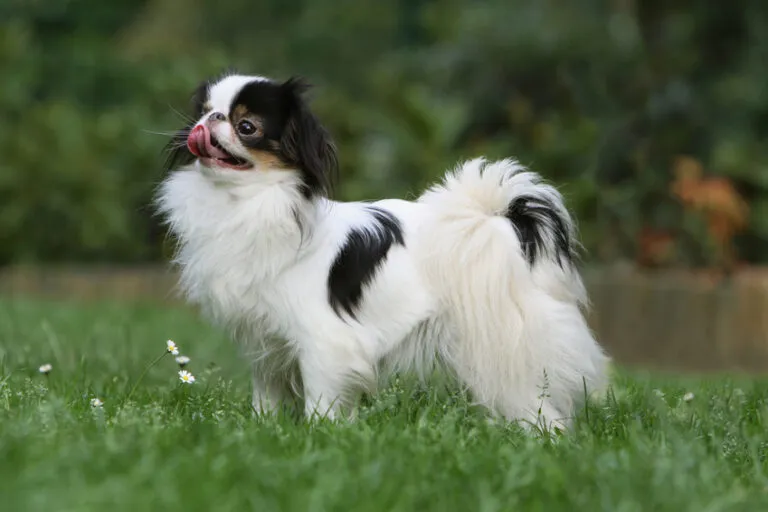
The Japanese Chin. “Chin” is an abbreviation of “chiichi inu” and translates as “little dog”. This elegant Japanese breed, with its abundant coat and typically oriental expression, once fitted into the kimono sleeves of noble Japanese ladies and today is perfectly content even in a small city flat. Its calm, gentle and affectionate nature makes it an ideal companion for families, older people and first-time dog owners.
© Dogs / stock.adobe.com
A Japanese Chin, a small toy breed known for its expressive eyes, silky coat, and elegant appearance.
Clever and proud like a monkey, loyal like a dog and also affectionate and quiet like a cat – this is how the Japanese describe their Chin, which has been highly valued in its homeland for thousands of years. The Japanese Chin is an exceptionally pleasant dog that adapts perfectly to everyday life, making it ideal as a city companion.
Naturally very peaceful, it gets along well with people and other animals from the outset. Aggression or nervousness are completely alien to this open-minded dog from the Far East. Although the alert Chin reliably lets its owner know about every visitor, its rather delicate voice is never excessively loud or intrusive.
This pedigree dog is certainly not a barker. Calmness comes naturally to the Chin and, unlike many other breeds, it needs neither a great deal of exercise nor lots of space to feel happy and balanced. There is one thing this little dog does insist on, however: plenty of attention!
Long periods alone are not for this sociable four-legged friend from Japan, who enjoys being the centre of attention. It needs the closeness of its “pack” and thrives on long cuddles. Thanks to its sensitive nature, it is very attuned to its people’s moods. With its playful character and unmistakable sense of humour, it can quickly lift any dip in its owner’s spirits.
The cheerful Chin is an ideal dog for beginners and suits both families with children and older people. Its easy-going nature and high adaptability ensure harmonious living between Chin and human. Its eagerness to learn and pronounced “will to please” make training fairly straightforward. It is content with little and does not necessarily need highly active people who spend hours every day at the dog park.
If you are not as steady on your feet, simply give your Chin a ball after a short walk so it can have a little play indoors. However, this lively and spirited little dog certainly won’t turn down longer outings in the countryside or extended walks in the local park either.
 © Dogs / stock.adobe.com
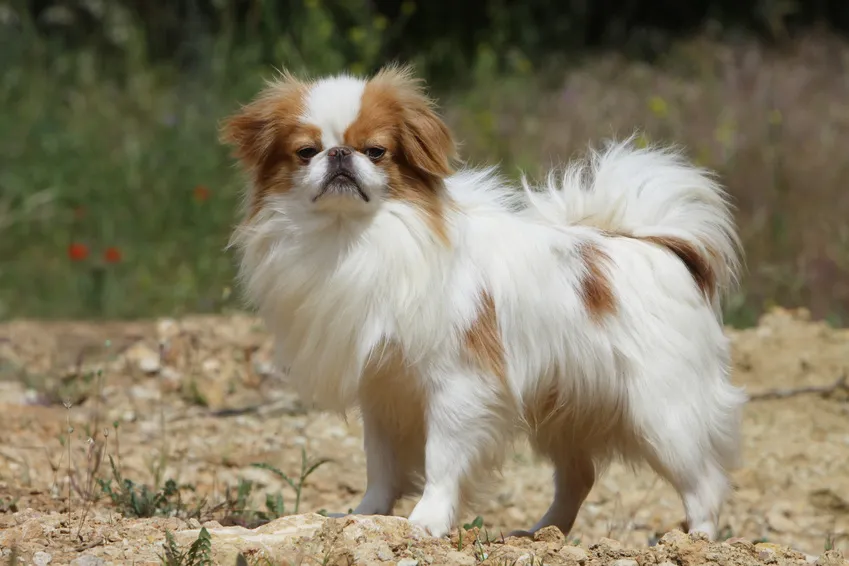
The Japanese Chin’s friendly nature is immediately apparent in its endearing, bright expression. Despite its lively character and fairly compact, square build, this pedigree dog, already popular with the Japanese nobility in the 8th century, appears very elegant and graceful.
Its large, prominent eyes, short, broad muzzle and symmetrical facial markings with their oriental expression are particularly striking. It moves stylishly and deftly on its delicate legs and slightly elongated paws. Standing around 25 cm tall and weighing about 3 kg, the Chin is one of the small dog breeds.
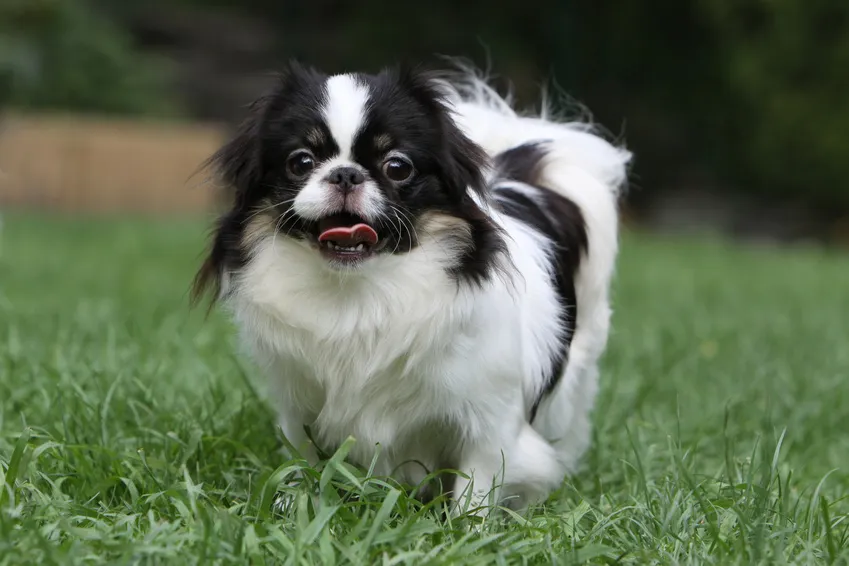
Another characteristic feature of this little Japanese dog is its fluffy coat, which hangs long and silky. The tail, which it carries curled over its back, resembles a plume. Its silky, shimmering coat is white with black or red markings. Japanese Chins with a round spot on their forehead are especially prized in their homeland, as legend has it that Buddha left his fingerprint on the Chin’s forehead when blessing these little dogs.
It was not only Buddha who is said to have taken a liking to the little Chins; ladies and gentlemen of refined Japanese society were already adorning themselves with these pretty toy dogs in the Middle Ages. However, the history of the Japanese Chin goes back much further.
Although the exact origin of today’s Chin is disputed, it is believed that the breed’s earliest ancestor was a gift from a Korean ruler to Japan and was already living at the Japanese imperial court in 732. Cynologists also assume that the Chin is related to the short-nosed breeds from China, from which the famous Pekingese also descended.
The Chin, whose Japanese characters mean “dog for indoors”, was so admired in early Japanese noble circles that soon anyone of standing kept a small breeding line. The rule was: the smaller the dog, the more valuable it was. Paintings, bronzes and vases over 1,000 years old depict the compact, short-nosed aristocratic dog with its fluffy coat.
In Europe, Japanese Chins became known at the latest through Queen Victoria of England, who received two dogs as a gift from the Japanese imperial court in 1853. The German Empress Augusta is also said to have received a Chin as a Christmas present from the Japanese Empress in 1880.
As a “guest gift”, the Japanese breed also came to the USA in the 19th century, where it was known as the Japanese Spaniel until 1977 and was popular among the wealthy and aristocratic. For a long time, ownership remained reserved for the elite, and as a result the Japanese Chin never truly experienced a “major breakthrough” outside its Far Eastern homeland.
In many countries, the Japanese Chin is one of the rarer dog breeds, despite being excellently suited as a city and family dog. Anyone considering buying a Japanese Chin may therefore need a little patience before finally holding this friendly little companion in their arms.
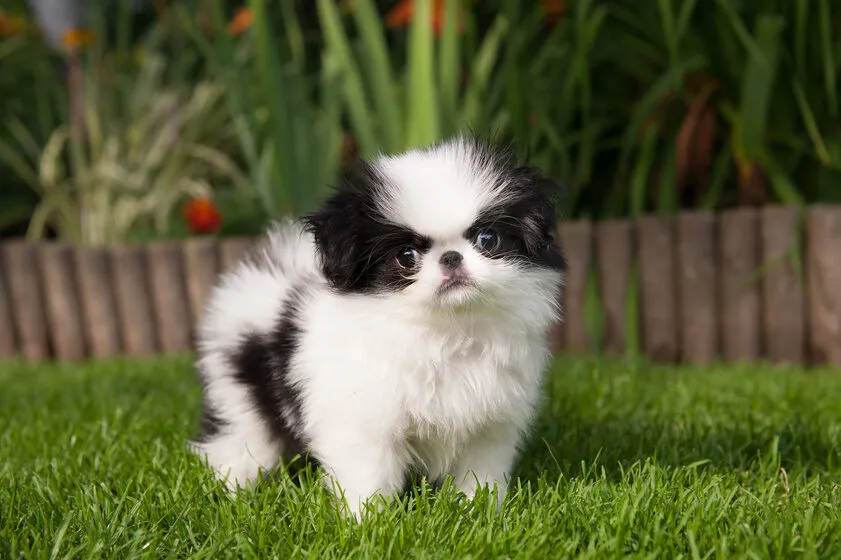
Always choose a breeder with great care, rushed purchases of cute puppies online or from dubious newspaper adverts should be strictly avoided. This applies especially to Chins, as unfortunately this small pedigree dog is prone to a number of illnesses.
Reputable breeders who breed their dogs in accordance with FCI requirements and submit to strict breeding controls pay meticulous attention to the health of their breeding animals and ensure the healthiest possible offspring through comprehensive checks, health examinations and vaccinations.
 © Cindy Schönherr / stock.adobe.com
Despite the efforts of many breeders, Japanese Chins are more prone than average to the following eye conditions:
The following applies to all illnesses: the earlier they are detected, the better the chances of recovery. If you notice any changes in your dog’s eyes, you should therefore promptly consult a vet. These include excessive, spasmodic blinking, watery eye discharge, redness of the conjunctiva or clouding of the lens.
In addition, breeding in Japanese Chins is comparatively often associated with hydrocephalus (water on the brain) and so-called difficult births.
Comprehensive genetic testing of the parent animals and a healthy lineage can reduce the above-mentioned conditions, which are usually genetic in origin, unfortunately, they cannot be completely prevented. After all, a dog’s health does not depend solely on its genes.
Environmental factors such as housing conditions, diet and grooming also influence a dog’s wellbeing. The right dog food therefore plays a particularly important role. It is no wonder that the question of which food is the right one is so hotly debated.
Don’t let the many differing opinions unsettle you; instead, focus solely on what your dog needs. The form in which your dog meets its nutritional requirements – whether with wet or dry food, cooked or raw food (BARF) – is initially of secondary importance.
Discover our selection of puppy food!
 © Dogs / stock.adobe.com
A dog’s nutritional requirements depend on several highly individual factors. These include age, size, weight and activity level. The question of what a Chin needs therefore cannot be answered in general terms. Speak to your breeder or your vet if you are unsure. However, meat should never be missing from your Chin’s diet.
Although Japanese nobles liked to feed their “kimono dogs” a vegetarian diet, we now know that dogs originally descended from wolves and are therefore naturally carnivorous. Like the wolf, which consumed not only the pure meat of its prey but also stomach contents and bones, dogs also require vitamins and minerals from vegetables, fruit, rice or pasta.
When putting together your dog’s food, it is always sensible to distinguish between puppy, adult and senior food , as a young, lively dog that is still growing has different energy needs from an older senior dog who prefers to rest comfortably on your lap, even if Japanese Chins are said to “stay young” well into old age.
Also read our articles on puppy nutrition, food for adult dogs and food for senior dogs!
In general, the Japanese Chin is considered an uncomplicated dog that adapts easily to our daily routines and, aside from regular cuddles, makes few demands. One exception, however, is grooming. Its silky, fine coat requires regular and thorough brushing. Especially in spring and autumn, during the moulting season, daily grooming is unavoidable. If you get your dog used to it early on, this grooming ritual will soon become second nature: your dog will enjoy the attention and you’ll be pleased to find less hair on carpets and armchairs.
There are few dogs that are content with as little space as the Japanese Chin. Its calm composure, openness towards people, other dogs and other pets, as well as its adaptability, make it almost tailor-made for city living. For older people, it is a loyal and affectionate companion; for children, a cheerful playmate; and for families, an attentive and humorous friend.
Anyone who has a Japanese Chin at home will soon find it hard to imagine life without its lovable, playful yet patient nature. Although the Japanese Chin seems to fit seamlessly into your everyday life, you should still think carefully before buying this breed. After all, these Japanese toy dogs do not like being alone and will not want to leave your side for the next ten to 15 years.
Plenty of free time or a dog-friendly employer who allows dogs in the office are basic requirements for owning a Chin. In addition, before your new companion moves in, you should consider where your Chin will stay when you go on holiday. Are you able to take your dog with you to your holiday destination, or do you have relatives or a close friend who can look after it in your absence? The better prepared you are for life with your four-legged friend, the more smoothly your future together with your Japanese Chin will run. Then nothing will stand in the way of a close bond for life.
Also read our articles on The Basics of Puppy Training!

The zooplus editorial team consists of a dedicated team of experts with many years of experience in the field of animal husbandry: Luisa with her White Swiss Shepherd Elyos, Laura, Julio, and Florian. Together with a large network of animal experts, we work to make the zooplus magazine a trusted source of information for all animal owners and lovers. Our goal is to provide exciting animal knowledge and relevant information on the proper care of pets.
Fans of the Bearded Collie agree that those who aren't familiar with this dog breed simply have to get acquainted with it. And those who have experienced how a Bearded Collie bolts across meadows with its flowing fur, how it rolls around full of energy and joy and how it attentively and observantly takes into account its owners wishes become simply addicted to this original dog breed and its unique charm.
The Irish Wolfhound is one of the largest dogs in the world. Used for hunting wolves and bears in medieval Ireland, today it is kept exclusively as a family dog. Despite its imposing size, this sighthound is very gentle and affectionate. Unfortunately, the friendly giant is also quite prone to illness and has a comparatively short life expectancy. Is an Irish Wolfhound right for me, and what does keeping one involve? You can find everything you need to know in the following article.