{"url":"https://www.zooplus.co.uk/magazine/cat/cat-adoption/10-tips-for-even-better-cat-photos","title":"10 Tips for Even Better Cat Photos","mag_id":415344,"is_single":true,"cat_name":"Cat","sub_cat_id":149,"sub_cat_name":"Cat Adoption and Ownership","cat_id":138}
Cats are among the most popular photography subjects of all. Pictures of their expressive eyes, velvety-soft paws, silky shimmering fur and graceful nature fascinate us. The problem is that these furry models can be quite headstrong. Discover how to perfectly capture your feline friend despite it all in the following 10 tips.
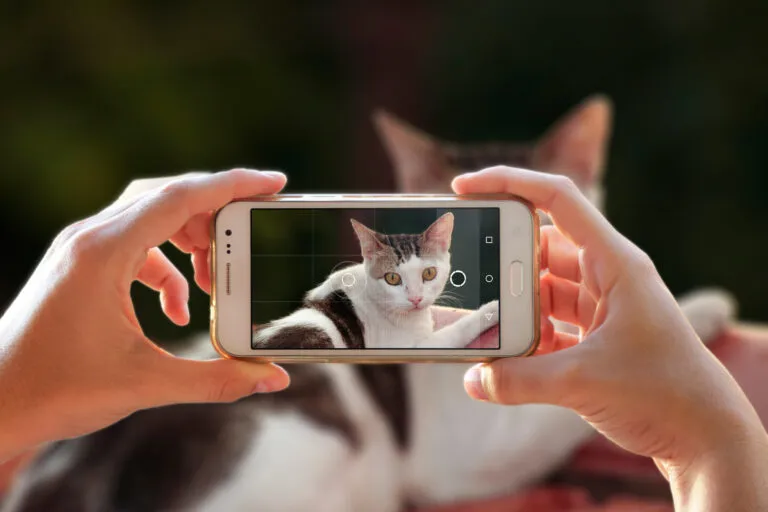
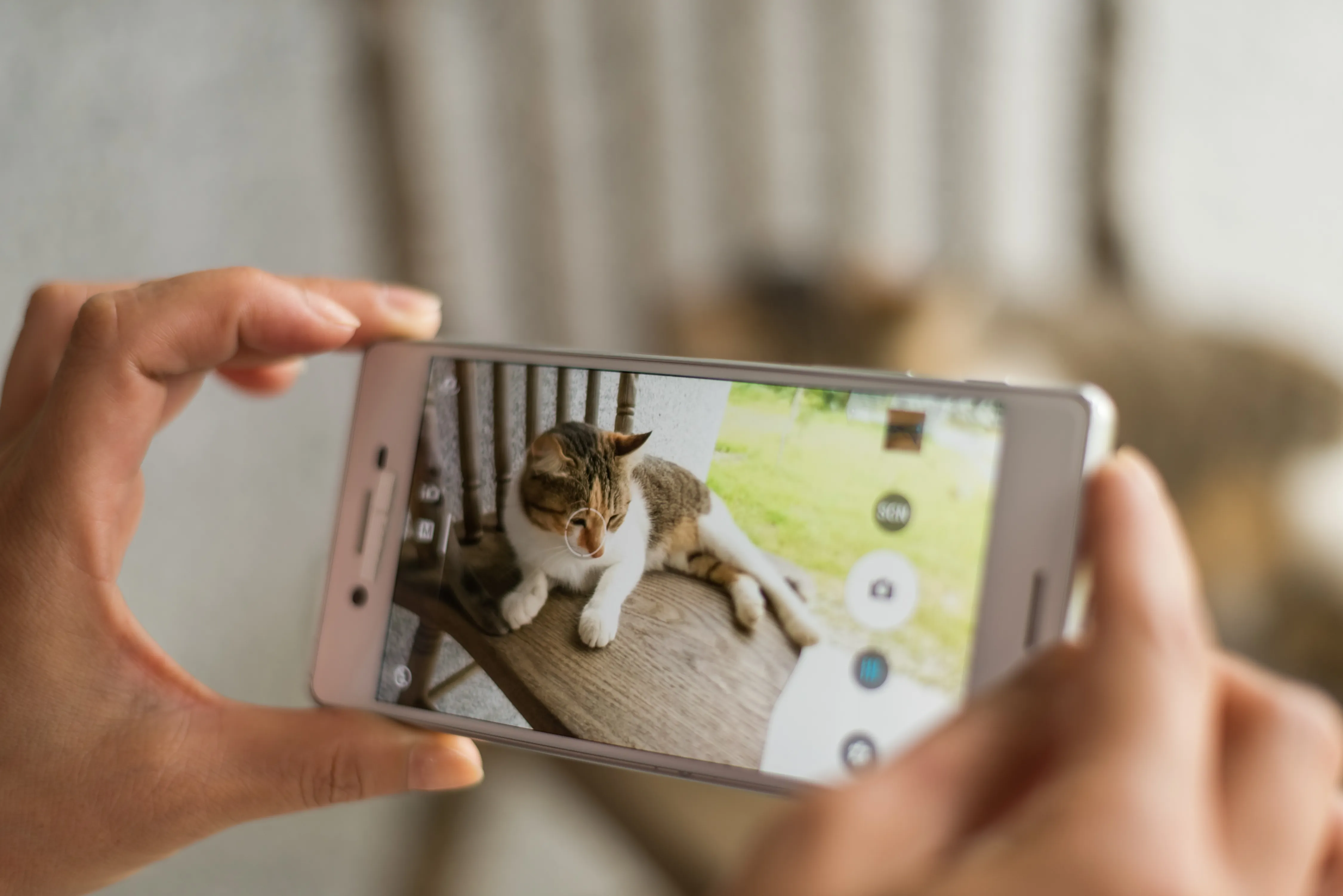
Whether they are snoozing peacefully on a warm windowsill, giving a hearty yawn, playing amusingly with a ball of wool or curiously exploring the garden at home: cats provide plenty of great photo opportunities – yet the moment you pick up your camera or smartphone, your lovely feline has already jumped up again and the perfect moment for the shot has passed. Luckily, we have a few simple tips and tricks to help you take brilliant photos of your cat or tomcat – even without an expensive DSLR camera, telephoto lens or tripod.
Have a Picture in Mind: How Would You Like to Show Your Cat?
Whether on a photo wall in your living room or online on Facebook, Instagram & Co. – there is no shortage of pictures with beloved furry friends taking centre stage. However, the quality of pet photos often leaves a lot to be desired: poor lighting, blurry movement, distracting backgrounds or simply boring sleeping pictures. Capturing a cat sharply in good light and in an interesting pose demands quite a lot from cat lovers and amateur photographers alike – after all, cats generally have little personal interest in a good portrait photo.
To make sure you still manage to take a lovely photo, you should think about what you want your picture to express before reaching for your camera or phone. How would you like to show your cat? Would you like a skilful portrait shot that highlights those beautiful eyes? Or would you rather photograph your cat in action – while playing, climbing or jumping?
Should your cat be photographed outdoors in nature or relaxing on the sofa at home? Sometimes it helps to get inspiration from other cat photography online. However, do not try to recreate a picture exactly – it usually goes wrong. Every cat is different, after all – and the photo should highlight that uniqueness.
To find the right subject for your cat, think about what makes your cat special. Does it have particularly spotted fur? Or what does it enjoy doing most? Is your cat still young and playful? Then a dynamic photo with its favourite toy would work well, or a picture showing the little cat looking curiously into the camera. With pictures of kittens, it is lovely when the proportions are visible, for example by photographing the kitten next to its mother’s teats or in your arms.
Is your fully grown cat a free spirit that would happily spend all day hunting mice? Then you should photograph it in the garden or out in an open field. Or does your cat prefer curling up on your lap and being stroked? In that case, a cosy picture of your furry friend lying in the sunshine is ideal.
Pay Attention to a Neutral Background
No matter which subject or “pose” you choose for your cat – it is naturally the centre of attention. And that should come across in the photos too. A busy background with people, cars, patterned wallpaper or the television distracts from your feline friend and is therefore best avoided.
If you are photographing your cat indoors, try placing it in front of a white or plain-coloured wall (without pictures or posters) or on an attractive wooden floor. Alternatively, you can hang up a sheet or paint a large piece of cardboard to use as a photography backdrop. Plain cushions or blankets are also perfect for creating background arrangements.
The important thing is that your cat stands out perfectly against the chosen background. For example, a black cat is best photographed on a light wooden floor or a colourful blanket rather than on dark tiles. Cats with reddish-brown fur, on the other hand, may not stand out clearly enough against certain wooden or laminate floors.
If you have a white cat at home, you can of course opt for a darker blanket or black cushions as the background. If you prefer photographing your cat outdoors, you should also make sure the background is as neutral as possible, such as a green meadow.
Make Sure There Is Enough Light
A beautiful background, a great pose and the best camera are all useless if the lighting is wrong. Good lighting, ideally plenty of natural daylight, is essential for beautiful photos. Unless you happen to own professional photography lights, you should photograph your cat near a large window whenever possible – or move the whole set-up outside into the garden.
To avoid unattractive shadows, do not stand directly with your back to the light source either. Instead, photograph slightly to the side of the incoming light from the window or the sun. If your cat is looking directly towards the window, you will later notice a white reflection in the pupil – a very popular effect in portrait photography.
Indoors, you can also slightly increase your camera’s ISO setting in addition to using natural daylight or use an external flash. The flash should always be pointed upwards so the photo is only illuminated indirectly by the reflected light from the ceiling. Never flash directly into your cat’s face – it will frighten them and send them running away.
Getting down to your cat’s eye level helps create more engaging and professional-looking pet photos.
Cats in Portraits: Sharp in Front, Blurred in the Background
Another tip for making your cat stand out even more is to blur the background while keeping the cat’s face razor-sharp. Professionals do this by setting the aperture in A or AV mode to as low a number as possible. At a value between f2.8 and f3.2, the aperture is wide open and the depth of field becomes shallower. This means the background appears blurred while your cat remains sharply focused in the foreground. It is important that the focus is on the cat’s eyes – a portrait photo is especially effective when the eyes are sharp and expressive, immediately drawing in the viewer.
For anyone unfamiliar with photographic terms such as focus, depth of field, aperture and shutter speed, but who still wants to take a beautiful portrait of their cat, portrait mode is recommended, as it can easily be set on most digital cameras (usually marked with a head symbol). Some smartphones are also capable of taking portrait photos with a blurred background. If your smartphone model does not have this mode, you can download apps designed to reduce depth of field. Alternatively, you can blur the background afterwards using image editing software or an app.
Cats in Motion: Fast, but Still not Blurry
One particular challenge in cat photography is that your furry model usually does not cooperate quite the way you would like. Instead of sitting still and looking into the camera, it would rather investigate what is happening behind the camera, jump onto the scratching post or run into another part of the house. Photographing your cat while running or jumping and freezing the movement in a photo naturally has a very special appeal. The problem is that these action shots often turn out blurry or shaky and are then only fit for the digital bin.
To prevent this, your camera’s shutter speed needs to be as fast as possible. If you are reluctant to adjust the settings manually, you can alternatively select the sports mode on your camera. Burst mode is also ideal when your cat is racing around and playing. This way, you will not miss any original poses from your cat. Of course, you will need to set aside some time after the photo shoot to sort through the flood of pictures. And most importantly: make sure you have enough storage space on your camera or smartphone beforehand.
Get Down to Your Cat’s Eye Level
Cat photos look more natural when they reflect the cat’s perspective. Pictures where the photographer simply shoots the cat from above while standing are rarely convincing, because too much of the surroundings usually distracts from the real subject and the cat appears too small. So for you, that means: get down on your knees!
Position yourself with the camera at your cat’s eye level and try to capture its gaze horizontally. If kneeling is difficult for you, you can of course try placing your cat in a higher position, for example on a table or scratching post.
If you have a particularly majestic cat at home, such as a Persian or Maine Coon, you should get even lower and photograph from a lying-down position using the so-called frog perspective. This will show off your impressive cat beautifully. But be careful: cats can sometimes appear heavier from below than they really are.
How to Get Your Cat to Look Directly into the Camera Lens
Real eye-catchers are photos in which the cat looks directly into the camera. But how do you persuade a stubborn tomcat or cat to do that? Simply waiting and pressing the shutter at the right moment can become quite a test of patience. Fortunately, there are a few tricks you can use to guide your feline friend’s gaze in the right direction.
This works best if a second person can assist you during the cat photo shoot. Attach an interesting toy to a stick. While you keep your finger on the shutter button, your partner should try to direct the cat’s attention towards the toy. Once they have succeeded, they should quickly swing the stick towards the camera lens, your cat will follow it with its eyes and you can take the shot!
If you are photographing your pet alone and do not have an assistant, you can also tap a finger against the camera body and try to attract your cat’s attention with the clicking noises. Cats are naturally very curious – make use of that! Finally, you can of course keep a tasty cat treat handy and hold it towards the camera lens. Your cat will do anything to get it – and with a bit of luck, will look directly into your camera at the same time.
By holding a treat near the camera, your cat will look straight into the lens.
Please Come Closer
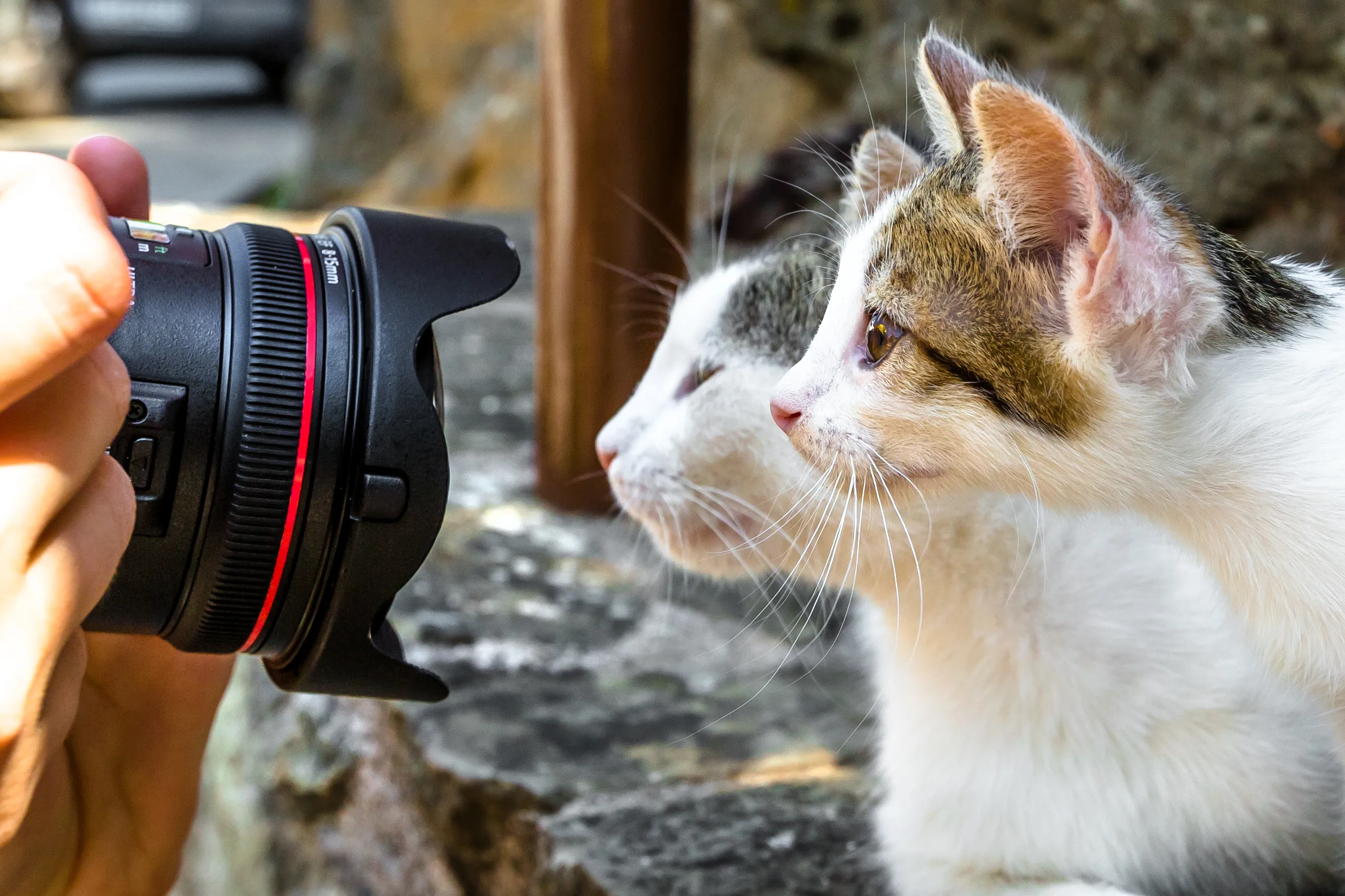
To get good cat photos, your cat needs to be the centre of attention and as little background as possible should be visible – you already know that much. Unlike landscape photography, you therefore need to get as close as possible to your four-legged model with your camera. Your cat does not need to ignore the camera – ideally, it should look directly into the lens. Get close and let your cat curiously “inspect” the camera – with a bit of luck, you may capture a fantastic close-up shot.
Detail shots showing only your cat’s paw, for example, or the distinctive spot on its nose, are also very interesting and look impressive enlarged on any photo wall. Remember to photograph using the highest possible image quality. That way, you can still crop the image afterwards without it becoming too pixelated when enlarged.
That Special Touch: Photo Effects in Post-Processing
Even if you can impress on Instagram & Co. with the hashtag #nofilter, photos sometimes only become true works of art with special effects. And honestly: if every celebrity photo in glossy magazines is edited, you are certainly allowed to make your cat look even more beautiful with various image editing programmes or apps too.
Pictures become more interesting when you create contrasts or slightly alter the colours. Some cat photos, for example, look even more professional in black and white than in colour. Cat photos become real eye-catchers when you add a so-called vignette. This darkens the edges of the picture with a shadow effect, making your cat stand out even more in the bright centre of the image.
Practice Makes Perfect
You now know plenty of tips for taking beautiful photos of your beloved furry friend. Nevertheless, it is of course possible that you will not manage the perfect cat photo straight away. But do not worry, always remember: nobody becomes a master overnight! Whether in sport, music, painting or cat photography, talent alone is not enough to become truly good. Becoming a professional only comes with lots of practice and training.
So grab your camera and simply try out different settings and perspectives. The more familiar you become with the technology, the faster you will be able to react to your cat’s interesting poses and capture them in a brilliant photo.
We wish you lots of fun, patience and of course plenty of good light when photographing your feline friend!
This article was translated using Artificial Intelligence from the original German zooplus Magazine. While the original content was authored by industry experts and reviewed by our editorial team, this automated translation has not been human-edited and is provided for informational purposes.
zooplus Editorial Team
The zooplus editorial team consists of a dedicated team of experts with many years of experience in the field of animal husbandry: Luisa with her White Swiss Shepherd Elyos, Laura, Julio, and Florian. Together with a large network of animal experts, we work to make the zooplus magazine a trusted source of information for all animal owners and lovers. Our goal is to provide exciting animal knowledge and relevant information on the proper care of pets.
The origins of indoor cats are as mysterious and fascinating as their characters. Are cats really desert animals – and what would that mean for their behaviour? In fact, it was unclear for a long time where the ancestors of our feline friends originated. That was until a genetic analysis shed some light on the enigma of cat evolution.
It’s not just the right type of litter tray that will make your cat happy, but also the right type of cat litter. The best litters are ones that are very absorbent and ideally neutralise odours too, but finding the perfect cat litter can be no easy task with so many varieties on offer from natural clumping litter made of clay, non-clumping litter, litter made of wood or silica.
There comes a time when every kitten becomes an adult and tests boundaries. The following article explains when puberty begins with cats and what this defiant phase means for you as a cat owner.