{"url":"https://www.zooplus.co.uk/magazine/cat/cat-travel-and-transport/9-tips-for-finding-the-perfect-cat-carrier","title":"9 Tips for Finding the Perfect Cat Carrier","mag_id":407603,"is_single":true,"cat_name":"Cat","sub_cat_id":24423,"sub_cat_name":"Travelling with a cat","cat_id":138}
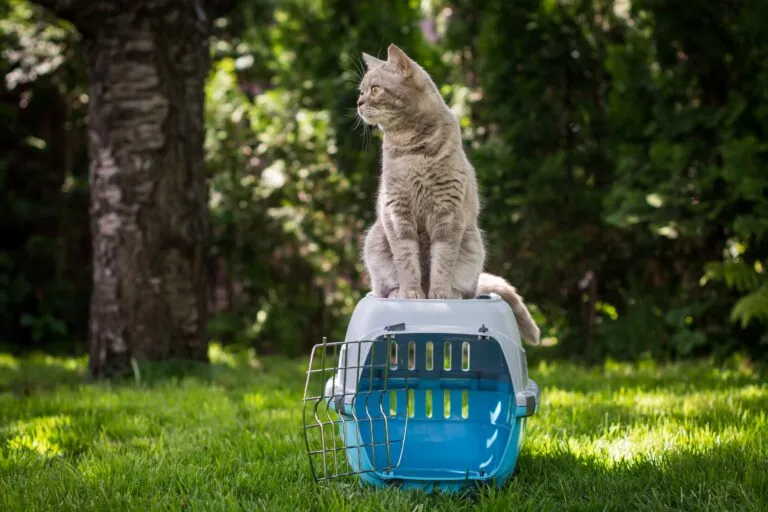
Part of the basic equipment for cats is a cat carrier. Whether you get your cat from a shelter, a breeder or a private owner, your pet needs to be transported home safely. You will also need a carrier regularly for trips to the vet. So it makes sense to buy a carrier before your cat moves in. That’s why we’ve put together nine tips on choosing and using a cat carrier for you below.
The cat carrier should be large enough for your cat to stand upright, turn around, sit comfortably and lie down. However, it shouldn’t be too large, as this can cause your cat to slide around inside during transport. This should be avoided to prevent unnecessary stress for your cat.
Make It Easier for Your Cat to Get Inside
Very few cats willingly go into their cat carrier or enjoy being placed inside. Taking them out again at the vet can also become a real challenge for many cat owners. It’s much easier if the carrier can be opened from the top. Through a top opening, you can place your cat into the carrier more easily than pushing them in through the front door. Ideally, the cat carrier should have two openings – one on top and one at the front.
Think about Safety
Confined cats can develop surprising abilities and turn into real escape artists. When choosing a carrier, make sure the fastenings close securely and cannot be opened by your cat. The carrier should also be robust – after all, it needs to withstand claws and teeth. Carrying handles and straps should be sturdy. The material should be chosen so that your cat can’t get its claws caught anywhere or injure itself in any other way.
Pay Attention to Ventilation
A carrier usually doesn’t mean anything good for a cat. More often than not, the dreaded vet awaits at the end of the trip. Cats therefore tend to react with stress when the carrier appears. Stress can cause them to pant, which uses more oxygen than calm breathing. It’s therefore very important that the cat carrier is adequately ventilated.
Think about Cleaning
Accidents can happen during transport. So make sure the carrier can be cleaned easily and thoroughly. Plastic carriers are particularly easy to clean.
Get Your Cat Used to the Carrier
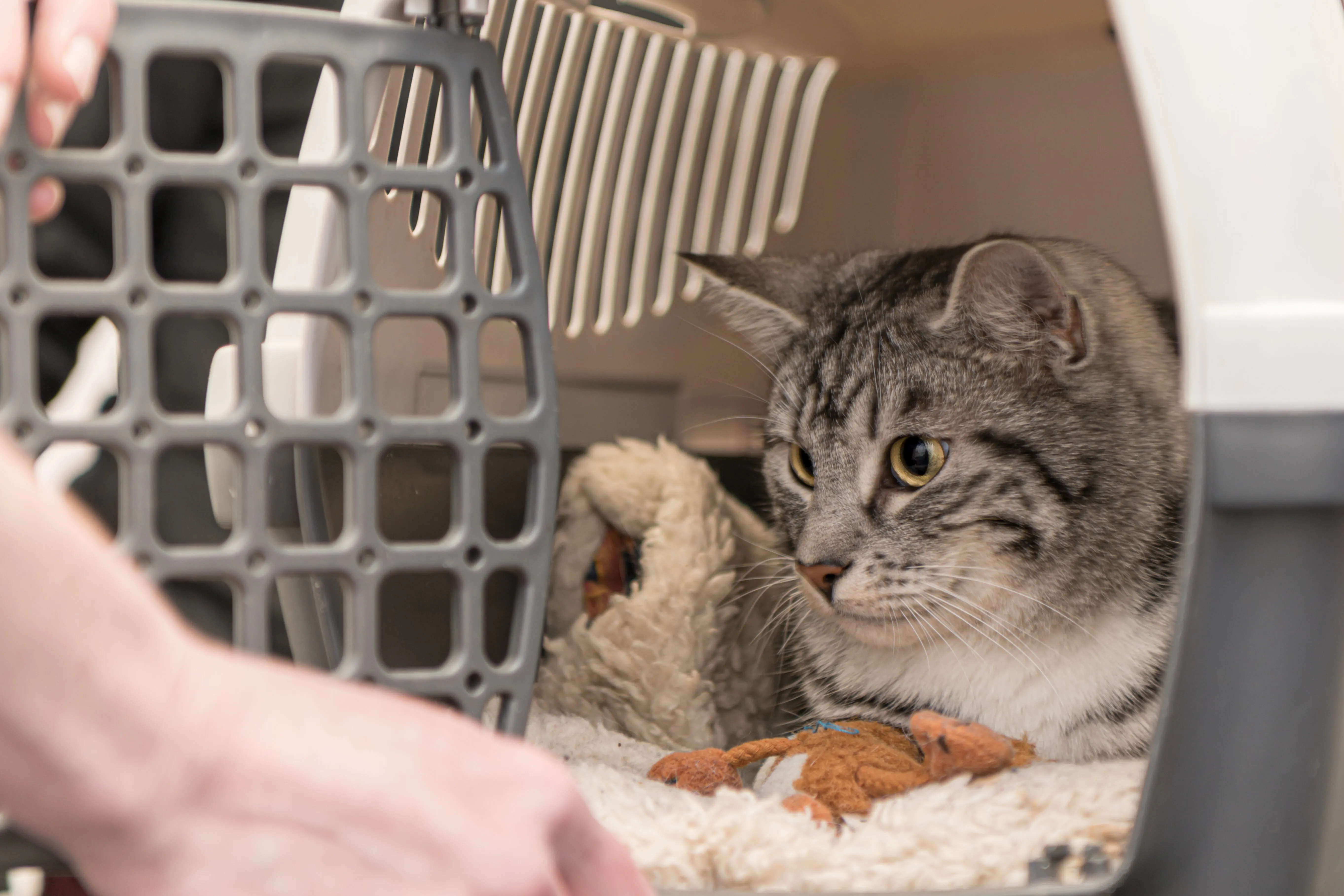
It’s often a struggle to put a cat into its carrier. Cats usually associate the carrier with a trip to the vet and understandably aren’t keen on outings. It becomes easier if your cat associates the carrier with something positive. Place the carrier open in your cat’s living area before it’s used for the first time. The aim is for your cat to accept the carrier as a safe den. A cosy blanket, favourite toys and treats can help make the carrier more appealing.
If the cat accepts its carrier as a safe place, the journey will be much more relaxed.
Replace the Cat Carrier if Necessary
If your cat refuses to go into the carrier, things quickly become difficult for the owner. In no time, the cat has disappeared into the furthest corner under the bed or is defending itself with claws and teeth. If your cat has already had bad experiences with its carrier, it can be worth starting afresh and replacing it. Often it’s easier if the carrier doesn’t have negative associations, and with a bit of patience you can get your cat used to a new model.
Make Your Cat Comfortable
Only very few cats like lying in an empty carrier. That’s why it’s a good idea to make the inside as cosy as possible. Non-slip materials work best, such as a sturdy blanket or an anti-slip mat. A soft cushion with catnip can also help your cat feel more at ease.
Don’t Just Place the Carrier on the Car Seat
Just like dogs, cats must also be secured as cargo in the car. If an accident happens and the cat isn’t secured, it can quickly become dangerous. ADAC crash tests with an unsecured dog dummy showed that in the event of a collision at 50 kilometres per hour, it is thrown through the interior of the car with 30 times its body weight.
Where Is the Best Place for the Cat Carrier in the Car?
To prevent your cat from becoming a projectile and putting itself and the vehicle’s occupants at risk, you should never simply place the carrier on the back seat or the front passenger seat.
ADAC crash tests have shown that the safest place for a cat carrier is in the footwell behind the front seats. When strapped onto the rear seat, the plastic material of the test carrier proved too weak in a 50 km/h impact. The metal door and lid broke under the strain of the four-kilogram artificial test cat.
At a Glance: The Ideal Carrier for your Cat
The cat carrier has two openings – one on top and one at the front.
The carrier is robust and can withstand claws and teeth.
Carrying handles and straps are sturdy.
The door can be closed securely.
The carrier is easy to clean.
The carrier is adequately ventilated.
The carrier has as low an empty weight as possible.
Your cat can’t get its claws caught anywhere or injure itself in any other way.
zooplus Editorial Team
The zooplus editorial team consists of a dedicated team of experts with many years of experience in the field of animal husbandry: Luisa with her White Swiss Shepherd Elyos, Laura, Julio, and Florian. Together with a large network of animal experts, we work to make the zooplus magazine a trusted source of information for all animal owners and lovers. Our goal is to provide exciting animal knowledge and relevant information on the proper care of pets.
When moving house, many things can go wrong – especially breaking a treasured possession. But when you move with your cat, something can also happen to them. That’s why this article shares the most important tips and tricks for moving house with cats.
The cat boarding cattery is completely full, the friendly neighbour has no time, and your own family lives far too far away. If you want to go on holiday with your cat, there are plenty of things to consider. In the following article, you’ll find important information and tips about travelling with your cat.
Taking your cat on a cruise? What sounds crazy is actually possible. After all, commuters too sometimes have to take their cat with them on the ferry. We'll give you some tips on how to make travelling by ship as pleasant as possible both for your cat and also the fellow passengers!