{"url":"https://www.zooplus.co.uk/magazine/cat/cat-training/my-cat-meows-at-night-why-and-what-to-do","title":"Cat Meowing at Night: Why Does It Happen and What Can You Do?","mag_id":135229,"is_single":true,"cat_name":"Cat","sub_cat_id":150,"sub_cat_name":"Cat Training","cat_id":138}
If your cat meows at night, it can quickly lead to sleepless nights. But what can you do if your cat robs you of sleep every night with constant meowing? In this article, you’ll find out why many cats meow especially at night and what can help put an end to the nocturnal yowling.
Cats are nocturnal. So it’s hardly surprising that they demand your attention with loud meowing, particularly at night when they’re at their most lively.
But don’t worry. Cat owners can still enjoy peaceful nights and sleep right through. The good news is that cats can learn to stay quiet at night. However, it’s important to first understand the reasons behind the nighttime meowing.
Noises During the Night
As so often, there isn’t just one single reason why cats meow at night. Cats are as individual as their causes for nocturnal meowing. While some doze peacefully and dream about the day’s adventures, others pace restlessly around the house. Some even scratch the sofa, the doors, or meow heart‑rendingly.
Of course, there are also characters who are simply chatterboxes by nature. These cats love to make themselves heard at every opportunity and want to “chat” with their humans. Most Siamese cats, for example, belong to this type.
Meowing as a Form of Communication
In general, cats use meowing to tell us something. They don’t do it just because they like the sound of their own voice or to deliberately keep you awake. Meowing is a tried-and-tested way for cats to communicate with their humans.
While adult cats mainly communicate with each other through body language, meowing is largely reserved for conversations between cats and people.
Cats quickly learn that their owners are often a bit “slow on the uptake” when it comes to reading physical signals. So, much like humans use speech, they rely on vocal sounds to get our attention.
Unfortunately, we don’t always understand what our cats are trying to tell us when they meow. Sometimes it takes empathy, patience and a bit of detective work to uncover the reason. After all, every cat has its own preferences, habits, experiences and needs.
Nevertheless, nighttime meowing is often due to one of the following causes:
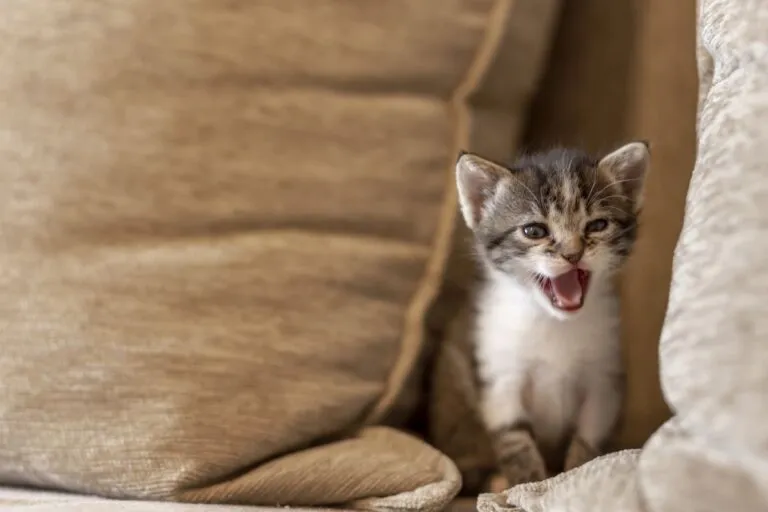
There are many reasons why cats miaow at night. Stress is one of them.
Seven Tips if Your Cat Meows at Night
Unfortunately, there’s no one-size-fits-all solution for teaching a cat to be quiet at night. The reasons for nighttime meowing can vary greatly – and so can the measures needed to prevent the disturbance.
First, try to identify the cause of the nocturnal meowing. Has anything in your home changed recently? Have you altered your cat’s food or feeding times ? Is your cat showing any other unusual behaviour? All of these factors can provide important clues.
If you suspect what might be behind the nighttime meowing, you’ve already taken the first step. You can now try appropriate countermeasures. You can read about what these might be in the tips below:
1. Meowing due to Nervousness, Fear, or Insecurity
Cats are creatures of habit and very sensitive to changes in their familiar surroundings. New furniture or even a house move can deeply unsettle a cat.
The unfamiliar environment, new smells and strange noises can frighten them. In this state, a peaceful night’s sleep is out of the question. Instead, your cat may meow at night – and probably during the day too – to draw attention to their distress.
Other events, such as loud New Year’s Eve fireworks or a heavy thunderstorm, can also scare cats with their heightened senses.
What Can You Do if Your Cat is Anxious or Insecure?
It’s important to take your cat’s worries seriously, without giving too much attention to their meowing at night. Otherwise, they may see this as encouragement to loudly demand your affection again on the following nights.
Create a Feel-Good Atmosphere
Instead, give your cat plenty of love and attention – especially during the day. Play with them, stroke their fur and let your feline friend enjoy a nap on your lap. At night, you shouldn’t shut the bedroom door either.
Perhaps your cat could even sleep in your bed and settle more easily? If that’s not for you, you can set up a cosy sleeping spot next to or under the bed, or put up a cat hammock. Some cats are even soothed by a quiet radio playing at night, which distracts them from unsettling noises.
Pheromones to Reduce Stress
If your cat continues to meow constantly at night or seems restless despite these measures, using a special diffuser may help. These contain pheromones (natural scent substances produced by cats) that can have a calming effect and help create a more relaxed atmosphere.
Pheromones are available in various forms, such as sprays or plug-in diffusers that you simply insert into a socket.
2. Meowing due to Hunger
Cats prefer to eat small portions throughout the day, which also suits their digestive system. If they haven’t eaten much in the evening, it’s understandable that they may ask for a small meal later and meow for it.
Even so, you shouldn’t jump out of bed straight away to fill the cat bowl . Once your cat has learnt that meowing leads to food, they’ll likely keep trying.
Instead, feed your cat shortly before you go to bed. You can also leave out a small portion for the night.
Alternatives to Regular Feeding
Food dispensers or a food-filled puzzle board can also be useful. These not only provide your cat with a small midnight snack, but also keep them occupied for a while as you sleep peacefully.
But be careful: Permanent access to food can easily lead to obesity in your cat. Always keep an eye on your cat’s weight and measure out the daily food allowance. That way, you can prevent your pet from putting on weight.
3. Meowing due to Boredom
During the day, your cat may snooze comfortably on the sofa – but in the evening and at night, they suddenly become lively. They meow constantly, asking for entertainment. This isn’t unusual, as cats are naturally more active at this time.
However, if you keep your cat sufficiently occupied during the day, they’ll also be ready to rest for a few hours at night. For example, you can play together or let them roam outside. Simply try out which games your cat enjoys most.
Playful Activities for Cats
Whether it’s balls of wool, little balls, feather wands, laser pointers, a shallow bowl of water or other cat toys: there are hardly any limits to your creativity when it comes to keeping your cat entertained. Make sure your feline can really burn off energy in the evening before bedtime and enjoy your full attention.
If they still don’t sleep after all that evening action, you can provide activities for the night. This could include puzzle boards or other interactive toys. That way, your cat can keep themselves busy at night while you continue sleeping in peace.
4. Meowing due to Loneliness
If your cat is alone at night, they may feel lonely. Kittens in particular, full of energy and playfulness, often dislike being alone after dark.
Getting a second cat could help. Unlike you, another cat is also active at night and makes a great playmate. While the two of them race around the sofa or conquer the scratching post together, you can sleep soundly in the next room.
Even with older cats, introducing a second feline companion can be a good solution to nighttime meowing. However, it’s essential to plan the introduction carefully in advance and proceed gently. Otherwise, bringing home another four-legged friend could lead to conflict.
5. Meowing out of Habit
Of course, some cats meow at night simply because it’s become a habit. This often happens when meowing achieves the desired effect: it gets your attention and prompts you to care for them, stroke them or put out food.
To stop habitual meowing, it’s best to ignore your cat at night. Even if they continue for a few more nights and cost you sleep, they’ll eventually realise it’s pointless and stop.
Still Take Warning Signs Seriously
Nevertheless, you should always take nighttime meowing seriously. If your cat hasn’t shown this behaviour before, consider what might have triggered the change. If stress, fear or boredom are behind the nightly drama, the tips above may help.
6. Meowing due to Illness or Pain
Many cats suffer in silence and hide pain for as long as possible. It’s in their nature: to survive, their wild ancestors could never show weakness.
But at night, pain often becomes unbearable. Added to this are the darkness, the silence, the absence of their humans and the lack of distraction. At that point, many cats see no other option but to meow loudly.
In addition to the psychological causes mentioned, you should always consider physical complaints as a possible reason. Pain in internal organs or joints, high blood pressure, an overactive thyroid or kidney failure, as well as heart disease can lead to restlessness at night.
Age-related limitations, such as declining senses (deafness or blindness), can also frighten a cat so much that they meow at night. Therefore, have your cat examined by a vet in any case. This is the only way to rule out illness as the cause.
7. Meowing due to Hormones
Especially in unneutered cats, hormones can sometimes run high. Cats in heat, for example, show it by pacing restlessly, rubbing their heads against objects or meowing more than usual. Even cats that were previously quiet at night may suddenly become very vocal when in heat.
At the same time, sexually mature cats give off a scent that tomcats can detect over long distances thanks to their keen sense of smell. So your male cat may suddenly become unbearable if a neighbouring female is in heat. He’ll do everything he can to reach her – and will loudly voice his frustration at the closed door during the night.
Easing Meowing during Heat
The most effective way to stop this hormonally driven feline chaos is certainly to have your cat neutered . Neutered cats are usually calmer and lose interest in potential mates. Neutering also prevents the risk of prolonged heat, which can occur if a female cat is not mated while in heat.
However, the decision to neuter should not be taken lightly. Discuss your plans thoroughly with your vet. They will advise you in detail about the right timing, as well as the benefits and possible side effects of the procedure.
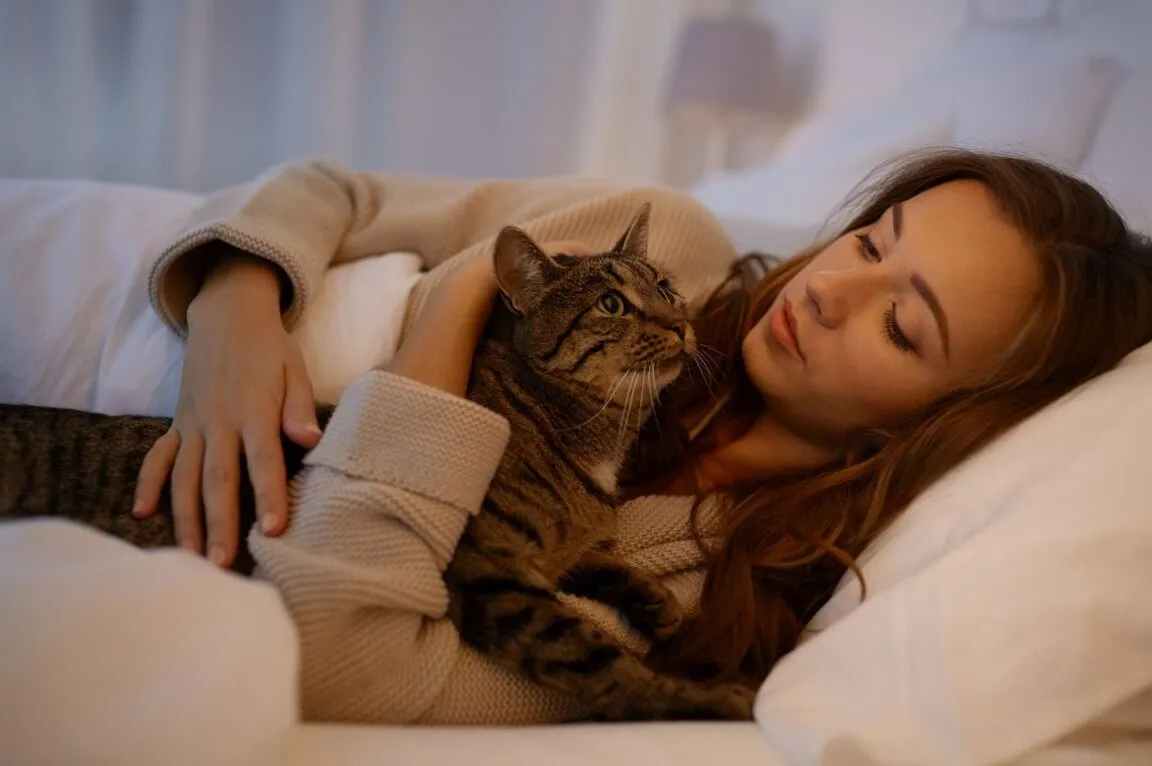
Loneliness can also be a reason why your cat meows at night.
Cat Meowing at Night: Should I See a Vet?
If your cat meows at night, psychological causes are often to blame. Boredom, lack of stimulation or loneliness frequently trigger this behaviour. However, physical complaints can also be responsible.
If your cat suddenly changes their behaviour, you should generally have them examined by a vet. Your pet may indeed be ill and need medication or a special diet.
What’s more: If the vet confirms that your cat is completely healthy, that reassurance alone will help you sleep more peacefully. You’ll also be able to try the measures mentioned above for psychologically driven meowing with greater calm and patience.
Help from a Behaviourist
If none of this works and the nightly yowling simply won’t stop, don’t hesitate to seek professional help from an experienced cat behaviourist.
After all, it’s not just you who suffers from the lack of sleep. Your cat is likely feeling unsettled too and is using intense meowing to express a need that you should try to understand.
This article was translated using Artificial Intelligence from the original German zooplus Magazine. While the original content was authored by industry experts and reviewed by our editorial team, this automated translation has not been human-edited and is provided for informational purposes.
At the Justus-Liebig-University of Giessen I was extensively trained as a veterinarian and was able to gain experience in various fields such as small animal, large animal and exotic animal medicine as well as pharmacology, pathology and food hygiene.
Since then, I have been working not only as a veterinary author, but also on my scientifically driven dissertation. My goal is to better protect animals from pathogenic bacterial organisms in the future.
Besides my veterinary knowledge, I also share my own experiences as a happy dog owner and can thus understand and enlighten fears and problems as well as other important questions about animal health.
Cats are naturally curious creatures. That being said, not every cat trusts people. This is especially true when cats grow up without contact with humans or have had negative experiences with people. Gentle handling of a scared cat is key.
Cat sounds are varied and act as a tool to express feelings. The most well-known are miaowing, purring and hissing. This article translates the most important sounds into human speak.
Trust is needed for a harmonious relationship with your cat. But can you build your cat's trust and how do felines show that they do trust you? Cats are considered independent and not very transparent, but these five signs of behaviour will prove to you whether and to what extent your cat trusts you.