{"url":"https://www.zooplus.co.uk/magazine/cat/cat-training/help-my-cat-is-scratching-the-sofa-what-should-i-do","title":"Help, My Cat Is Scratching the Sofa! What Should I Do?","mag_id":408656,"is_single":true,"cat_name":"Cat","sub_cat_id":150,"sub_cat_name":"Cat Training","cat_id":138}
Sometimes it’s enough to drive you to despair: your cat scratches the sofa or the wallpaper and before long the furniture is fit for the tip. But scratching is a completely natural behaviour. With the right scratching post and a few handy tricks, you can save your home furnishings from your feline’s sharp claws.
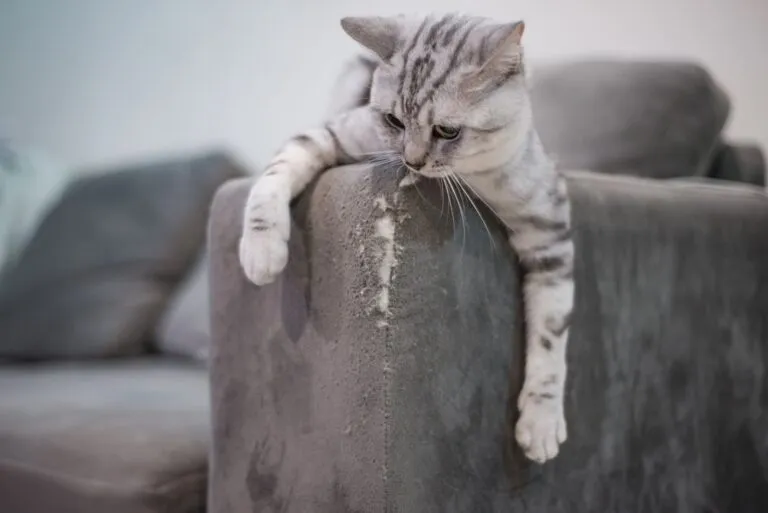
A scratched armchair, claw marks on the sofa or torn wallpaper often give the game away: a cat lives here. But why do so many kitties attack their owners’ furniture with their claws?
Claw Care
One reason cats scratch furniture is to care for their claws.
To keep these little predators’ weapons sharp, the worn outer layers of horn need to be shed regularly. Scratching keeps the claws at the right length, sharpens them to a dagger-like point and removes dirt.
Outdoors: Tree Trunks …
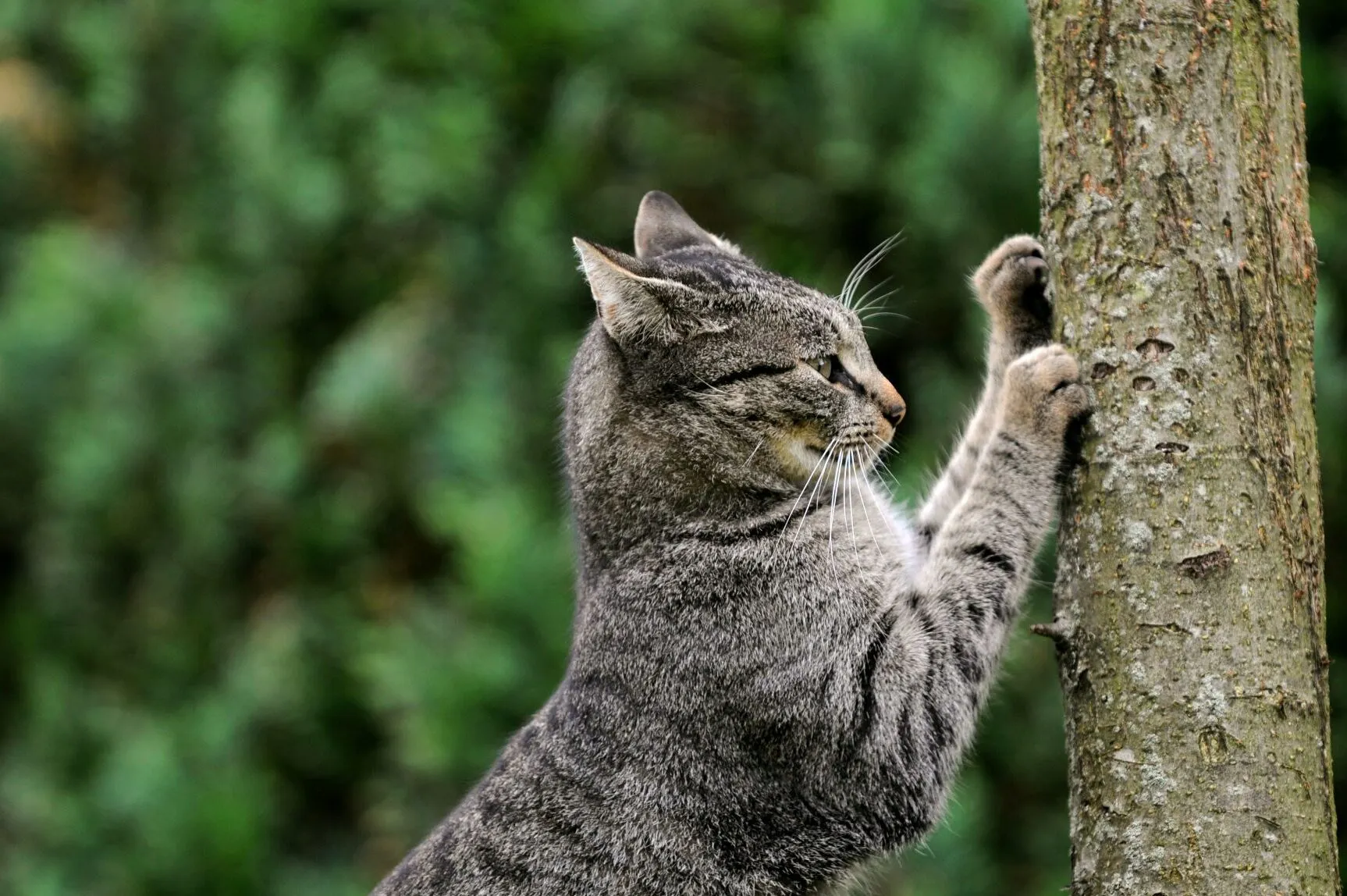
Outside, cats sharpen their claws on tree trunks. They particularly like using trees that are slightly slanted or upright, where they can enjoy a full stretch.
Fallen tree trunks are sometimes used for claw sharpening too. In popular scratching spots, you may occasionally find shed claw husks, sometimes even embedded in the wood.
… And Indoors: The Furniture
Indoor cats don’t have trees at their disposal and inevitably have to resort to alternatives. Upholstered furniture, carpets, wooden furniture and textured wallpaper are especially popular for a “pedicure”.
So when your cat scratches the sofa or the wallpaper, she isn’t doing it to annoy you. For your kitty, it’s simply the best substitute for a tree trunk.
Cats also scratch to leave messages for other cats. With their markings, they’re making a statement, for example: “This is my territory.”
The visible scratch marks are accompanied by scent signals. These scents are released from the sweat glands in the paw pads and toes.
Because scratching is such an important form of communication, cats often leave scratch marks around the home even if they have the most beautiful scratching post available.
Sharpening Claws to Relieve Stress
Some cats also take their claws to the furniture because they’re bored or want to relieve stress. Plenty of play, perhaps even in the form of cat agility, often helps with boredom and tension.
Cats are particularly fond of sharpening their claws when another cat is watching. It’s a kind of dominance gesture, saying: “Look at me! I’m the boss.”
Your Cat is Scratching – What Helps?
Important: never punish your cat, even if she’s just shredded your designer sofa. With a few simple training tips, you can gently discourage your kitty from scratching in the wrong places:
Provide plenty of alternatives in the form of scratching posts and other scratching furniture.
Make access to favourite scratching spots more difficult by, for example, placing a heavy shelving unit or a plant pot in front of the wallpaper.
Double-sided tape is very unpleasant for cats’ paws – stick it onto the scratching areas on your upholstered furniture.
If territorial disputes in a multi-cat household are the cause of frequent scratch marking, a feline behaviourist may be able to help.
Scratching Post: How Your Cat Can Scratch Properly
To let your kitty express her natural scratching behaviour, she needs a scratching post. For indoor cats especially, this piece of cat furniture is essential.
A standard scratching post – also known as a cat tree – consists of a trunk wrapped in sisal. One or more platforms are attached to the trunk. In addition to freestanding models, there are also so-called ceiling-height scratching posts. These are particularly tall and can be secured against the ceiling. Large scratching posts have several trunks, platforms and hideaways.
It’s best to place the scratching post where your family usually spends time, for example in the living room. A spot by a window is ideal. Cats love watching what’s going on from up high – when they’re not dozing.
Look Out for Quality
When buying, make sure it’s good quality: the scratching post should be sturdy and not tip over when your cat clambers about on it. With cheaper products, the fabric covering on the platforms and hideaways is sometimes fixed with staples, which could injure your cat.
It’s best to cut off plush balls and other cat toys attached with strings using a pair of scissors. Otherwise, your cat could get tangled in the string while playing, slip and seriously injure herself.
In addition, at least one section of the trunk should be tall enough for your cat to stretch out fully while sharpening her claws.
Last but not least, give your cat a little time to get used to her cat tree. She may ignore her new piece of furniture at first. Before long, though, she’ll be using it enthusiastically to sharpen her claws, clamber about or have a snooze.
This article was translated using Artificial Intelligence from the original German zooplus Magazine. While the original content was authored by industry experts and reviewed by our editorial team, this automated translation has not been human-edited and is provided for informational purposes.
zooplus Editorial Team
The zooplus editorial team consists of a dedicated team of experts with many years of experience in the field of animal husbandry: Luisa with her White Swiss Shepherd Elyos, Laura, Julio, and Florian. Together with a large network of animal experts, we work to make the zooplus magazine a trusted source of information for all animal owners and lovers. Our goal is to provide exciting animal knowledge and relevant information on the proper care of pets.
Cats are naturally curious creatures. That being said, not every cat trusts people. This is especially true when cats grow up without contact with humans or have had negative experiences with people. Gentle handling of a scared cat is key.
Cat sounds are varied and act as a tool to express feelings. The most well-known are miaowing, purring and hissing. This article translates the most important sounds into human speak.
Trust is needed for a harmonious relationship with your cat. But can you build your cat's trust and how do felines show that they do trust you? Cats are considered independent and not very transparent, but these five signs of behaviour will prove to you whether and to what extent your cat trusts you.