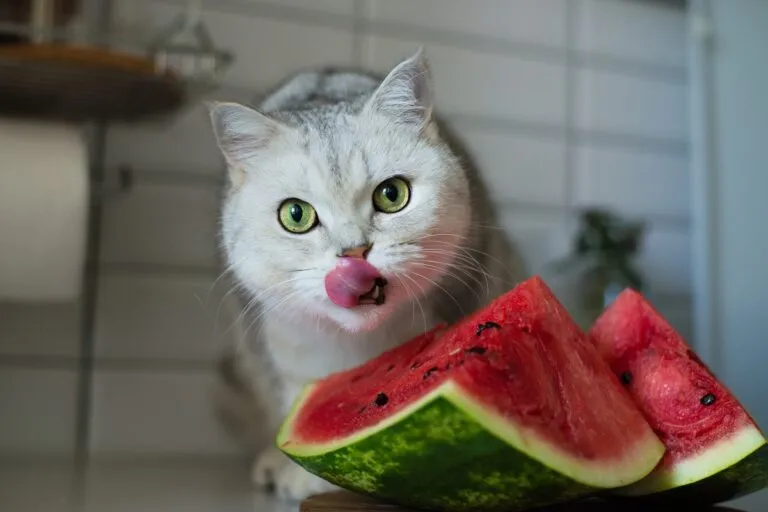
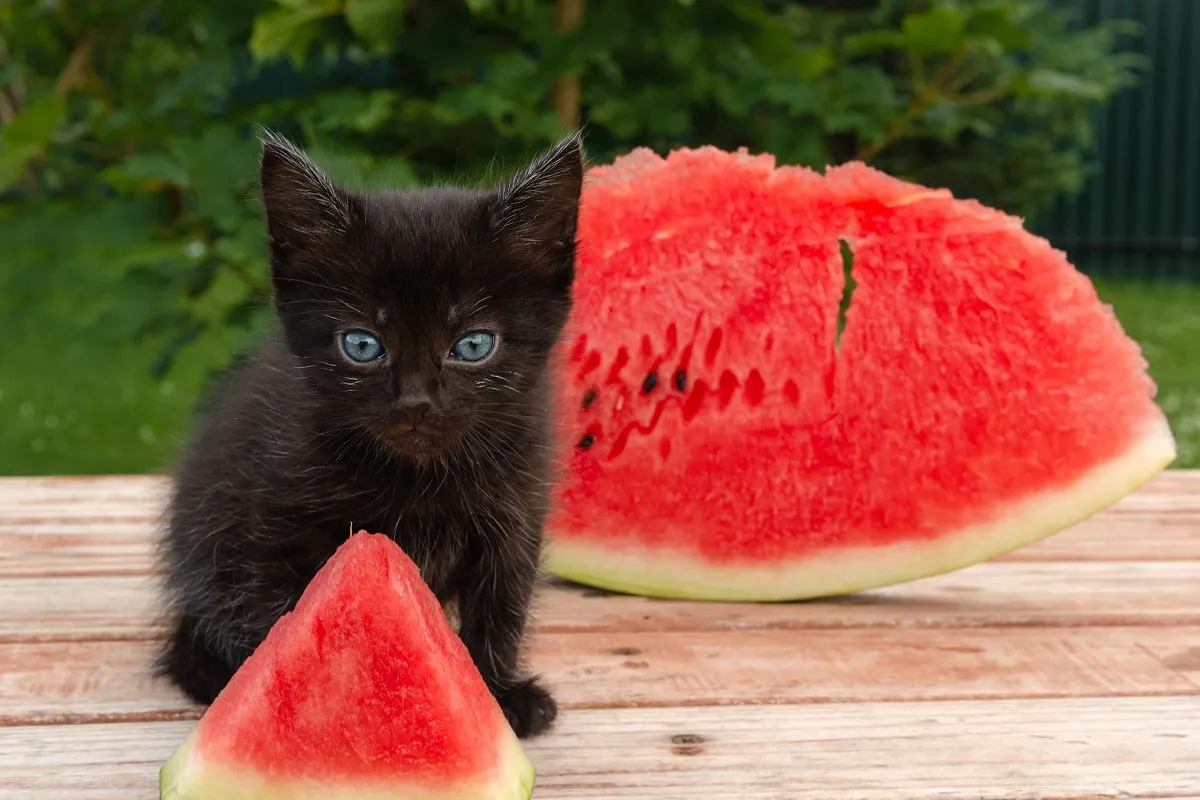
Especially on hot summer days, we love a juicy slice of watermelon as a low-calorie snack between meals. Some of our cats also enjoy watermelon as a tasty treat. But can cats eat watermelon, and what should you bear in mind? Here you’ll find all the answers.
At 24 to 40 kilocalories per 100 grams, watermelon is very low in calories compared to other fruits. Its low sugar content of six grams per 100 grams makes it a healthy treat between meals.
Watermelon is rich in vitamin A, pantothenic acid, niacin and vitamin C, and also contains important amino acids and antioxidants. It also provides essential minerals such as magnesium, phosphate and calcium.
High Water Content
With a water content of 90 to 95%, watermelon can be a useful source of fluids for cats that are reluctant to drink. Especially in summer, a small piece of watermelon can help cover part of their daily water needs.
A Special Trait of Cats: No Sense of Sweetness
What was long suspected has now been confirmed by genetic research: domestic cats and some of their wild relatives lack taste receptors for sweetness on their tongues. As a result, most cats show little interest in eating watermelon or other sweet fruits.
Can Watermelon Be Harmful to Cats?
Fortunately, watermelon contains no substances that are harmful to your cat and is generally well tolerated. However, if your cat has any pre-existing conditions, such as a sensitive digestive system or diabetes, fruit should not be fed. Cats with an allergy to watermelon should also avoid it.
Note: If your cat has any existing health issues, it’s generally advisable to consult your vet before making changes to their diet.
Only Ripe Fruit for Your Cat
Cats should not eat unripe or overripe watermelon. A ripe watermelon has juicy, red flesh, and when you tap the rind of a whole melon, it should sound hollow.
Can Cats Eat Watermelon Seeds and Rind?
The large seeds and the tough rind should be removed before feeding. They can cause a life-threatening intestinal blockage. Watermelons grown conventionally are often treated after harvest to extend their shelf life. These chemicals or pesticide residues can lead to poisoning.
How Much Watermelon Can Cats Eat?
By nature, cats are not designed to digest large amounts of fruit. Any type of fruit should therefore only be offered in small portions. Larger quantities can lead to stomach ache, flatulence and diarrhoea.
Test in Small Amounts
There is no clear guidance on how much watermelon a cat can eat per day per kilogram of body weight. Always start with small pieces and see how well your cat tolerates it. If it is well accepted and tolerated, you can gradually increase the amount offered next time.
Before giving your cat a piece of watermelon, you should remove the seeds and the rind.
Conclusion: Can Cats Eat Watermelon?
Yes, cats can eat watermelon. However, it’s important to make sure the watermelon is fully ripe and not spoiled. Remove the rind and seeds before feeding, or choose a seedless watermelon.
As strict carnivores, cats should only be given small amounts of watermelon as an occasional snack. It’s a nice change, but it should not form a main part of their diet.
If your cat reacts badly after eating watermelon, stop feeding it immediately and, if in doubt, ask your vet for advice.
This article was translated using Artificial Intelligence from the original German zooplus Magazine. While the original content was authored by industry experts and reviewed by our editorial team, this automated translation has not been human-edited and is provided for informational purposes.
zooplus Editorial Team
The zooplus editorial team consists of a dedicated team of experts with many years of experience in the field of animal husbandry: Luisa with her White Swiss Shepherd Elyos, Laura, Julio, and Florian. Together with a large network of animal experts, we work to make the zooplus magazine a trusted source of information for all animal owners and lovers. Our goal is to provide exciting animal knowledge and relevant information on the proper care of pets.
Some cats always seem to be hungry. But how much food does a cat need per day? This article helps you to find out the right amount of food for your cat.
Summer is the peak season for refreshing ice cream, and cats enjoy it too when it's hot. Would you like to surprise your cat with some ice cream for a change? We will clarify whether ice cream is dangerous for cats and show you how to make your own healthy cat ice cream.